

 EN
EN
 русский
 Español
 عربى
عربى Français
What Is a Prefabricated K House and Why Is It Gaining Popularity in 2026?
Admin 2026-04-02Content
- 1 What Is a Prefabricated K House and Why Is It Gaining Popularity in 2026?
- 2 What Is a Prefabricated K House Structure?
- 3 How Does a K-Type Prefabricated House Differ from Modular Homes?
- 4 Why Are K Houses Popular in Construction and Temporary Housing?
- 5 Key Advantages of Choosing a Prefabricated K House
What Is a Prefabricated K House and Why Is It Gaining Popularity in 2026?
Core Conclusion: A prefabricated K house is a lightweight, modular, steel-frame prefab building widely used in China and global markets, known for fast assembly, low cost, durability, and flexibility. In 2026, surging demand comes from 70% faster construction, 30% lower cost, eco-friendly design, and wide applications in housing, camps, offices, and temporary facilities.
What Is a Prefabricated K House? Full Definition & Structure
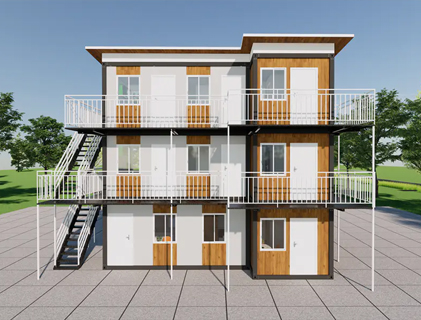
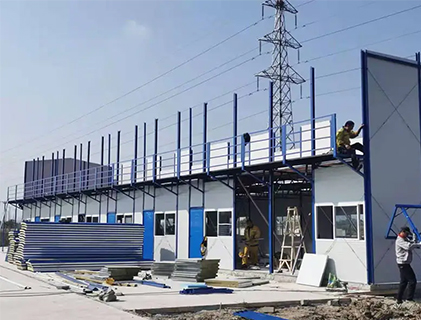
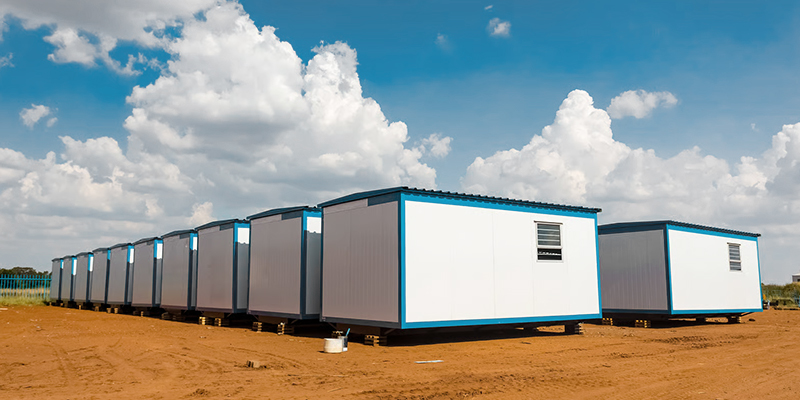
A prefabricated K house, also known as a K-Type Prefabricated House, is a standardized modular building system made of light steel structures, color steel panels, and integrated components. All parts are produced in factories and assembled on-site, making it a typical prefab modular house.
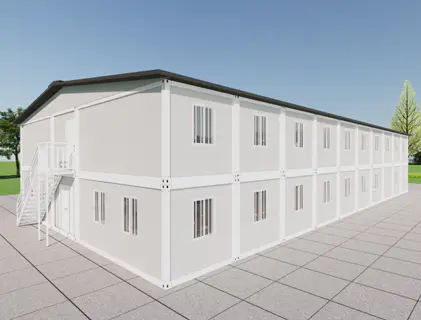
Unlike traditional container houses, K houses feature a frame-style structure supporting multi-story buildings, expansion, and combined layouts. They are officially classified as temporary prefab buildings but can also serve long-term residential and commercial uses.
As a leading product from prefab houses China manufacturers, the K house system has become a global benchmark for affordable, fast, and reliable modular construction.
Core Structural Components of K-Type Prefabricated Houses
The K house relies on a stable, reusable steel frame system with fully prefabricated parts. Every component is precision-manufactured for fast installation and strong stability.
- Light steel keel frame with high seismic and wind resistance
- Thermal-insulation color steel wall and roof panels
- Standardized doors, windows, and electrical connectors
- Reusable floor beams and decorative accessories
- Flexible layout for single, double, or multi-story combinations
Key Advantages of Prefabricated K Houses in 2026
The rapid rise of K houses is driven by practical advantages that solve modern construction pain points. In 2026, these benefits have made it a top choice for construction, emergency housing, and commercial projects.
Ultra-Fast Construction & Installation
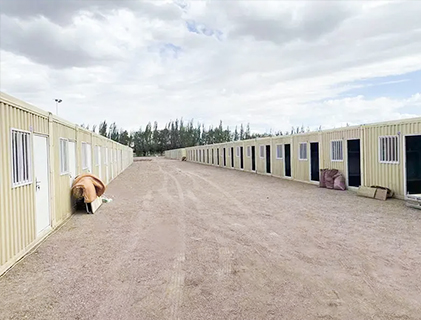
A complete K house can be installed in 1–3 days, and a large-scale camp in 7–15 days. This is 70% faster than traditional brick-and-mortar buildings, supporting urgent projects and emergency shelters.
Cost-Effective & Budget-Friendly
K houses reduce overall costs by 25–30% due to factory production, reduced labor, and no wet construction. They also lower maintenance and energy costs for long-term use.
Eco-Friendly & Sustainable
K houses produce 90% less construction waste than traditional buildings. Most materials are recyclable and reusable, aligning with global green building policies in 2026.

Performance Comparison: K House vs Traditional Building vs Container House
| Index | Prefabricated K House | Traditional Building | Standard Container House |
|---|---|---|---|
| Construction Speed | 70% Faster | Slow | Fast |
| Total Cost | 30% Lower | High | Medium |
| Service Life | 15–20 Years | 50+ Years | 10–15 Years |
| Reusability | High | Low | Medium |
Why Prefabricated K Houses Are Booming in 2026 (Data & Trends)
In 2026, the global market for prefab houses China exports continues to expand, and K-type houses have become the fastest-growing segment. Demand is driven by urban construction, emergency housing, tourism, and remote workspaces.
Line Chart: Global Demand Growth for Prefabricated K Houses (2020–2026)
Bar Chart: Major Application Fields of K Houses in 2026
Pie Chart: Market Share of Prefab House Types (2026)
Main Applications of Prefabricated K Houses in 2026
K houses are widely used in nearly every field due to strong adaptability. In 2026, they serve as long-term housing, temporary buildings, mobile offices, and emergency shelters worldwide.
- Construction site dormitories and offices
- Emergency disaster relief and temporary housing
- Modular residential houses and apartments
- Scenic spots, homestays, and mobile tourism facilities
- Temporary prefab building for schools, clinics, and shops
Why China Leads the Global K-Type Prefab House Market
China is the world’s largest prefab house manufacturer and exporter, supplying high-quality, low-cost K houses to over 120 countries. Advanced production lines, standardized systems, and complete supply chains make Chinese K houses unbeatable.
In 2026, China’s prefab modular house exports increased by 35% year-on-year, with K-type houses accounting for nearly half of total sales. They are recognized for stability, safety, and fast delivery.
The Future of Prefabricated K Houses Beyond 2026
With global urbanization and green building trends, K houses will continue expanding as a permanent housing solution, not just temporary buildings. Smart technology, solar integration, and upgraded interiors will further boost demand.
By 2030, industry analysts predict K-type prefabricated houses will occupy over 55% of the global temporary and modular construction market.
What Is a Prefabricated K House Structure?
Core Conclusion: A prefabricated K house structure is a highly integrated, modular, and lightweight steel frame building system composed of standardized load-bearing frames, insulated enclosure panels, floor systems, roof structures, and reliable connecting components. It features factory-manufactured parts, bolted on-site assembly, outstanding structural stability, strong environmental adaptability, and excellent reusability. With grade 8 seismic resistance, reliable wind and waterproof performance, and a long service life, the K-Type Prefabricated House structure represents a mature, safe, and efficient solution in the modern prefabricated construction industry.
Overall Structural System of Prefabricated K House
The prefabricated K house relies on a complete and independent frame structural system, which is designed to provide stable support, flexible layout, and high durability. Unlike traditional container structures, the K house adopts a column-beam supporting system that allows single-story, double-story, and extended combined layouts while maintaining excellent structural integrity and safety.
All structural components are produced in a standardized industrial process, with unified dimensions, high matching accuracy, and stable mechanical properties. The fully modular design supports quick disassembly, relocation, and reassembly without causing damage to the main structure, making the building highly flexible and environmentally friendly.
The structural system integrates load-bearing, thermal insulation, sound insulation, waterproofing, and decoration functions into one, creating a safe, comfortable, and practical indoor environment. It is widely used in temporary prefab buildings, residential modules, office spaces, public service facilities, and emergency shelters due to its superior comprehensive performance.
Core Structural Characteristics
- Stable light steel frame structure with uniform force distribution and high safety
- 100% factory prefabricated components for precise and reliable quality
- Bolted connection mode, no wet construction and fast on-site installation
- Excellent seismic, windproof, and weather-resistant performance
- High reusability and low loss during disassembly and assembly
Core Load-Bearing Frame Structure
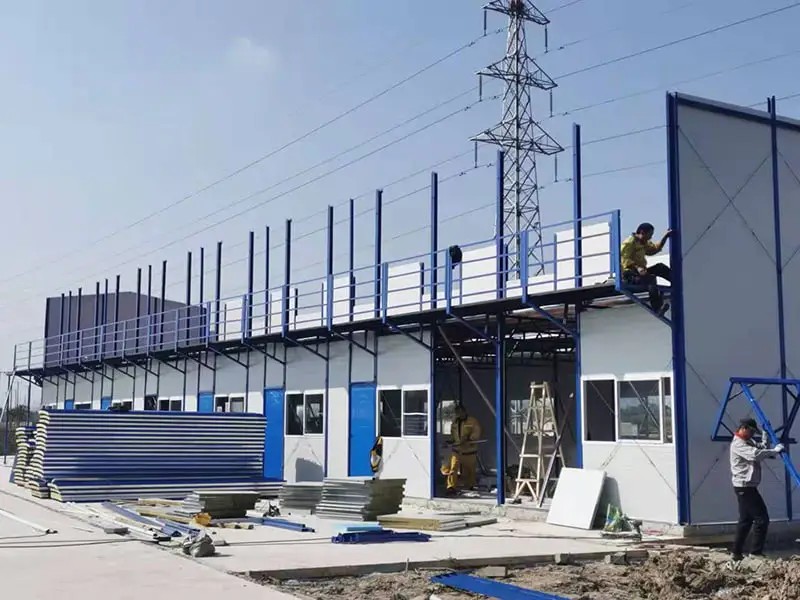
The load-bearing frame is the foundation of the prefabricated K house structure, made of high-strength galvanized light steel profiles. The main components include vertical columns, top ring beams, bottom ground beams, horizontal connecting beams, and diagonal support members. These components form a stable spatial stress system that effectively bears and transmits vertical and horizontal loads.
The galvanized surface treatment provides excellent anti-corrosion and anti-rust performance, ensuring the frame remains stable and intact even in long-term outdoor use. The triangular stress design in key positions enhances overall rigidity and effectively improves the deformation resistance of the structure.
The frame structure is lightweight yet high-strength, reducing the load on the foundation while maintaining strong bearing capacity. This design allows the building to adapt to various geological conditions and simplifies the foundation construction process.
Envelope Structure: Walls and Roof Systems
Wall Panel Structure
The wall system of the K house adopts lightweight composite insulation panels, which are inserted and fixed between the steel frames. The panels have excellent thermal insulation, sound insulation, and fireproof performance, creating a comfortable and quiet indoor environment. The surface of the panels is smooth, flat, and colorfast, maintaining an attractive appearance for a long service life.
Roof Structure System
The roof system adopts a scientifically designed slope structure for efficient drainage and snow load resistance. The roof panels are matched with reinforced steel trusses to ensure high load-bearing capacity and stability. The fully sealed waterproof structure effectively prevents water leakage and provides reliable protection in all weather conditions.
Floor and Auxiliary Connection Structures
The floor structure consists of high-strength steel floor beams and rigid composite floor panels, with strong bearing capacity to support daily use and furniture placement. The floor surface has anti-slip and wear-resistant properties, ensuring safe and comfortable use.
Auxiliary structures include door and window openings, reserved passages, sealing strips, and fixed connectors. These components enhance the airtightness, watertightness, and overall stability of the building, forming a complete and mature structural system.
Structural Performance and Safety Indicators
| Performance Item | Standard Parameter |
|---|---|
| Seismic Resistance Level | Grade 8 |
| Wind Load Resistance | 120km/h |
| Service Life Cycle | 15-20 Years |
| Fire Protection Grade | B1 Grade |
| Assembly Efficiency | High Efficiency |
Structural Stability and Durability Performance
The prefabricated K house structure features outstanding stability and durability through optimized design and high-quality materials. The light steel frame evenly distributes stress, preventing structural deformation and ensuring long-term use stability. The overall structure maintains excellent performance even under extreme weather conditions such as strong winds and earthquakes.
The connection nodes are reinforced with high-strength fasteners to ensure firmness and reliability. The sealed and insulated design protects internal components from moisture and corrosion, further extending the service life of the building.
Line Chart: Structural Stability Over Service Life
Line Chart: Environmental Adaptability Performance
Flexibility and Expandability of the Structure
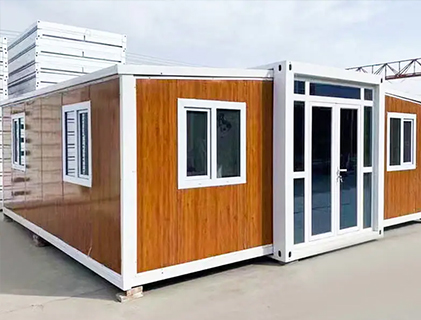
The modular design of the prefabricated K house structure enables excellent flexibility and expandability. The building can be freely expanded horizontally to increase indoor space and can also be built into double-story structures to improve space utilization efficiency. The layout can be customized according to functional needs, suitable for dormitories, offices, classrooms, lounges, and other scenarios.
The structure supports complete disassembly and reassembly, and all components can be reused after relocation. This feature makes the K house highly adaptable to mobile and temporary space requirements, with extremely low material loss and high sustainable utilization value.
Application Advantages of K House Structure
The prefabricated K house structure integrates multiple advantages such as safety, stability, durability, comfort, and environmental protection. It performs well in thermal insulation, sound insulation, and waterproofing, providing users with a comfortable and healthy indoor environment.
The structure adapts to various climate zones and geographical environments, maintaining stable performance in cold, hot, humid, and coastal areas. The dry construction method reduces environmental impact and meets the development needs of green and low-carbon construction.
With high integration and complete functions, the K house structure can be widely used in prefab modular houses, temporary prefab buildings, residential modules, and public facilities, becoming an ideal solution for modern construction demands.
Summary of Prefabricated K House Structure
The prefabricated K house structure is a mature, reliable, and high-performance modular building system composed of a steel load-bearing frame, insulated panels, and stable connecting components. It features outstanding seismic performance, wind resistance, durability, and flexibility, meeting diverse application needs.
This structural system represents the advanced level of prefabricated buildings, providing safe, comfortable, and efficient space solutions for various scenarios. Its excellent performance and stable quality make it a preferred choice in the modular construction field.
How Does a K-Type Prefabricated House Differ from Modular Homes?
Core Conclusion: A K-Type prefabricated house is a lightweight, steel-framed, component-based prefabricated building assembled from standardized parts on-site, while modular homes are fully finished, box-shaped units built entirely in factories and transported as complete rooms. The two differ in structural form, assembly method, flexibility, and application scenarios, with both offering excellent performance, stability, and efficiency in modern construction.
Basic Structural Differences Between K-Type Houses and Modular Homes
The K-Type prefabricated house uses a light steel frame + independent panels structure. All components, including columns, beams, walls, roofs, and floors, are produced separately and assembled through bolt connections. This structure is lightweight, flexible, and highly adaptable to various terrains and space requirements.
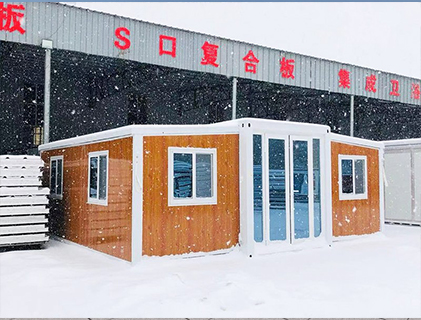
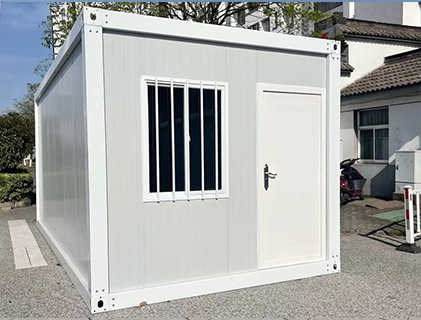
Modular homes adopt an integrated box-type module structure. Each module is a completely independent room unit, with interior decoration, circuits, and pipelines all finished in the factory. Modules are transported as a whole and connected on-site to form a complete building.
Both systems feature high prefabrication rates, stable performance, and eco-friendly construction, but their structural logic creates unique advantages for different usage scenarios.
Core Structural Features
- K-Type House: Light steel frame, component-based assembly, high flexibility, expandable design
- Modular Home: Integrated box module, full factory finishing, high integrity, strong integrity
- Both have reliable seismic resistance, wind resistance, and long service life
- Both support fast construction and low environmental impact during installation
Assembly and Construction Differences
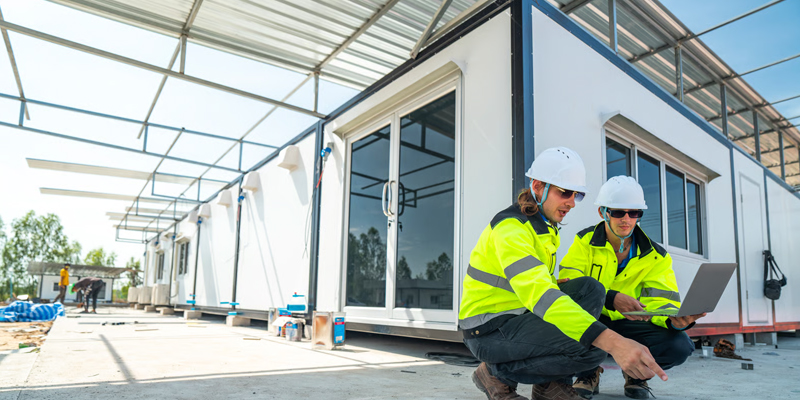
K-Type prefabricated houses are built using on-site component assembly. Workers connect steel frames, install wall and roof panels, fix doors and windows, and complete sealing. The process is lightweight, requires no heavy machinery, and can be completed quickly even in remote areas.
Modular homes require on-site module hoisting and connection. Since each module is a complete room, transportation and installation rely on lifting equipment. Once placed, modules are connected structurally and functionally to form a finished building.
The assembly method of K-Type houses provides superior convenience and mobility, while modular homes offer higher integrity and shorter on-site completion time.
Flexibility and Expandability Comparison
K-Type prefabricated houses have outstanding flexibility and expandability. They can be extended horizontally, increased to double-story structures, or adjusted in layout at any time. Components can be disassembled and reused multiple times without damage, making them highly adaptable to changing space needs.
Modular homes have fixed module sizes and rely on combining complete units for expansion. While they support multi-unit combinations, internal layout changes are limited once manufactured. Modular homes excel in forming fixed, large-scale spaces efficiently.
This flexibility makes K-Type houses ideal for dynamic, temporary, or expandable space requirements, while modular homes are perfect for standardized, fixed-layout residential and commercial buildings.
Performance Comparison Table
| Comparison Item | K-Type Prefabricated House | Modular Home |
|---|---|---|
| Structure Form | Component + Steel Frame | Integrated Box Module |
| Assembly Method | On-site Assembly | Module Hoisting |
| Flexibility | Ultra High | High |
| Reusability | Multiple Times | Multiple Times |
| Spatial Layout | Customizable | Module Combination |
Spatial Design and Internal Layout
K-Type prefabricated houses support highly flexible internal partitioning. Walls can be adjusted or removed to create open or separated spaces according to functional needs. The frame structure allows free design of room size, quantity, and purpose.
Modular homes come with pre-designed internal layouts that are fully finished in factories, including floors, walls, ceilings, electrical systems, and plumbing. The interior is ready for immediate use upon module connection.
Both systems provide comfortable, well-insulated, and quiet indoor environments with excellent living and working conditions.
Application Scenario Differences
K-Type prefabricated houses are widely used in temporary and flexible space scenarios, including construction camps, emergency shelters, temporary offices, public service facilities, and expandable residential spaces. Their lightweight and dismountable design makes them extremely suitable for mobile or short-term use.
Modular homes are commonly used for long-term and fixed residential buildings, such as apartments, family houses, hotels, schools, and medical facilities. Their high-integrity structure provides stable, permanent, and comfortable living environments.
Both building types are widely recognized in modern construction for their efficiency, safety, and environmental performance.
Line Chart: Flexibility Performance Comparison
Line Chart: Structural Integrity Comparison
Durability, Safety and Environmental Performance
Both K-Type prefabricated houses and modular homes feature excellent structural safety, with high seismic and wind resistance. They use stable, high-strength materials and reliable connection systems to ensure long-term stability and user safety.
Both building systems produce minimal construction waste and support reusable components, making them eco-friendly, low-carbon, and sustainable choices for modern construction. They also offer excellent thermal and sound insulation for comfortable indoor environments.
The service life of both systems is long, maintaining stable performance and appearance throughout years of use.
Summary of Key Differences
K-Type prefabricated houses and modular homes represent two advanced directions in prefabricated construction. K-Type houses focus on flexibility, mobility, and expandability, making them ideal for dynamic and changeable space needs. Modular homes emphasize integrity, standardization, and completion, suitable for fixed and long-term architectural projects.
Understanding these differences helps users choose the most suitable building solution based on their actual needs. Both systems represent high-efficiency, high-performance, and eco-friendly modern construction technology, bringing reliable and comfortable space solutions to various fields.
Why Are K Houses Popular in Construction and Temporary Housing?
Core Conclusion: K houses are extremely popular in construction sites and temporary housing due to their ultra-fast installation, exceptional structural flexibility, high safety performance, comfortable living environment, reusability, and strong adaptability to complex terrains. These advantages perfectly match the demands of temporary space use, making K houses the most reliable and preferred solution in the industry.
Ultra-Fast Assembly and Rapid Space Availability
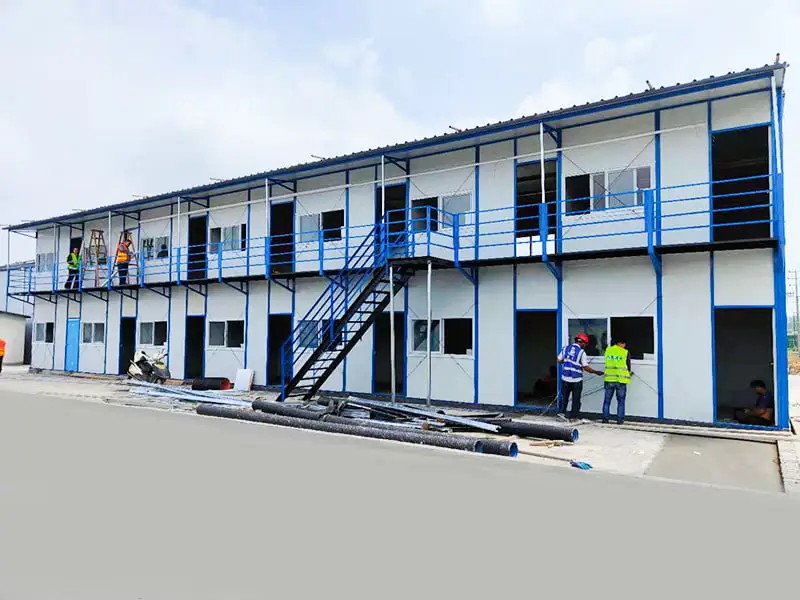
One of the most significant advantages of K houses is their efficient assembly speed. All components are prefabricated and connected by bolts, requiring no wet construction or complex construction techniques. A complete K house can be fully assembled in a short period, allowing immediate use for accommodation, offices, and storage.
For construction projects that require rapid response and temporary housing scenarios such as emergency shelters, this speed advantage is irreplaceable. Teams can quickly obtain safe and complete living and working spaces without long waiting times, greatly improving overall efficiency.
The lightweight and standardized design also allows simple operation even in remote areas or complex construction sites, ensuring stable and efficient construction progress under various conditions.
Key Advantages of Fast Assembly
- All components are prefabricated and processed for one-time in-place assembly
- Bolt connection mode, simple operation without professional technology
- Short construction period and immediate availability after completion
- Suitable for emergency needs and time-sensitive projects
Outstanding Flexibility and Expandability
K houses feature excellent flexibility and can be freely expanded, combined, and adjusted according to actual needs. They support single-layer and double-layer structures, horizontal expansion, and mixed layout combinations, easily adapting to the increasing or changing space demands of construction sites.
Whether it is additional dormitories, offices, meeting rooms, or canteens, K houses can achieve seamless expansion without destroying the original structure. This scalability is particularly important for long-term construction projects with changing personnel and functional requirements.
In temporary housing applications, this flexibility allows spaces to be adjusted at any time according to the number of users and functional changes, maintaining efficient and reasonable space utilization.
High Safety and Stable Structural Performance
Safety is a core requirement for construction and temporary housing, and K houses excel in structural safety and stability. The entire system uses a light steel frame structure with strong seismic and wind resistance, maintaining structural stability even in harsh outdoor environments.
The materials used have reliable fire performance, and the overall design fully considers the safety of daily use. Stable load-bearing capacity, firm connections, and anti-slip floors provide a safe living and working environment for users.
For construction sites with complex environments and temporary housing in various regions, this high safety performance ensures long-term stable use and protects the personal safety of all users.
Performance Comparison of K Houses in Temporary Applications
| Performance Index | Advantage Level |
|---|---|
| Assembly Speed | Extremely High |
| Structural Flexibility | Extremely High |
| Safety Performance | High |
| Environmental Adaptability | High |
| Reusability | Extremely High |
Comfortable Living and Working Environment
Although K houses are temporary buildings, they provide a comfortable indoor environment comparable to permanent structures. The wall and roof panels have excellent thermal and sound insulation properties, maintaining a stable indoor temperature and isolating external noise.
The reasonable space design, bright lighting conditions, and good ventilation create a cozy and pleasant living atmosphere. For construction workers and temporary housing users, this comfort effectively improves quality of life and work efficiency.
The fully enclosed structure blocks wind, rain, and dust, making the indoor environment clean and tidy, suitable for long-term living and daily use.
High Reusability and Sustainable Performance
K houses support multiple disassembly and reassembly without damage to components, making them highly reusable. When a construction project is completed or temporary housing needs to be relocated, the entire structure can be dismantled and transferred to a new site for reuse.
This reusability makes the structure highly sustainable and environmentally friendly, with extremely low material loss and no construction waste. It fully meets the requirements of green and low-carbon development in modern construction.
For users with mobile and phased construction demands, this feature brings long-term stable value and excellent overall performance.
Line Chart: Usage Cycle Performance of K Houses
Line Chart: Environmental Adaptability Index
Strong Adaptability to Complex Terrains and Environments
Construction sites are often located in areas with complex terrains, and temporary housing may need to be built in various geographical environments. K houses have low requirements for foundations and can adapt to flat, sloped, and soft terrains with simple foundation treatments.
The lightweight structure reduces the load on the ground, and the flexible installation method allows normal construction in areas where traditional buildings cannot be built. This adaptability allows K houses to be used in various remote and complex areas.
Whether in plains, mountains, or coastal areas, K houses maintain stable performance and provide reliable space support for various projects.
Simple Maintenance and Easy Management
K houses feature simple structures and standardized components, making daily maintenance extremely convenient. Damaged parts can be quickly replaced, and daily upkeep requires minimal effort.
For large-scale construction camps and temporary housing areas, this easy-maintenance feature greatly reduces management difficulty and ensures long-term stable use of all buildings.
The durable materials are resistant to corrosion, fading, and deformation, maintaining good appearance and performance for many years.
Summary of Core Popularity Reasons
The popularity of K houses in construction and temporary housing stems from their perfect match with industry demands: fast assembly improves efficiency, flexibility adapts to changes, safety protects users, comfort enhances experience, reusability creates value, and adaptability expands application scenarios.
These comprehensive advantages make K houses stand out among temporary building solutions, providing safe, comfortable, efficient, and reliable space support for construction projects and temporary housing worldwide.
As a mature, high-performance prefabricated building system, K houses will continue to be the first choice for temporary construction and housing applications.
Key Advantages of Choosing a Prefabricated K House
Core Conclusion: Choosing a prefabricated K house provides exceptional value through rapid assembly, superior structural safety, outstanding flexibility, long durability, high comfort, reusability, and strong environmental adaptability. These advantages make it a reliable, efficient, and sustainable building solution for residential, commercial, and temporary applications.
Rapid Assembly and Efficient Construction
One of the most prominent advantages of a prefabricated K house is its fast installation process. All structural components are prefabricated and designed for bolted connections, eliminating the need for wet construction, curing time, or complex on-site processing. Buildings can be fully assembled and ready for use in a short period, supporting urgent project timelines and immediate space demands.
This efficiency ensures that living spaces, offices, or facilities become operational much faster compared with traditional construction methods. Even in remote locations or challenging work sites, the lightweight and modular design allows smooth and quick installation without heavy machinery or specialized labor.
For projects requiring speed and responsiveness, the prefabricated K house delivers unmatched efficiency while maintaining consistent structural quality.
Core Efficiency Benefits
- 100% factory-prepared components for precise and fast installation
- Bolted assembly system for easy, quick, and stable construction
- No wet operations, reducing construction time significantly
- Immediate usability upon completion of assembly
Excellent Structural Safety and Stability
Prefabricated K houses are engineered with a strong, lightweight steel frame that delivers outstanding safety performance. The system offers reliable seismic resistance, wind load capacity, and overall structural stability, ensuring safe usage in diverse geographical and weather conditions.
The frame design evenly distributes structural stress, while reinforced connection points enhance durability and prevent deformation. High-quality materials provide stable fire performance and long-term structural integrity, creating a secure environment for residents and users.
Safety is embedded in every design element, from stable load-bearing floors to sealed, protective wall panels, making the K house a trusted choice for long-term and temporary use alike.
Outstanding Flexibility and Expandability
Flexibility is a defining advantage of the prefabricated K house. The modular structure supports unlimited horizontal expansion, double-story configurations, and customizable internal layouts. Spaces can be adjusted, extended, or reconfigured at any time to meet changing functional needs.
Whether creating dormitories, offices, meeting rooms, lounges, or public facilities, the K house adapts seamlessly. Components can be disassembled, relocated, and reassembled multiple times without damage, enabling exceptional mobility and reusability.
This level of adaptability makes the K house ideal for dynamic projects, growing teams, and temporary or transitional space requirements.
Comprehensive Performance Comparison Table
| Advantage Category | Performance Level |
|---|---|
| Assembly Speed | Excellent |
| Structural Safety | Excellent |
| Flexibility & Expansion | Excellent |
| Service Life | High |
| Environmental Adaptability | Excellent |
High Comfort and Livable Environment
Despite its modular design, the prefabricated K house provides a comfortable indoor environment comparable to traditional buildings. Insulated wall and roof panels deliver effective thermal and sound insulation, maintaining stable temperatures and reducing external noise.
Ventilated, bright, and well-designed interiors create a pleasant living and working atmosphere. The fully enclosed structure blocks dust, wind, and moisture, ensuring a clean, cozy, and habitable space throughout the year.
This high level of comfort supports long-term occupancy and improves overall well‑being for all users.
Long Durability and Low Maintenance
Prefabricated K houses are built to last with corrosion-resistant, wear-resistant, and weatherproof materials. The steel frame remains stable and intact over many years, while exterior panels retain color and strength without fading or deterioration.
Maintenance requirements are minimal due to the robust material selection and sturdy structural design. Individual components can be easily replaced if needed, ensuring long-term functionality with little effort.
This durability ensures consistent performance and appearance throughout the building’s long service life.
Line Chart: Long-Term Durability Performance
Line Chart: Comfort & Insulation Performance
Eco-Friendly and Sustainable Design
Prefabricated K houses support green and sustainable construction practices. The assembly process produces almost no construction waste, and all components are reusable and recyclable. The lightweight structure reduces resource consumption during production and transportation.
Energy-efficient insulation reduces energy consumption for temperature control, supporting low-carbon and eco-friendly daily use. The sustainable design aligns with modern environmental standards and responsible building practices.
Choosing a K house means choosing a sustainable, responsible, and environmentally friendly building solution.
Wide Environmental Adaptability
Prefabricated K houses perform reliably in all types of climates and terrains. They adapt to cold regions, warm zones, coastal areas, and mountainous locations with equal stability. The structure withstands high winds, moderate snow loads, and changing weather conditions while maintaining interior comfort.
Low foundation requirements allow installation on various ground conditions, expanding its usability to remote, rural, and developing areas. This high adaptability makes the K house a truly universal building solution.
Summary of Core Advantages
The prefabricated K house combines speed, safety, flexibility, comfort, durability, and sustainability into one complete system. Each advantage is designed to enhance usability, efficiency, and quality for the user.
From rapid assembly to long-term reliability, every feature serves a practical purpose, making the K house a smart, dependable, and high-performance choice for any modern building need.
By choosing a prefabricated K house, users gain a future-proof, adaptable, and comfortable space that performs exceptionally well in every scenario.
For exclusive deals and latest offers, sign up by entering your email address below.

-
TEL:+86 18762912902
-
Email:cntaimao@163.com
-
WhatsApp:
-
Add:Group 5, Cao Village, Zhenze Town, Suzhou, Jiangsu, China
Copyright © Suzhou Taimao Integrated Housing Co., Ltd.
All Rights Reserved.
 Wholesale movable homes for sale
custom built modular homes
Wholesale movable homes for sale
custom built modular homes