

 EN
EN
 русский
 Español
 عربى
عربى Français
 Product Category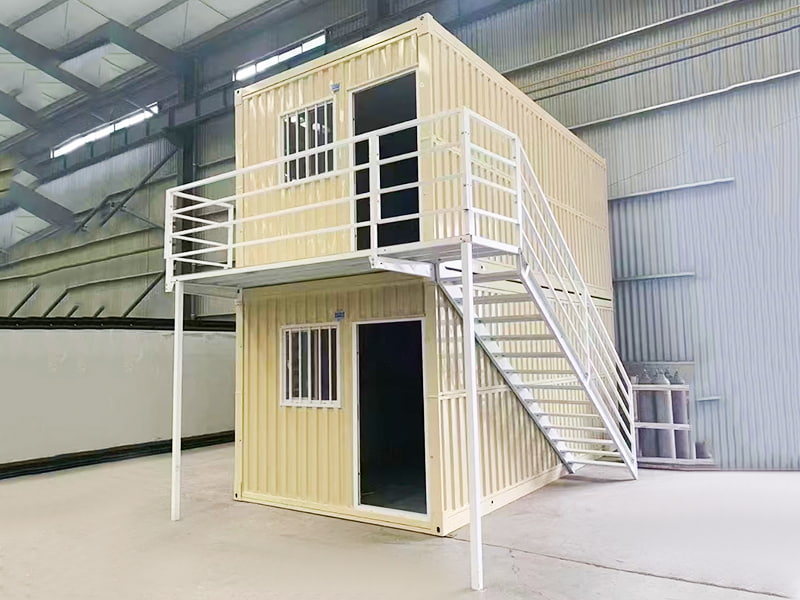
1. What Is a Folding Container House?
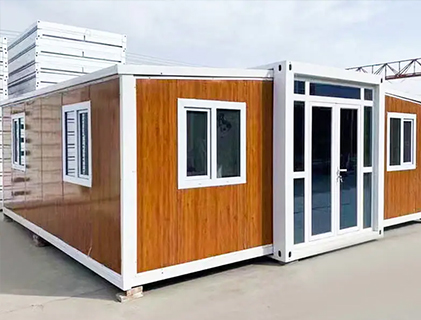
A folding container house is a prefabricated modular structure engineered to collapse into a compact flat-pack form for shipping and storage, then unfold or expand on-site into a fully habitable living or working space. Also referred to as a collapsible container house, this format combines the structural strength of steel-frame construction with the logistical efficiency of flat-pack delivery — reducing shipping volume by up to 75% compared to a pre-assembled container unit of the same size.
The global demand for rapid-deploy, relocatable housing has driven significant innovation in folding container design. A standard fold out container house can be transported four to five units per standard flatbed truck and erected on-site by two to four workers in under 4 hours — without heavy cranes or specialist equipment.
2. How a Folding Container House Works
(1) Folded Transport State
In its folded state, the roof and floor panels hinge inward, collapsing the structure to a height of approximately 300–400 mm. Wall panels, doors, and windows remain pre-installed within the folded frame. This means no components are lost in transit and no on-site fitting of wall elements is required.
(2) On-Site Deployment
On arrival, the unit is placed on a prepared foundation — simple concrete footings or steel ground screws are sufficient for most soil conditions. Workers release the locking pins, the roof is lifted hydraulically or manually, and the walls swing outward into position. Locking bolts are engaged and the unit is structurally complete. A portable folding house of 20 square meters can reach move-in-ready condition within a single working day including utility connections.
(3) Expandable Configurations
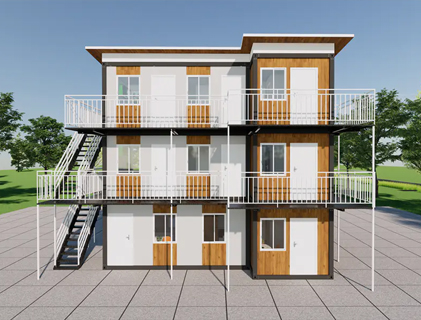
Fold out container homes can be arranged side-by-side or end-to-end and connected through bolt-on corridor modules, creating multi-room floor plans from individual folding units. A two-unit configuration delivers approximately 40–44 square meters of combined living space — sufficient for a comfortable one-bedroom home with separate kitchen, bathroom, and living area.
3. Folding Container House Specifications at a Glance
| Parameter | 20 ft Unit | 40 ft Unit |
|---|---|---|
| Floor Area (deployed) | ~20 m² | ~40 m² |
| Folded Height | ~350 mm | ~380 mm |
| Interior Height (deployed) | 2,500 mm | 2,500 mm |
| Units per Truck | 4–5 units | 2–3 units |
| Assembly Time | 2–4 hours | 3–5 hours |
| Wind Load Rating | ≥120 km/h | ≥120 km/h |
| Design Lifespan | 20–30 years | 20–30 years |
4. Key Advantages Over Conventional Prefab Housing
The collapsible container house format offers a distinct set of advantages that neither traditional construction nor standard modular buildings can match:
- Freight efficiency — Shipping 4–5 folded units per truck versus 1 pre-assembled container reduces per-unit logistics cost by 60–70%
- No skilled labor on-site — Deployment requires only basic hand tools; no welding, cutting, or specialized trades needed
- Full relocatability — Units fold back down for transport to a new location, making them a permanent reusable asset rather than a fixed structure
- Factory-installed fit-out — Insulation, wiring, plumbing stubs, doors, and windows are installed before folding, so the unit arrives complete
- Scalability — Multiple fold out container homes can be combined into villages, camps, or multi-unit residential developments with consistent build quality across every unit
5. Common Use Cases
- Emergency and disaster relief housing — Deployed within 24–48 hours after earthquakes, floods, or conflict displacement events
- Construction site offices and welfare facilities — Temporary on-site accommodation that relocates with the project
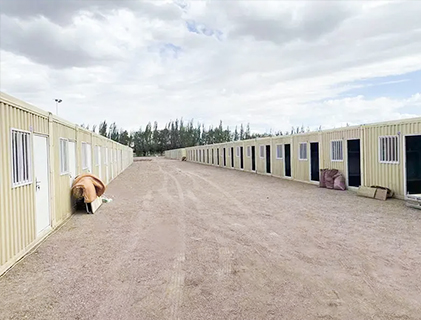
- Remote worker camps — Mining, oil, and energy project accommodation in locations with no permanent infrastructure
- Eco-tourism and glamping resorts — Low-impact cabins deployable on sensitive terrain without foundations
- Affordable urban micro-housing — A portable folding house installed on underutilized urban land plots as a cost-effective housing solution
6. Frequently Asked Questions
Q1: How many times can a folding container house be redeployed?
High-quality folding container houses are designed for repeated fold-deploy cycles — typically rated for 30 or more full deployment cycles over their service life. The hinge and locking mechanisms use hardened steel components engineered for long-term repeated use. Structural integrity is maintained across all cycles when units are handled according to manufacturer guidelines.
Q2: Is a collapsible container house suitable for cold climates?
Yes, when specified with appropriate insulation. A collapsible container house can be ordered with rock wool or polyurethane foam panel systems achieving U-values of 0.3 W/m²K or lower, meeting the thermal performance requirements of most cold-climate building codes. Double-glazed windows and insulated floor panels complete the thermal envelope.
Q3: Do fold out container homes require planning permission?
Planning requirements vary by country and jurisdiction. In many regions, fold out container homes used as temporary structures for less than a defined period (commonly 28 days to 12 months) are exempt from full planning permission. For permanent installation, standard residential planning applications apply. Always confirm local regulations with the relevant authority before installation.
Q4: Can a portable folding house connect to mains utilities?
Yes. A portable folding house arrives with pre-routed conduit and plumbing stubs for connection to mains electricity, water supply, and drainage. Units can also be configured for off-grid operation with rooftop solar panels, battery storage, and self-contained water and waste systems — making them viable in remote locations without utility infrastructure.