

 EN
EN
 русский
 Español
 عربى
عربى Français
Container House: Complete Guide to Design, Cost, and Modern Living Solutions
Admin 2026-04-01Content
- 1 Container House: Complete Guide to Design, Cost, and Modern Living Solutions
- 2 What Is a Container House?
- 3 Types of Container Houses
- 4 Container House Key Features and Advantages
- 5 Container House Design Ideas
- 6 Modern container home layouts
- 7 Small container house design inspiration
- 8 Multi-container house configurations
- 9 Benefits of Container Houses
- 10 Fast construction and installation
- 11 Eco-friendly and sustainable housing
- 12 Flexibility and mobility
Container House: Complete Guide to Design, Cost, and Modern Living Solutions
A container house is a modular, cost-effective, and fast-built building made from steel shipping containers, ideal for residential, commercial, and emergency use. It offers 70% faster construction than traditional buildings and costs 30–50% less per square meter.
What Is a Container House?
A container house is a sturdy structure built from repurposed or new steel shipping containers, designed with insulation, waterproofing, and interior finishing for safe and comfortable living. It supports flexible expansion, relocation, and customization, making it a popular modern living solution worldwide.
Most container houses use Q355 high-strength steel frames and 50–75mm insulation panels, with a service life of 15–25 years. They meet wind resistance up to Grade 12 and earthquake resistance up to Grade 8.
Core Design Principles for Container Houses
Structural Safety
The design prioritizes load-bearing capacity and stability. Corner columns and beam connections use high-strength bolts to ensure overall rigidity and prevent deformation in extreme weather.
Thermal Insulation & Comfort
High-density rock wool or polyurethane panels are used to reduce heat transfer. Indoor temperature remains stable, cutting air-conditioning energy use by 30–40% compared to traditional buildings.
Flexible Layout & Expansion
Containers can be combined horizontally or stacked vertically to create single-family homes, offices, or multi-story dormitories. Layouts can be adjusted without damaging the main structure.
Container House Cost Breakdown
Costs vary by size, material, and decoration. Below is the average cost for standard container house types:
| Container Type | Size | Total Cost (USD) | Cost per m² |
|---|---|---|---|
| 20ft Basic | 6m × 3m | 3,500–5,000 | 195–280 |
| 20ft Finished | 6m × 3m | 6,000–9,000 | 330–500 |
| 40ft Finished | 12m × 3m | 11,000–16,000 | 305–445 |
Practical Advantages of Container Houses
- Construction speed: 2–4 hours to assemble one 20ft unit
- Cost efficiency: saves 30–50% compared to brick-concrete buildings
- Mobility: can be transported and reused as a whole unit
- Eco-friendly: reduces 80% construction waste and saves steel resources
- Durability: resists wind, rain, corrosion, and mild seismic activity
Common Application Scenarios
Container houses adapt to diverse needs with strong practicality. They are widely used in daily life and emergency situations.
Residential Use
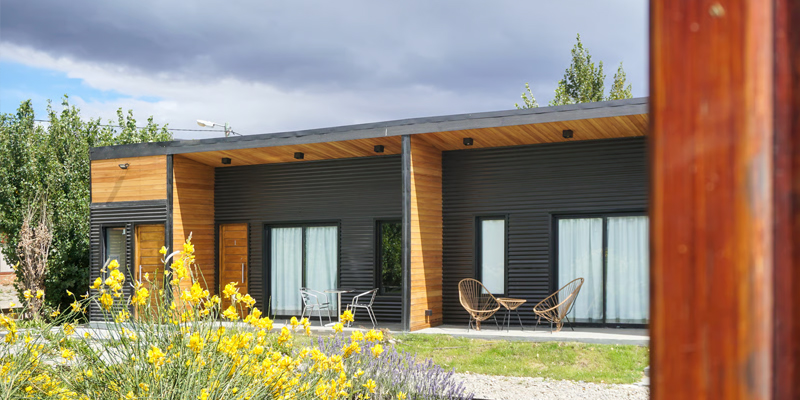
Including family homes, tiny houses, vacation cabins, and rental apartments. Many users combine 2–4 containers to create open-plan living rooms, bedrooms, and kitchens.
Commercial & Public Use
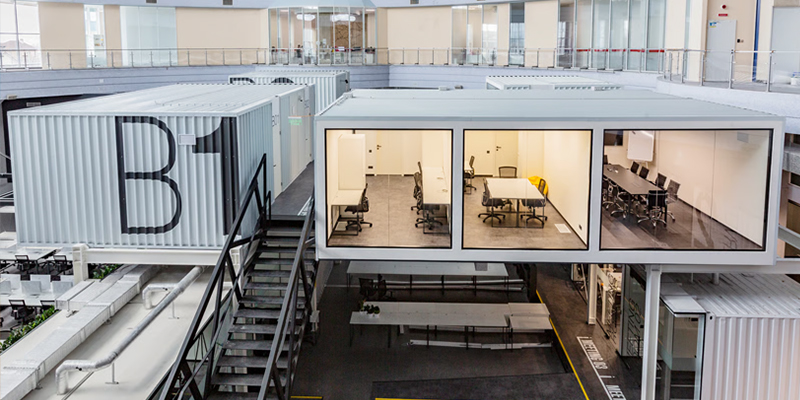
Shops, cafes, offices, scenic service centers, and exhibition booths. Container commercial spaces feature unique appearances and short installation cycles.
Emergency & Temporary Use
Disaster resettlement housing, medical temporary stations, and construction site dormitories. They can be deployed in 24–48 hours after a disaster.
Daily Maintenance Guidelines
Proper maintenance extends the service life to 25+ years and keeps the container house in good condition.
Steel Frame Maintenance
Inspect for rust every 6 months. Repaint exposed areas to prevent corrosion and maintain structural strength.
Waterproof & Roof Care
Clean roof debris regularly to avoid water accumulation. Replace damaged sealing strips annually to ensure waterproof performance.
Electrical & Plumbing Checks
Test circuits, sockets, and water pipes every year to avoid aging, leakage, or safety hazards.
Why Choose a Container House for Modern Living?
Container houses match the needs of modern living: low cost, fast delivery, eco-friendly design, and high flexibility. They are suitable for people seeking affordable housing, mobile offices, or sustainable living spaces.
With mature production technology and standardized design, container houses have become a reliable alternative to traditional buildings, providing safe, comfortable, and practical solutions for global users.
What Is a Container House?
A container house is a modular, structurally reinforced building made from steel shipping containers, engineered for permanent or temporary living, working, and commercial use. It delivers fast installation, high durability, low cost, and eco-friendly performance, making it one of the most practical modern construction solutions available. Unlike basic temporary shelters, container houses comply with international building safety standards, resist extreme weather, and support full interior customization for long-term occupancy.

Core Structural Composition of a Container House
Load-Bearing Steel Framework
The foundation of every container house is a high-strength steel frame manufactured from corten steel or Q355 structural steel, with a yield strength of 355MPa. This frame includes four corner columns, top and bottom beams, and reinforced welded connections designed to support vertical and horizontal loads. The steel structure ensures the building can withstand physical impacts, soil settlement, and structural stress over decades of use.
Thermal Insulation and Envelope Panels
Container houses use 50mm to 75mm thick sandwich panels made from rock wool, polyurethane, or EPS materials. These panels provide excellent thermal insulation, sound absorption, and fire resistance. High-quality insulation reduces energy consumption by 30% to 40% compared to traditional buildings, maintaining stable indoor temperatures in hot and cold climates.
Waterproof and Sealing System
A professional waterproof system includes sealed roof joints, polymer waterproof coatings, and rubber sealing strips for doors and windows. This design eliminates water leakage, resists humidity and corrosion, and extends the building’s service life in coastal, rainy, or high-moisture environments.
Pre-Installed Utility Systems
Electrical wiring, sockets, lighting, plumbing pipes, and drainage lines are pre-installed in the factory. On-site assembly only requires connection to external power and water supplies, allowing immediate occupancy without secondary renovation.
Standard Dimensions and Specifications
Container houses follow international shipping container standards, ensuring compatibility for transportation, stacking, and combination. The table below lists the most widely used sizes and their applications:
| Model | Length | Width | Height | Main Usage |
|---|---|---|---|---|
| 20ft Standard | 6m | 3m | 2.8m | Office, Bedroom, Shop |
| 40ft Standard | 12m | 3m | 2.8m | Home, Dormitory, Lounge |
Key Performance Advantages
- Wind resistance up to Grade 12 and earthquake resistance up to Grade 8
- Assembly time of just 2 to 4 hours for a single 20ft unit
- Cost reduction of 30% to 50% compared to brick-concrete buildings
- Construction waste reduced by over 80% for sustainable construction
- Full mobility, reusability, and expandability for flexible layouts
These advantages make container houses suitable for residential, commercial, emergency, and industrial applications. They are widely adopted in urban housing projects, remote construction sites, disaster relief zones, and creative commercial spaces.
Application Scenarios
Container houses are highly versatile and adaptable to diverse functional needs. In residential architecture, they are used as single-family homes, tiny houses, vacation villas, and rental apartments. Multiple containers can be combined to create open-plan living rooms, kitchens, bathrooms, and multi-bedroom layouts.
For commercial use, container houses are designed as retail stores, cafes, shared offices, scenic spots service centers, and exhibition booths. Their unique industrial aesthetic and short construction cycle make them ideal for fast-opening businesses.
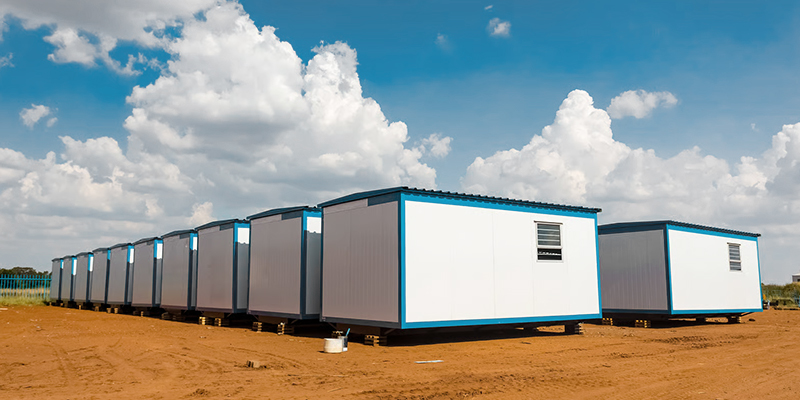
In emergency situations, container houses serve as disaster resettlement housing, mobile medical stations, and temporary command centers. They can be deployed within 24 to 48 hours, providing safe and comfortable shelter for affected populations.
Environmental and Sustainable Value
Container houses represent a green building solution that supports global carbon reduction goals. Repurposing a single 20ft container saves 1.8 tons of steel and reduces carbon emissions by over 3 tons. Factory prefabrication minimizes on-site construction waste and environmental disruption.
High-performance insulation lowers long-term energy use, while solar panels and rainwater collection systems can be integrated to create self-sufficient, zero-carbon living spaces. All major materials are recyclable, supporting a circular economic model.
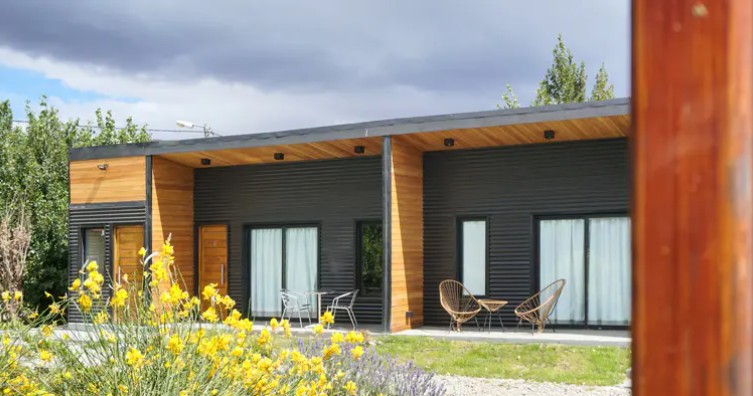
Daily Maintenance Guidelines
Steel Frame Protection
Inspect the steel frame for rust every six months. Apply anti-corrosion paint to damaged areas to maintain structural strength and extend service life to 25 years or more.
Roof and Waterproof Maintenance
Clean debris from the roof regularly to prevent water accumulation. Replace worn sealing strips annually to ensure reliable waterproof performance.
Utility System Inspection
Test electrical circuits, sockets, and plumbing systems annually to avoid aging, leakage, or safety hazards. Avoid overloading electrical equipment to ensure stable daily operation.
Types of Container Houses
Container houses are classified into six major types based on structure, materials, usage, and design: repurposed shipping container houses, new custom container houses, flat-pack container houses, stacked multi-story container houses, combined modular container houses, and specialized emergency container houses. Each type serves unique scenarios with distinct performance, cost, and installation features.
Repurposed Shipping Container Houses
This is the most common and eco-friendly type, built from retired cargo containers. These containers are refurbished, reinforced, and equipped with insulation, windows, and utilities. They retain the original steel structure, offering excellent durability and low cost.
Each reused 20ft container saves 1.8 tons of steel and reduces carbon emissions by over 3 tons. This type is ideal for residential homes, workshops, and small commercial spaces. The service life reaches 15–20 years with proper maintenance.
New Custom Container Houses
Unlike repurposed units, new container houses are factory-built with brand-new steel frames and customized dimensions. They support personalized layouts, larger openings, and enhanced structural performance.
They feature Grade 12 wind resistance and Grade 8 earthquake resistance, with a longer service life of 25–30 years. This type is widely used for high-end residences, offices, and luxury commercial spaces.
Flat-Pack Container Houses
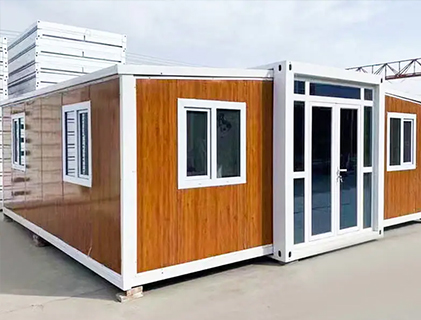
Flat-pack container houses are disassembled into panels for transportation and assembled on-site. They save 70% of shipping space and reduce logistics costs significantly.
A single unit can be assembled in 3 hours by two workers. This type is perfect for remote areas, temporary housing, and budget projects. It offers reliable waterproof and thermal insulation performance at a lower price.
Stacked Multi-Story Container Houses
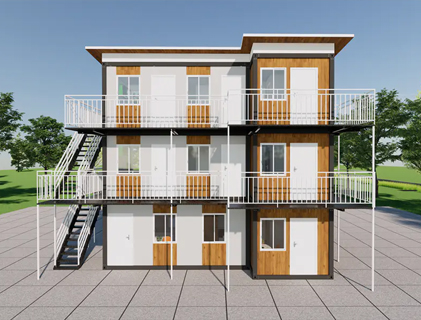
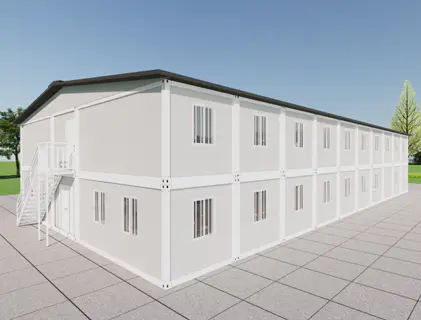
Stacked container houses use reinforced connectors and load-bearing structures to build 2–3 story buildings. They are widely applied in dormitories, hotels, apartments, and office buildings.
The design maximizes land use efficiency and supports fast overall construction. Safety is ensured with professional lifting, fixing, and anti-slip systems. This type is popular in urban and industrial construction projects.
Combined Modular Container Houses
Combined container houses integrate multiple units to create large open spaces. Walls between containers can be removed to form living rooms, conference halls, or shopping areas.
They support flexible expansion and layout adjustment, making them suitable for large-scale housing, commercial complexes, and public facilities. The prefabrication rate exceeds 85%, ensuring stable quality and fast delivery.
Specialized Emergency Container Houses
Emergency container houses are designed for disaster relief, field hospitals, and emergency command centers. They can be deployed and put into use within 24 hours.
They are equipped with basic living facilities, waterproof and thermal insulation systems, and strong mobility. This type provides safe and stable shelter in earthquakes, floods, and other natural disasters.
Comparison Table of Main Container House Types
| Type | Cost | Assembly Speed | Service Life | Best Application |
|---|---|---|---|---|
| Repurposed | Low | Fast | 15–20 Years | Home, Workshop |
| New Custom | Medium-High | Fast | 25–30 Years | Luxury Home, Office |
| Flat-Pack | Very Low | Very Fast | 10–15 Years | Temporary Housing |
| Stacked | Medium | Fast | 20–25 Years | Dormitory, Hotel |
Key Selection Factors for Container Houses
- Budget: Flat-pack and repurposed types offer the lowest cost
- Usage time: Long-term projects choose new or stacked types
- Mobility: Flat-pack and repurposed units are easier to transport
- Space demand: Combined and stacked types support large areas
- Emergency use: Specialized emergency container houses are the best choice
Understanding the classification and characteristics of container houses helps users select the most suitable type based on budget, application scenario, construction period, and functional needs. Each type provides a reliable, efficient, and economical building solution for modern living and commercial demands.
Container House Key Features and Advantages
Container houses are modular, steel-structured buildings with fast construction, high durability, low cost, environmental friendliness, and strong flexibility. They outperform traditional buildings in safety, efficiency, and sustainability, making them a preferred solution for modern living, commercial, and emergency spaces.

Outstanding Structural Safety and Stability
High Wind and Seismic Resistance
Built with high-strength Q355 steel frames, container houses provide reliable structural stability. They can resist Grade 12 strong winds and Grade 8 earthquakes, ensuring safety in extreme weather conditions. The integrated steel structure distributes stress evenly and prevents collapse or deformation.
Fireproof, Waterproof and Anti-Corrosion Performance
Wall and roof panels use Class A fireproof materials, effectively blocking flame spread. Professional waterproof sealing and anti-corrosion coating protect the building from rain, moisture, and rust, extending service life to 15–30 years with basic maintenance.
Ultra-Fast Construction and Installation
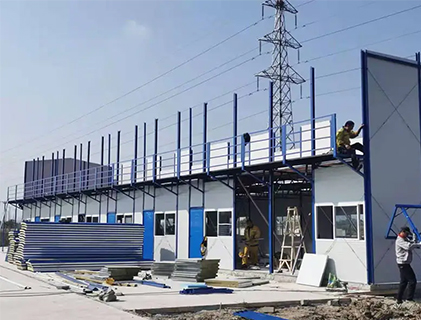
Container houses adopt factory prefabrication with a prefabrication rate of over 85%. All components are produced in a standardized workshop and assembled on site. A 20ft standard unit can be fully installed in 2–4 hours, and a 10-unit dormitory building can be completed in just 3 days.
Compared with traditional brick-concrete buildings, the construction period is shortened by 70%, and labor input is reduced by 60%. This advantage is critical for emergency rescue, construction sites, and time-sensitive projects.
Exceptional Cost-Effectiveness
The total cost of a container house is 30–50% lower than traditional buildings per square meter. Lower material, labor, and construction waste treatment costs reduce overall investment. Later maintenance is simple and low-cost, requiring only regular anti-corrosion and waterproof inspections.
Flexible Design, Expansion and Mobility
Customizable Layout and Combination
Containers can be combined horizontally or stacked vertically to create single-family homes, offices, shops, or multi-story buildings. Internal walls can be adjusted to form open or partitioned spaces, fully meeting personalized needs.
Reusable and Movable
Container houses can be transported as a whole or disassembled for relocation without structural damage. They are suitable for temporary sites, mobile shops, and emergency shelters, realizing efficient resource reuse.
Excellent Thermal Insulation and Living Comfort
Equipped with 50–75mm thick insulation panels, container houses effectively isolate heat and cold. Indoor temperature remains stable, reducing energy consumption for air conditioning and heating by 30–40%. Sound insulation performance reaches 30–40 decibels, creating a quiet and comfortable living environment.
Eco-Friendly and Sustainable Construction
Using recycled shipping containers reduces steel consumption. Each reused 20ft container saves 1.8 tons of steel and reduces carbon emissions by over 3 tons. Factory prefabrication cuts construction waste by more than 80%, supporting green and low-carbon development.
Wide Application Scenarios
- Residential use: family houses, tiny homes, vacation villas, and rental apartments
- Commercial use: shops, cafes, offices, scenic service centers, and exhibition booths
- Emergency use: disaster resettlement housing, field hospitals, and temporary command centers
- Industrial use: construction site dormitories, material storage rooms, and remote workshops
Comparison Between Container Houses and Traditional Buildings
| Indicator | Container House | Traditional Building |
|---|---|---|
| Construction Period | Shortened by 70% | Long (Months) |
| Total Cost | 30–50% Lower | High |
| Construction Waste | Reduced by 80% | Large Amount |
| Mobility | High (Movable & Reusable) | Fixed (Non-Movable) |
In summary, container houses integrate safety, efficiency, economy, flexibility, and environmental protection. Their comprehensive advantages make them an ideal, forward-looking building solution for global residential, commercial, and emergency needs.
Container House Design Ideas
Container house design focuses on flexible combination, space optimization, natural integration, and personalized styling, creating functional, comfortable, and aesthetic living spaces. With modular structures, container houses support single-unit, combined, stacked, and open-plan designs for residential, commercial, and recreational use.
Single-Container Compact Living Design
A single 20ft container is ideal for compact, low-cost living spaces. Smart layout divides the limited area into functional zones: bedroom, kitchenette, bathroom, and storage. Built-in furniture saves space, while large windows improve lighting and ventilation.
This design is perfect for tiny homes, vacation cabins, and backyard studios. It costs 30% less than traditional small rooms and can be completed within one week. The compact structure ensures warmth in winter and coolness in summer with high-quality insulation.
Multi-Container Combined Open Design
Horizontal Combination Layout
Combining 2 to 4 containers side by side creates spacious open areas. Removable middle walls form large living rooms, dining areas, or open offices. This design supports custom room counts and flexible interior flow.
L-Shaped and U-Shaped Layouts
L-shaped and U-shaped designs use 2 to 6 containers to form private courtyards. The enclosed outdoor space enhances privacy and connects indoor and natural environments. These layouts are widely used in family homes and scenic villas.
Stacked Multi-Story Design Ideas
Stacking 2 to 3 containers creates multi-story buildings with high land efficiency. The first floor serves as public space (living room, kitchen), and upper floors as private bedrooms. External stairs and small balconies improve comfort and appearance.
This design is suitable for urban homes, dormitories, and small hotels. Each unit is reinforced with high-strength connectors to ensure safety and stability, meeting Grade 8 seismic standards.
Natural & Green Integration Design
Vertical Greening and Roof Gardens
Green walls and roof gardens reduce indoor temperature by 4–6°C and improve air quality. Climbing plants cover exterior walls, softening the industrial steel appearance. The green design creates an eco-friendly living environment.
Large Glass & Natural Light
Replacing solid walls with floor-to-ceiling glass windows maximizes natural light and outdoor views. Double-glazed glass ensures thermal and sound insulation, making the space bright, open, and comfortable.
Popular Aesthetic Style Designs
- Industrial Style: Retain steel texture, exposed frames, and minimalist black-gray tones
- Nordic Style: Light colors, wood decor, and simple lines for warm, fresh atmospheres
- Modern Minimalist: Clean shapes, hidden storage, and functional integrated design
- Eco Natural: Wood veneer, green elements, and close-to-nature material matching
Commercial Space Creative Design
Container commercial spaces feature unique appearances and fast construction. Shops, cafes, and exhibition booths use colorful exteriors, open doors, and extended awnings to attract customers. Internal open layouts improve commercial functionality and user experience.
Modular commercial containers can be assembled in 3 days and moved easily, making them perfect for pop-up stores, scenic services, and creative industries.
Key Design Parameters Table
| Design Item | Standard Value | Purpose |
| Insulation Thickness | 50–75mm | Temperature Control |
| Window Area Ratio | 15–25% | Lighting & Ventilation |
| Floor Height | 2.6–2.8m | Space Comfort |
| Stack Limit | 2–3 Floors | Safety & Stability |
| Table 1: Core Design Parameters for Container Houses | ||
Smart & Functional Interior Design
Built-in cabinets, folding tables, and wall beds maximize space utilization. Integrated kitchen and bathroom systems provide complete daily functions. Smart home devices (lighting, air conditioning, security) enhance convenience and modern living experience.
Reasonable pipeline design hides wires and water pipes, keeping interiors clean and tidy. Waterproof and anti-slip materials ensure safe daily use.
Container house design balances aesthetics, function, and practicality. Flexible combinations and creative ideas make it suitable for diverse scenarios. With reasonable planning, container houses can be as comfortable and beautiful as traditional buildings, while offering lower cost and faster construction.
Modern container home layouts
Modern container home layouts are practical, open, flexible, and space-efficient designs based on standard 20ft and 40ft shipping containers. They focus on open living areas, natural light, privacy, and functional zoning, suitable for full-time residences, vacation homes, and small family living.
Single 20ft Container Compact Layout
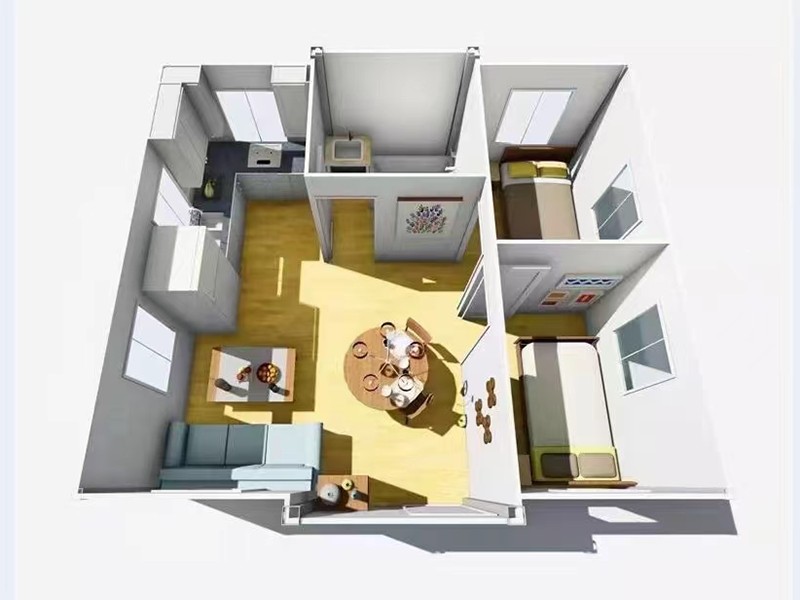
This is the most economical modern layout for solo dwellers or guest houses. The 20ft unit (6m × 3m) uses smart zoning to include a sleeping area, mini kitchen, bathroom, and storage. A large window wall improves ventilation and brightness.
Built-in furniture and foldable structures maximize usable space. The layout is quick to build and costs 40% less than traditional small homes. It is widely used for backyard studios, tiny homes, and rental units.

Single 40ft Container Open Layout
Open-Plan Main Space
A 40ft container provides enough length for an open living, dining, and kitchen area. The open design creates a sense of spaciousness and supports modern lifestyle needs. One end is designed as a private bedroom with a closed partition.
Functional End Zones
The bathroom and storage are placed at one end to optimize pipeline layout and enhance privacy. Large sliding doors connect indoor and outdoor spaces, making the home feel larger and more natural.
Two-Container Side-by-Side Layout
Two containers placed parallel create a wide, comfortable home with a middle open space. One side serves as public area (living room + kitchen), and the other as private area (bedrooms + bathroom). This layout is ideal for small families and offers balanced functionality.
The central space can be a covered atrium or dining area, improving light and airflow. Total area reaches 36㎡, enough for 2–3 people with full home functions.
L-Shaped Modern Container Layout
L-shaped layout uses 2–4 containers to form a private courtyard. The indoor space wraps around the outdoor yard, creating a strong connection between residents and nature. Bedrooms are placed along one wing, and living areas along the other.
This layout improves privacy, security, and natural lighting. It is one of the most popular designs for modern vacation homes and suburban residences.
Stacked Two-Story Layout
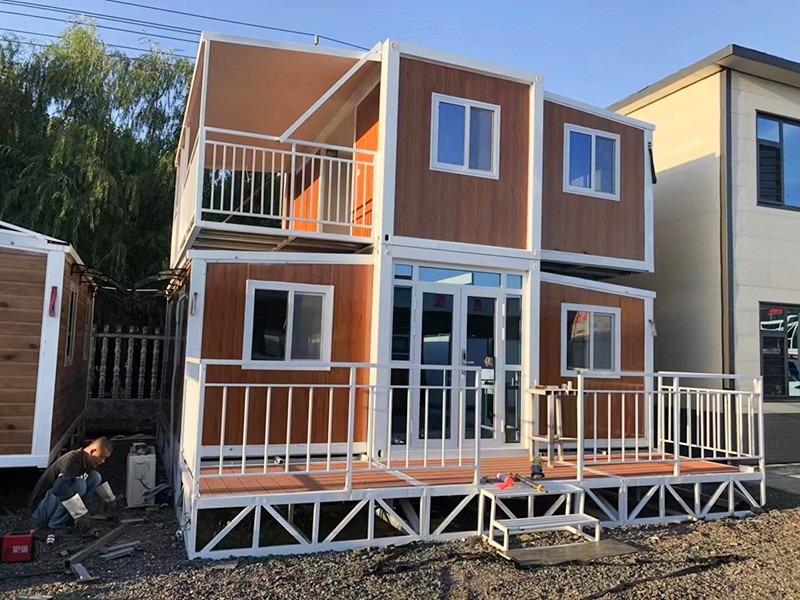
Stacking two containers creates a two-story home with clear zoning: first floor for public use, second floor for bedrooms. External stairs save indoor space, and small balconies enhance comfort.
This layout saves land and supports urban and suburban settings. It meets seismic and wind-resistant standards and is suitable for families needing multiple bedrooms.
U-Shaped Luxury Layout
U-shaped layout uses 3–6 containers to fully enclose a private courtyard. All rooms face the inner yard, maximizing view, light, and quietness. The design supports large kitchens, multiple bedrooms, and home offices.
It is a high-end modern layout with strong aesthetics and comfort, widely used in luxury container villas and resort homes.
Comparison of Common Modern Layouts
| Layout Type | Number of Containers | Suitable For | Features |
|---|---|---|---|
| Single 20ft | 1 | Solo, Guest House | Low Cost, Compact |
| Single 40ft | 1 | Couple, Small Family | Open, Functional |
| Side-by-Side | 2 | Family of 3–4 | Spacious, Balanced |
| L-Shaped | 2–4 | Vacation, Villa | Courtyard, Private |
| Two-Story Stacked | 2 | Urban, Multi-Bedroom | Land-Saving, Modern |
Key Principles of Modern Container Layouts
- Separate public and private areas for better comfort
- Maximize natural light with large windows and glass walls
- Open-plan design to reduce closed, narrow spaces
- Built-in storage to keep interiors tidy and functional
- Indoor-outdoor integration for better living experience
Modern container home layouts combine flexibility, efficiency, and aesthetics. They provide comfortable, affordable, and customizable living spaces while meeting the demands of contemporary family life.
Small container house design inspiration
Small container house design focuses on space maximization, multi-functional furniture, smart storage, and natural light integration. Using 10ft or 20ft standard containers, these designs create comfortable, stylish, and highly efficient living spaces for solo dwellers, couples, guest houses, or vacation retreats with limited square footage.
Compact Layout Optimization
The core of small container design is efficient zoning. A 20ft container (6m × 3m) is divided into four essential zones: sleeping area, kitchenette, bathroom, and storage. Every corner is utilized to avoid wasted space, creating a fully functional home in 18 square meters.
Open sightlines and minimal interior partitions prevent the space from feeling cramped. Sliding doors instead of swing doors save up to 0.5 square meters of floor area, improving traffic flow and usability.
Multi-Functional Furniture Design
Transformable Living and Sleeping Areas
A wall-mounted folding bed or sofa bed serves as seating during the day and a comfortable bed at night. Built-in storage underneath holds clothing, bedding, and daily necessities, doubling the functionality of every piece.
Built-In and Foldable Surfaces
Fold-down tables and desks provide work or dining space when needed and tuck away when not in use. Built-in cabinets and floating shelves eliminate the need for bulky standalone furniture, keeping the space clean and organized.
Smart Storage Solutions
Vertical storage is critical in small containers. Floor-to-ceiling cabinets, overhead shelves, and under-stair drawers utilize unused vertical space. Niche storage in walls and bedside areas keeps small items tidy and accessible.
Hidden storage in window sills, staircases, and platform bases increases total storage capacity by 40% without reducing living space, ensuring the interior remains clutter-free.
Natural Light and Ventilation Design
Large windows, skylights, and glass sliding doors are essential to brighten small spaces. A combination of side windows and roof skylights increases natural light by 60%, making the interior feel larger and more welcoming.
Cross-ventilation design creates smooth airflow, reducing humidity and stuffiness. Light-colored interior walls reflect natural light, further enhancing the sense of space and brightness.
Exterior and Aesthetic Inspiration
- Minimalist white and wood tones for a bright, warm, and spacious look
- Industrial black-and-gray style with exposed steel textures
- Scandinavian light tones with natural wood finishes
- Pop-color accents for lively, modern, and youthful appeal
- Green wall exteriors for eco-friendly, cooling, and natural aesthetics
Small Extension Design Ideas
Even small containers can benefit from subtle extensions. A small bay window, outdoor deck, or foldable awning adds functional space without increasing the container’s footprint. A 1-meter deck expands usable outdoor area and creates a relaxing leisure zone.
These lightweight extensions are low-cost, easy to install, and significantly improve comfort and practicality for daily use.
Essential Design Parameters for Small Container Houses
| Design Item | Recommended Value | Purpose |
|---|---|---|
| Container Size | 10ft / 20ft | Compact & Low-Cost |
| Window Ratio | 20%–30% | Light & Ventilation |
| Insulation Thickness | 50–75mm | Temperature Control |
| Door Type | Sliding Door | Space Saving |
Energy-Saving and Eco-Friendly Design
Small container houses are ideal for energy-efficient living. High-performance insulation reduces cooling and heating needs by 35%. Solar panels on the roof provide clean, off-grid power for lighting and small appliances.
Water-saving faucets and low-flow toilets reduce resource consumption. These eco-friendly features make small container homes sustainable, affordable, and suitable for remote or off-grid locations.
Small container house design proves that limited space does not mean limited comfort or style. With smart planning, multi-functional furniture, and creative details, these compact homes deliver complete functionality, modern aesthetics, and cozy living environments for a wide range of practical uses.
Multi-container house configurations
Multi-container house configurations are flexible, scalable, and functional structural combinations that connect two or more standard shipping containers to create spacious, comfortable, and customizable living spaces. These configurations solve space limitations of single-unit designs and support full-family homes, multi-room offices, and large commercial spaces with modular efficiency and cost-effective construction.
Side-by-Side Linear Configuration
The side-by-side configuration places two or more containers horizontally in a straight line, forming a wide, open floor plan. By removing the shared interior walls, the combined space creates a large, unified area for living rooms, kitchens, or dining zones. This design is easy to construct, has stable structural performance, and is widely used in modern family homes.
Two 40ft containers in this configuration provide up to 72 square meters of usable space, supporting open-concept layouts with separate bedrooms and bathrooms. The linear shape ensures uniform natural light and simplifies utility installation, reducing overall construction time by 30%.
L-Shaped Corner Configuration
Private Courtyard Integration
The L-shaped configuration uses two to four containers arranged perpendicularly to form a private outdoor courtyard. This design enhances privacy, improves natural ventilation, and creates a smooth indoor-outdoor living flow. One wing houses public areas, while the other provides private bedrooms.
Aesthetic and Functional Balance
This configuration offers a modern, dynamic appearance and maximizes outdoor space. It is highly popular for vacation homes, suburban villas, and remote retreats. The courtyard can be used for gardens, seating areas, or outdoor dining, increasing overall living comfort significantly.
U-Shaped Enclosed Configuration
The U-shaped configuration uses three or more containers to form a fully enclosed central courtyard. All interior rooms face the private outdoor space, providing abundant natural light and a peaceful atmosphere. This high-end configuration supports large families with multiple bedrooms, home offices, and spacious common areas.
With a complete sense of enclosure and privacy, this design is ideal for luxury container homes and resort accommodations. The structure remains stable and secure, meeting international wind and seismic safety standards.
Stacked Vertical Configuration
Stacked configuration places containers vertically to create two or three-story buildings, maximizing land usage. The ground floor is used for public living spaces, and upper floors for private bedrooms. External staircases maintain interior space efficiency.
This configuration is perfect for urban areas with limited land. Professional steel connectors and reinforced bases ensure safety, supporting Grade 8 seismic resistance. It is widely used in townhouses, dormitories, and multi-level home offices.
T-Shaped and Cross-Shaped Configurations
T-shaped configurations combine three containers to create a central living area with extended wings for bedrooms or studios. Cross-shaped configurations use four or more containers for large, multi-functional homes with dedicated areas for living, working, and entertaining.
These complex configurations provide exceptional space diversity and are suitable for large families, shared living, or mixed-use residential and commercial projects. The modular structure maintains fast installation and lower costs than traditional buildings.
Comparison of Common Multi-Container Configurations
| Configuration Type | Number of Containers | Best For | Key Advantage |
|---|---|---|---|
| Side-by-Side | 2–4 | Open Family Home | Easy Construction |
| L-Shaped | 2–4 | Courtyard Villa | Privacy & Nature |
| U-Shaped | 3–6 | Luxury Home | Enclosed Privacy |
| Stacked | 2–4 | Urban Townhouse | Land Efficiency |
Core Design Principles for Multi-Container Homes
- Clear separation between public and private living zones
- Maximize natural light and cross-ventilation in all rooms
- Simplified structural connections to ensure stability
- Centralized utility layout for plumbing and electrical efficiency
- Flexible interior walls for future space adjustments
Multi-container house configurations unlock the full potential of modular construction, offering unlimited design possibilities for modern living. Whether simple or complex, these combinations deliver durable, affordable, and highly personalized spaces that outperform traditional buildings in speed, efficiency, and creative freedom.
Benefits of Container Houses
Container houses offer a wide range of practical, financial, and environmental benefits, including affordability, speed of construction, durability, mobility, and sustainability. They are a superior alternative to traditional buildings for residential, commercial, and emergency use, with proven performance and global recognition.
Cost-Effective and Budget-Friendly
One of the most significant benefits of container houses is their low overall cost. Compared to traditional brick-and-concrete buildings, container homes cost 30% to 50% less per square meter. Reduced material expenses, shorter construction periods, and minimal labor requirements contribute to significant savings.
Even high-end custom container homes remain more affordable than conventional houses. Basic 20ft container shelters start at very low budgets, making them accessible for individuals, families, and large-scale projects alike. Long-term maintenance costs are also minimal due to durable materials.
Ultra-Fast Construction and Installation
Container houses use modular prefabrication with a factory completion rate of over 85%. A single unit can be fully assembled on-site in 2 to 4 hours, and a complete family home can be finished in days rather than months.
This speed is critical for emergency housing, construction camps, and time-sensitive business projects. Traditional buildings take months or years to complete, while container structures provide ready-to-use spaces in a fraction of the time.
Exceptional Durability and Structural Safety
High Wind and Earthquake Resistance
Built from reinforced steel frames, container houses withstand Grade 12 winds and Grade 8 earthquakes. The solid, integrated structure prevents collapse and ensures safety in extreme weather conditions.
Waterproof, Fireproof, and Corrosion-Resistant
Modern container homes feature professional waterproof sealing, fire-resistant panels, and anti-corrosion coatings. With proper maintenance, they last 15 to 30 years—longer than many temporary and lightweight building types.
Mobility, Reusability, and Flexibility
Container houses are highly portable. They can be transported as complete units or disassembled and relocated without structural damage. This mobility is ideal for remote sites, temporary businesses, and emergency response teams.
Units can be combined, stacked, or expanded to meet changing space needs. Whether adding a room, extending living areas, or creating multi-story buildings, containers offer unmatched flexibility for future modifications.
Eco-Friendly and Sustainable Construction
Using recycled shipping containers reduces industrial waste. Each repurposed 20ft container saves 1.8 tons of steel and reduces carbon emissions by more than 3 tons.
Factory production cuts on-site construction waste by over 80%. Energy-efficient insulation lowers long-term power consumption, and solar panels can easily be integrated for off-grid, zero-carbon living.
Wide Versatility for All Applications
- Residential: family homes, tiny houses, villas, and guest units
- Commercial: shops, cafes, offices, and pop-up venues
- Emergency: disaster shelters, field hospitals, and relief centers
- Industrial: construction camps, storage, and remote workshops
Comparison of Benefits: Container Houses vs. Traditional Buildings
| Benefit | Container House | Traditional Building |
|---|---|---|
| Total Cost | 30–50% Lower | High |
| Construction Time | Days to Weeks | Months to Years |
| Mobility | Highly Movable | Permanent & Fixed |
| Environmental Impact | Low & Eco-Friendly | High Waste |
Comfortable Living Environment
Modern container houses include high-performance thermal insulation, soundproofing, and ventilation systems. Indoor temperatures remain stable year-round, reducing energy use for heating and cooling. Custom layouts, large windows, and stylish interiors provide comfort equal to traditional homes.
In summary, the benefits of container houses cover cost, speed, safety, flexibility, sustainability, and comfort. They represent a smart, modern, and forward-thinking building solution for global housing and development needs.
Fast construction and installation
Fast construction and installation are the most prominent advantages of container buildings, enabling projects to be completed in days or weeks instead of months or years. This efficiency comes from factory prefabrication, modular design, and on-site assembly, making container houses ideal for urgent housing, commercial projects, and emergency relief.
Factory Prefabrication: The Foundation of Speed
Over 85% of container house construction is completed in a controlled factory environment, including structure welding, insulation installation, wall decoration, window fitting, and pipeline layout. Workers assemble components in a standardized process without being affected by weather, site conditions, or seasonal changes.
Factory production ensures high efficiency and stable quality. Once finished, the entire unit is transported to the site for direct installation, eliminating time-consuming on-site construction steps such as bricklaying, plastering, and curing required in traditional buildings.
On-Site Installation Process and Efficiency
Simple Foundation Requirements
Container houses require only a basic, level concrete foundation or adjustable support base, unlike traditional buildings that need deep excavation and complex structural foundations. Foundation preparation takes just 1–2 days, greatly reducing early construction time.
Rapid Assembly and Connection
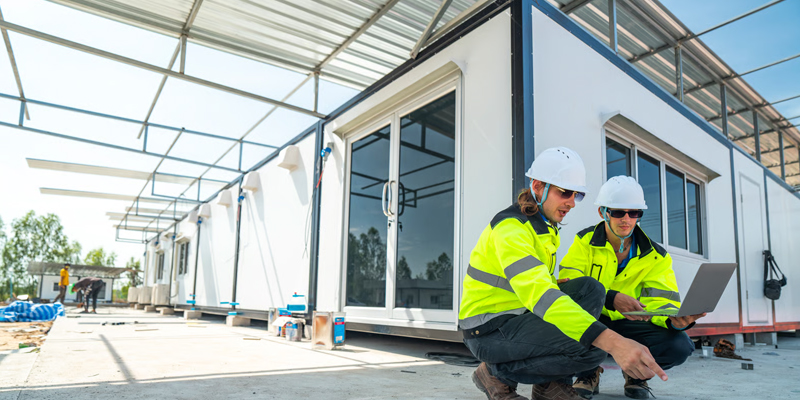
A single 20ft or 40ft container unit can be hoisted and fixed in 2–4 hours. Multi-container combinations take 1–3 days, including structural connection, waterproof treatment, and utility access. Most small projects are fully completed and ready for use within one week.
Time-Saving Comparison with Traditional Construction
Traditional residential or commercial buildings require 3–12 months for completion, while container houses of the same area take only 10–20% of that time. Large-scale dormitory or shelter projects can be deployed in weeks, which is critical for emergency response and time-sensitive business operations.
This dramatic reduction in construction time lowers labor costs, shortens investment cycles, and allows users to occupy or operate their spaces much sooner.
Stability and Quality in Fast Installation
Despite rapid installation, container houses maintain high structural safety and performance. Factory-processed components meet strict quality standards, and on-site assembly uses standardized connectors to ensure stability, wind resistance, and seismic performance.
Fast construction does not mean rough quality. Every step follows professional design and construction specifications, ensuring safety, durability, and comfort after quick installation.
Application Scenarios Dependent on Fast Installation
- Emergency disaster relief housing and temporary resettlement sites
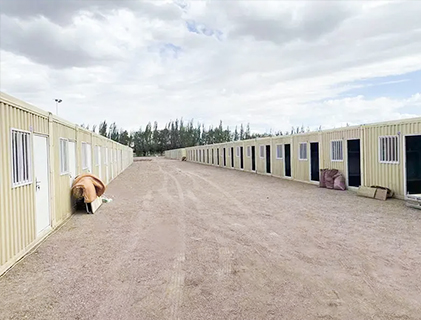
- Construction site camps, worker dormitories, and temporary offices
- Quick-opening commercial shops, cafes, and exhibition spaces
- Remote area residential and functional service buildings
- Rapidly built residential and vacation home projects
Construction Time Comparison Table
| Project Type | Container House | Traditional Building |
|---|---|---|
| Single Unit (20ft) | 2–4 Hours | 15–30 Days |
| Small Family Home | 3–7 Days | 3–6 Months |
| Large Dormitory | 2–4 Weeks | 6–12 Months |
Economic Benefits of Fast Construction
Shorter construction periods reduce labor costs, equipment rental fees, and management expenses. Businesses can start operating earlier, and residents can move in sooner, significantly improving economic efficiency.
Fast construction also reduces the impact of inflation and material price fluctuations, making project budgets more controllable and predictable.
In conclusion, fast construction and installation make container houses a revolutionary building solution. Combining factory prefabrication, simple foundations, and efficient on-site assembly, they provide a reliable, time-saving, and cost-effective choice for modern construction needs.
Eco-friendly and sustainable housing
Eco-friendly and sustainable container housing represents a low-carbon, recyclable, and resource-efficient building solution. By reusing steel containers, reducing construction waste, and integrating energy-saving designs, these homes minimize environmental impact while providing safe, comfortable, and durable living spaces.
Recycling and Reusing Shipping Containers
Each year, millions of shipping containers are retired globally. Converting them into homes prevents industrial waste and reduces the need for new building materials. Repurposing one 20ft container saves over 1.8 tons of steel and reduces carbon emissions by more than 3 tons compared to producing new steel structures.
This circular economy model extends the lifecycle of durable steel containers, turning industrial surplus into functional housing. It is one of the most direct and effective ways to reduce construction-related environmental damage.
Minimal Construction Waste and Pollution
Factory-Prefabricated Clean Production
Over 85% of container home production occurs in controlled factories, eliminating messy on-site processes like bricklaying, concrete pouring, and plastering. This reduces dust, noise, and wastewater pollution during construction.
Drastic Waste Reduction
Traditional buildings generate large amounts of construction waste, while container projects reduce waste by over 80%. Most components are pre-cut and standardized, leaving almost no unused materials on-site.
Energy-Efficient Thermal Insulation
Modern container homes use high-density 50–75mm insulation panels in walls, roofs, and floors. This reduces energy consumption for heating and cooling by 30–40% compared to conventional buildings.
Stable indoor temperatures lower reliance on air conditioning and heating systems, decreasing long-term carbon footprints and utility costs for residents.
Renewable Energy Integration
Container roofs provide ideal surfaces for solar panels, enabling off-grid, clean energy generation. Many sustainable container homes use solar power for lighting, appliances, and heating, achieving zero or low-carbon operation.
Rainwater collection systems can also be installed, reducing reliance on municipal water supplies and supporting sustainable water management.
Long Lifespan and Reusability
Steel container structures last 15–30 years with basic maintenance. Unlike temporary buildings that are discarded after short-term use, containers can be disassembled, relocated, and reused multiple times without structural damage.
This reusability avoids repeated resource consumption and makes container housing a truly sustainable long-term solution.
Key Eco-Friendly Features of Container Homes
- Recycled steel structure reduces raw material extraction
- Ultra-low construction waste and environmental pollution
- High-performance insulation lowers energy usage
- Compatible with solar and rainwater harvesting systems
- Reusable, movable, and fully recyclable at end of life
Sustainability Performance Comparison
| Environmental Indicator | Container Housing | Traditional Housing |
|---|---|---|
| Recycled Materials | High (Steel Containers) | Low |
| Construction Waste | Reduced by 80% | Very High |
| Energy Consumption | 30–40% Lower | High |
| Reusability | Fully Reusable | Non-Reusable |
Green Living and Healthy Environment
Eco-friendly container homes use low-formaldehyde, non-toxic, and environmentally safe interior materials, improving indoor air quality and supporting healthy living. Natural light designs and green wall integration further enhance well-being.
In summary, eco-friendly and sustainable container housing combines recycling, energy efficiency, low waste, and renewable compatibility. It is a forward-thinking solution that addresses global housing needs while protecting the planet for future generations.
Flexibility and mobility
Flexibility and mobility are defining characteristics of container houses, offering unlimited adaptability, easy relocation, and modular expandability that traditional buildings cannot match. These features make them ideal for dynamic lifestyles, temporary projects, remote locations, and evolving space needs.
Full Mobility: Transportable Anywhere
Container houses are designed to global shipping standards, meaning they can be transported by truck, ship, or crane to virtually any location. A fully finished unit can be moved without disassembly, preserving interiors, furniture, and utilities.
Relocation takes just hours to days, compared to the permanent nature of traditional buildings. This mobility supports remote work, disaster relief, seasonal living, and temporary commercial use with no loss of investment.
Flexible Layout Modification
Easy Internal Space Adjustment
Interior walls in container houses are lightweight and removable, allowing users to rearrange rooms, expand open spaces, or add partitions as needs change. No heavy construction is required, making layout updates fast and low-cost.
Customizable Functional Zones
Containers can be designed for residential, office, retail, or storage use and easily reconfigured later. A guest house can become a home office, or a retail unit can transform into a café, demonstrating extreme functional flexibility.
Modular Expansion and Combination
Container units can be combined horizontally or stacked vertically to increase space without rebuilding. Adding a bedroom, expanding a living area, or creating a two-story home is simple and fast.
Expansions are cost-effective and non-disruptive to existing spaces. This scalable flexibility supports growing families, expanding businesses, and changing project requirements over time.
Low-Foundation Flexibility
Unlike traditional buildings, container houses do not require permanent, deep foundations. They can be placed on stilts, gravel pads, concrete blocks, or adjustable supports, suitable for sloped, rocky, or remote terrain.
This foundation flexibility enables installation in areas where traditional construction is impossible or expensive, expanding usable land options dramatically.
Versatile Application Scenarios
- Mobile homes for nomadic, seasonal, or relocation-prone residents
- Temporary offices, shops, and pop-up commercial spaces
- Emergency shelters and disaster relief housing
- Remote site housing for mining, forestry, and exploration
- Expandable vacation homes and rental units
Flexibility Comparison: Container vs. Traditional Buildings
| Feature | Container House | Traditional Building |
|---|---|---|
| Mobility | Fully Transportable | Permanent, Non-Movable |
| Expansion | Modular & Fast | Complex & Slow |
| Layout Change | Easy & Low-Cost | Difficult & Expensive |
| Foundation | Light & Flexible | Permanent & Fixed |
Cost comparison with traditional housing
Container houses cost 30% to 60% less than traditional brick-and-mortar homes in total construction expense, with major savings in materials, labor, time, foundations, and maintenance. This cost efficiency makes container housing one of the most affordable and practical modern building solutions.
Initial Material Cost Savings
Traditional housing requires large quantities of cement, bricks, sand, steel, and wood, which represent a huge portion of total expenses. Container homes use recycled steel structures as the main frame, reducing the demand for raw building materials by over 70%.
Even new shipping containers cost far less than building a traditional structure from scratch. Used containers provide even greater savings while maintaining structural strength, resulting in a much lower material investment.
Low-Cost Foundation Requirements
Traditional homes need deep, heavy foundations including excavation, steel reinforcement, and large-volume concrete pouring, which can account for 15% to 20% of total cost.
Container homes only need simple supports such as concrete blocks, steel piers, or a basic flat platform. Foundation costs are reduced by up to 80%, especially on challenging terrain where traditional foundations are extremely expensive.
Lower Maintenance and Long-Term Costs
Steel container structures are waterproof, corrosion-resistant, and pest-resistant, requiring almost no annual maintenance. Traditional homes need frequent repairs for walls, roofs, and plumbing, creating ongoing costs over decades.
High-efficiency insulation in container homes also reduces energy bills by 30% to 40%, delivering continuous long-term savings on utilities.
Full Cost Breakdown Comparison
| Cost Item | Container House | Traditional House | Savings |
|---|---|---|---|
| Materials | Low | High | 50–60% |
| Labor | Very Low | Very High | 60–80% |
| Foundation | Minimal | Expensive | 70–90% |
| Maintenance | Almost None | Annual Cost | 90%+ |
| Total Cost | Low-Medium | High-Very High | 30–60% |
Additional Hidden Cost Advantages
- No cost for construction waste disposal
- Lower insurance premiums due to durable structure
- Earlier occupancy means faster savings on rent
- Stable budget with almost no unexpected overspending
- Reusable value if relocation or resale is needed
Affordability for Different Users
For individual homeowners, container homes make affordable, custom housing possible without large mortgages. For developers and businesses, they reduce project investment and improve return on investment.
For emergency and public projects, low-cost container housing provides fast, large-scale solutions within limited government budgets.
In conclusion, the cost advantage of container houses over traditional housing is comprehensive and significant. Lower initial investment, reduced labor expense, simple foundations, and minimal long-term maintenance create a highly economical choice that maintains quality, safety, and comfort.
Frequently Asked Questions (FAQs)
Q1: How often do I need to repaint a container home to prevent rust?
A1: With proper anti-corrosion treatment, you only need to touch up the paint every 3–5 years. In coastal areas with high salt content in the air, repainting every 3 years is recommended to maintain rust resistance. High-quality anti-corrosion paint can extend this interval to 5–7 years.
Q2: Can a container home last as long as a traditional home?
A2: Yes. A well-maintained container home has a service life of 15–30 years, which matches the lifespan of mid-range traditional brick-and-mortar homes. In fact, in dry, mild climates, container homes can last up to 30–40 years with minimal maintenance.
Q3: Is the maintenance of a container home more difficult than a traditional home?
A3: No—maintenance is significantly easier. Container homes have fewer components that require regular upkeep (no wood to rot, no concrete to crack, no roof shingles to replace). Most maintenance tasks are simple and can be completed by homeowners without professional skills.
Q4: Does relocating a container home reduce its long-term value?
A4: Relocating a container home has minimal impact on its value, as long as it is done professionally. A properly relocated container home retains 40–60% of its original value, which is far more than traditional homes (which lose all building value if demolished or abandoned).
Q5: What is the most common maintenance issue with container homes?
A5: The most common issue is rust, especially in areas with high humidity or saltwater exposure. This can be easily prevented by regular anti-corrosion treatment and paint touch-ups. Other minor issues include worn sealants around windows/doors, which are quick and low-cost to replace.
Q6: Do container homes have higher insurance costs due to maintenance concerns?
A6: No—insurance costs for container homes are often lower than traditional homes. Their durable steel structure is resistant to fire, wind, and pests, which reduces insurance risk. On average, container home insurance costs 10–20% less than traditional home insurance.
For exclusive deals and latest offers, sign up by entering your email address below.

-
TEL:+86 18762912902
-
Email:cntaimao@163.com
-
WhatsApp:
-
Add:Group 5, Cao Village, Zhenze Town, Suzhou, Jiangsu, China
Copyright © Suzhou Taimao Integrated Housing Co., Ltd.
All Rights Reserved.
 Wholesale movable homes for sale
custom built modular homes
Wholesale movable homes for sale
custom built modular homes