

 EN
EN
 русский
 Español
 عربى
عربى Français
How long does it take to build a modular home?
Admin 2026-04-10Building a modular home typically takes 3 to 6 months from design approval to move-in — significantly faster than traditional site-built construction, which often requires 9 to 18 months. The factory-controlled production of modular building components allows multiple phases to run simultaneously, compressing timelines without sacrificing structural integrity.
For projects using modular container building systems or portable shipping container homes, timelines can be even shorter — sometimes as little as 6 to 10 weeks for standard configurations. Understanding what drives these timelines helps buyers and developers plan projects with greater confidence.
Content
- 1 Phase-by-Phase Breakdown of the Modular Building Timeline
- 2 How Modular Building Compares to Traditional Construction
- 3 Key Factors That Affect How Long a Modular Home Takes to Build
- 4 Timeline by Modular Home Type
- 5 Steps You Can Take to Keep Your Project on Schedule
- 6 Why Factory Quality Directly Impacts Your Timeline
- 7 About TAIMAO Integrated Housing
- 8 Frequently Asked Questions
Phase-by-Phase Breakdown of the Modular Building Timeline
The modular construction process is divided into distinct phases. Unlike traditional building where phases are strictly sequential, modular building allows factory production and site preparation to happen at the same time.
| Phase | Duration | Key Activities |
|---|---|---|
| Design & Permitting | 4 – 8 weeks | Floor plans, engineering review, local permits |
| Site Preparation | 2 – 4 weeks | Land clearing, foundation, utilities |
| Factory Production | 4 – 8 weeks | Module assembly, insulation, MEP rough-ins |
| Transportation | 1 – 2 weeks | Module delivery via flatbed or container ship |
| On-Site Assembly & Finishing | 2 – 6 weeks | Crane placement, utility hookups, interior finishing |
The most significant time savings come from running site preparation and factory production in parallel. While workers are pouring the foundation, the modules are already being assembled in the controlled factory environment.
How Modular Building Compares to Traditional Construction
The efficiency advantage of modular building over traditional site construction is substantial. Weather delays, subcontractor scheduling conflicts, and site-related waste are dramatically reduced when 70–90% of the build happens indoors under factory conditions.
Average Build Time Comparison (Months)
Build
Building
Building
Approximate averages; actual timelines vary by project complexity
Modular container building solutions — built on standardized container frames — are especially fast because the structural shell is already formed. Interior fit-outs and utility connections account for most of the remaining on-site time.
Key Factors That Affect How Long a Modular Home Takes to Build
Not every modular project finishes at the same speed. Several variables can either accelerate or extend your timeline:
1. Project Complexity and Customization Level
Standard, catalog-based designs can move through production 30–50% faster than fully custom layouts. Projects with complex rooflines, multi-story stacking, or heavily customized MEP (mechanical, electrical, plumbing) systems require longer engineering and production cycles.
2. Permit and Approval Timelines
Local government permitting is often the most unpredictable variable. In some jurisdictions, permits for modular or portable shipping container homes are granted within 2 weeks; in others, the process can stretch to 3 months. Working with a manufacturer experienced in local building codes helps reduce this uncertainty.
3. Site Accessibility and Foundation Type
Remote or difficult-to-access sites can add 1–3 weeks. A simple concrete slab foundation can be ready in days, while a full basement foundation may take 3–4 weeks. The foundation type must be finalized early, as it directly affects module placement design.
4. Factory Production Capacity
A manufacturer's production schedule and capacity significantly impact delivery lead time. Factories with higher output capacity — and those that manage their own production line rather than outsourcing — tend to offer more reliable delivery windows.
5. Module Count and Home Size
A single-module studio or office unit can be delivered and installed in as little as 4–6 weeks total. A multi-module family home with 4–6 modules typically needs 3–5 months. Larger developments with 20+ units benefit from batch production efficiencies but require more site coordination time.
Timeline by Modular Home Type
Different project types have distinct typical timelines. Below is a practical reference:
| Project Type | Typical Total Timeline | Notes |
|---|---|---|
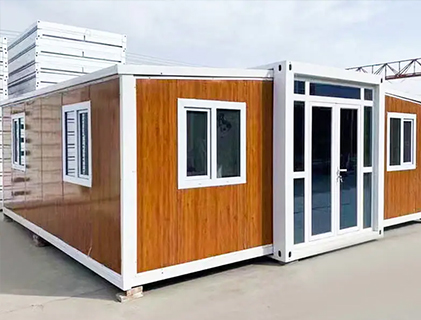
| Single-unit portable container home | 6 – 10 weeks | Fastest option; minimal site prep |
| 2–3 bedroom modular home | 3 – 5 months | Standard residential; common choice |
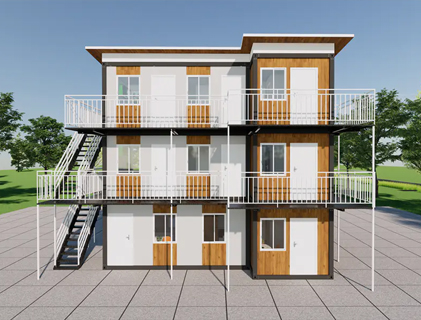
| Multi-story modular building | 5 – 9 months | Stacking requires more engineering |
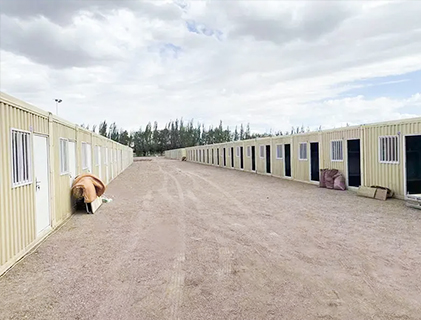
| Modular container building (commercial) | 2 – 5 months | Offices, camps, retail pods |
| Large residential development (20+ units) | 6 – 12 months | Phased delivery reduces on-site time |
Steps You Can Take to Keep Your Project on Schedule
Proactive planning is the most reliable way to avoid delays in modular construction. Practical steps include:
- Lock in your design early. Late-stage changes to floor plans or specifications are the leading cause of production delays.
- Begin permit applications immediately. Submit permit documents in parallel with finalizing your factory order — do not wait for one to complete before starting the other.
- Confirm site access and foundation type before the factory begins production, so module dimensions are correctly matched.
- Choose a manufacturer with in-house production. Factories that control their own supply chain and production line are better positioned to give — and keep — firm delivery commitments.
- Plan for crane access. Confirm road width, overhead clearance, and ground conditions for module placement day to avoid costly last-minute rescheduling.
Why Factory Quality Directly Impacts Your Timeline
A common but overlooked cause of delays is poor factory quality control that forces rework on-site. When modules arrive with substandard coatings, dimensional inconsistencies, or improperly routed utilities, on-site assembly time can double or triple.
This is why the production model of your chosen modular building manufacturer matters as much as the design itself. Manufacturers operating fully integrated, in-house production facilities with intelligent production lines and digital quality management are consistently able to deliver modules that require minimal on-site correction.
On-Site Rework Days vs. Factory Quality Level
Estimated on-site rework days decrease as factory integration level increases
About TAIMAO Integrated Housing
TAIMAO Integrated Housing operates an in-house full-chain factory with complete control over the entire process — from raw materials to finished products — with a monthly production capacity of up to 3,000 units.
- In-house Spraying Workshop: Ensures uniform and durable coatings, with color consistency and anti-corrosion standards far superior to outsourced processing.
- Intelligent Production Lines: Precision equipment and digital management deliver high-accuracy, high-efficiency standardized production at every stage.
- Large-scale Flexible Capacity: Stable supply for large-volume orders while flexibly accommodating customized project requirements.
This vertically integrated model is what allows TAIMAO to maintain consistent module quality, firm delivery commitments, and compressed lead times — factors that directly translate into shorter overall project timelines for buyers.
Frequently Asked Questions
For exclusive deals and latest offers, sign up by entering your email address below.

-
TEL:+86 18762912902
-
Email:cntaimao@163.com
-
WhatsApp:
-
Add:Group 5, Cao Village, Zhenze Town, Suzhou, Jiangsu, China
Copyright © Suzhou Taimao Integrated Housing Co., Ltd.
All Rights Reserved.
 Wholesale movable homes for sale
custom built modular homes
Wholesale movable homes for sale
custom built modular homes