


 EN
EN
 русский
 Español
 عربى
عربى Français
Folding Container Houses: Transport Efficiency, Deployment Speed, and Application Scenarios
Admin 2026-07-27Content
- 1 Quick Answer: Why Folding Container Houses Deploy Faster Than Fixed Modular Units
- 2 What Is a Folding Container House and How Does It Work
- 3 Core Advantages of Folding Container Houses for Transport and Deployment
- 4 Structural Specifications and Performance Profile
- 5 Deployment Process: From Folded Shipping State to Ready-to-Use Structure
- 6 Folding Container House vs Standard Modular Container House: Which Fits Your Project
- 7 Global Application Scenarios for Folding and Collapsible Container Houses
- 8 Industry Trends and Market Outlook for Portable and Foldable Shelter Structures
- 9 How to Evaluate a Folding Container House Manufacturer or Supplier
- 10 Company Profile: Suzhou Taimao Integrated Housing Co., Ltd.
- 11 Frequently Asked Questions
Quick Answer: Why Folding Container Houses Deploy Faster Than Fixed Modular Units
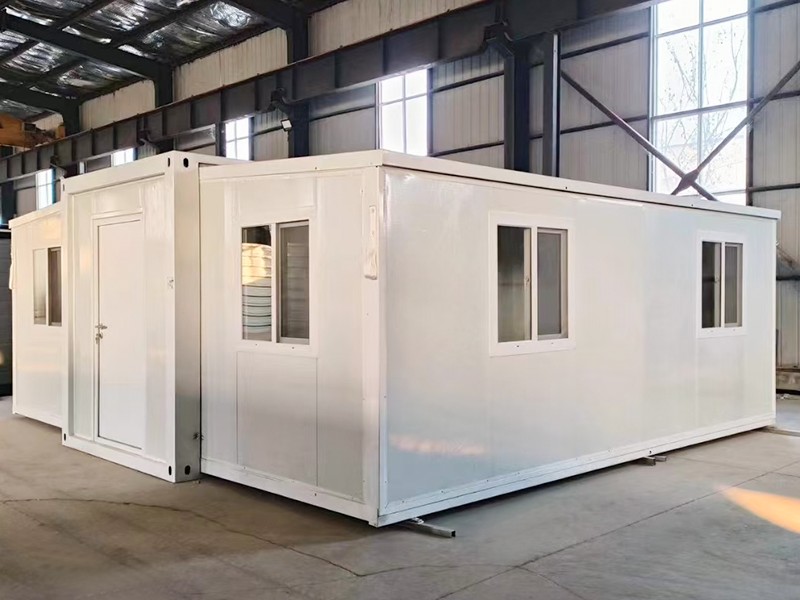
A folding container house is built around a hydraulic or manual folding structure that lets the entire unit collapse into a compact, flat-pack shape for transport and then unfold into a full-size room on site. Because the folded volume is reduced to approximately one-third of its deployed size, up to 12 units can be loaded into a single standard 40HQ shipping container, and once the container arrives, a team of two to three people can unfold a single unit in about 30 minutes without a professional installation crew. This combination of compact shipping and rapid, low-labor deployment is the direct answer to why folding container houses, sometimes searched as collapsible container house, fold out container homes, or foldable portable homes, are increasingly used for emergency rescue shelters, short-term commercial events, exhibition booths, and remote fieldwork housing.
This guide explains how the folding mechanism works, what the structural and transport specifications look like in practice, where these units are currently being deployed, and what to check when comparing a folding container house supplier. Suzhou Taimao Integrated Housing Co., Ltd. develops modular building solutions that include this fold-out product category alongside its wider modular housing range, and the figures referenced throughout this article are drawn from the product specifications the company uses for its folding container house and Large Corrugated Folding Container Room lines, together with published industry research on portable and emergency shelter structures. Readers researching a portable folding house, container foldable house, or a collapsible container house for events, remote fieldwork, or emergency response will find practical, verifiable detail supported by data visualizations throughout this article.
What Is a Folding Container House and How Does It Work
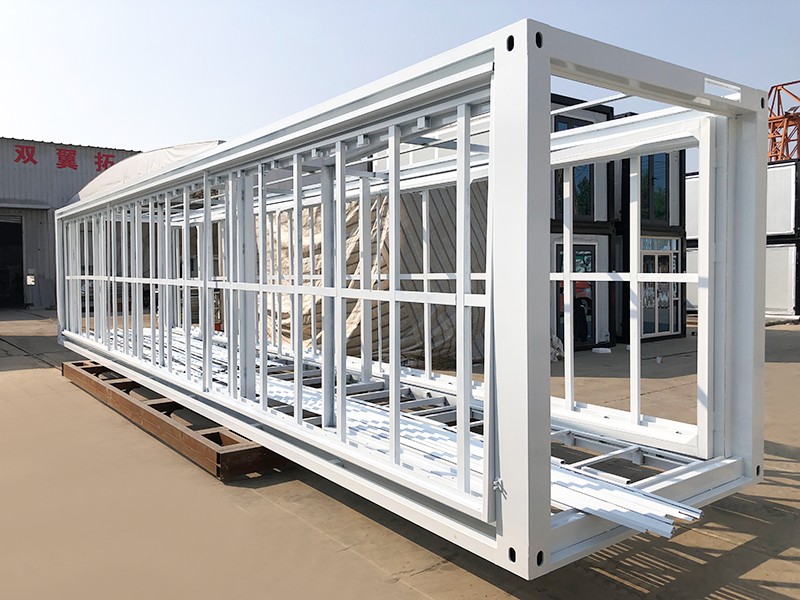
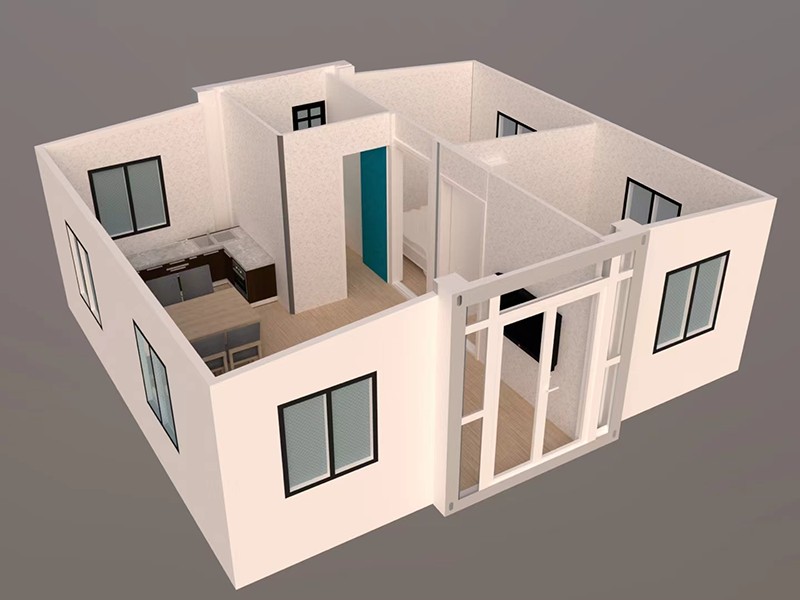
A folding container house is a factory-built unit constructed around a steel frame with hinged wall and roof sections, corrugated steel panels, and a hydraulic or manual folding mechanism that allows the entire structure to fold flat for transport and then unfold back into a full room on site. Unlike a fixed modular box that arrives already at full size, the folding design changes shape during transit, which is the feature that allows a much larger number of units to be packed into the same shipping container. The corrugated steel panels used on the walls and roof, often referred to in product listings as a Large Corrugated Folding Container Room, are chosen for their combination of structural rigidity and relatively light weight, which supports both the folding mechanism and manual hoisting during positioning.
The diagram below illustrates the two working states of a folding container house side by side: the folded, transport-ready state on the left, and the unfolded, deployed state on the right, connected by the unfolding sequence. In the folded state, wall panels are collapsed inward and stacked against the base frame, reducing the unit to roughly one-third of its deployed volume. In the unfolded state, the hinge lines along the vertical edges lock into position, the roof panel extends to its full span, and the structure becomes a stable, walk-in room ready for interior use.
Core Components of the Folding Structure
- Steel base frame that anchors the folding mechanism and supports the floor
- Hydraulic or manual hinge system along the vertical wall edges
- Corrugated steel wall and roof panels for structural rigidity and weather resistance
- Locking mechanism that secures the structure once fully unfolded
- Pre-fitted door and window units integrated into the folding wall sections
- Lifting points for simple hoisting during positioning and loading
Because the folding and locking hardware is built into the frame at the factory, on-site work is largely limited to positioning the folded unit, releasing the locks, and extending the walls and roof into place. This is a meaningfully different workflow from a rigid modular box, which arrives at full size and simply needs to be set down and connected, or from a panel-by-panel container house, which needs to be assembled piece by piece. The folding container house sits between these two approaches, trading a small amount of on-site assembly time for a substantial gain in transport density.
Core Advantages of Folding Container Houses for Transport and Deployment
The main practical advantages of a folding container house center on two related outcomes: how efficiently the units travel, and how quickly they become usable once they arrive. The table below summarizes the core specifications behind these advantages.
| Metric | Specification |
|---|---|
| Folding Mechanism | Hydraulic or manual folding structure |
| Folded Volume Reduction | Reduced to approximately 1/3 of deployed volume |
| Container Loading Capacity | 12 units per standard 40HQ shipping container |
| Transportation Cost Impact | Reduced by approximately 30% to 40% |
| Transport Damage Rate | Below 3% overall |
| Unfolding Team and Time | 2 to 3 people, approximately 30 minutes per unit |
The volume reduction achieved by folding is the single specification that most directly explains the transport and cost advantages of this product category. When a unit collapses to roughly one-third of its deployed size, far more units fit into the same shipping container compared with a rigid box of equivalent finished dimensions. Understanding the scale of this reduction helps buyers evaluate why folding container houses are frequently chosen for projects that require moving a large number of units at once. The chart below compares the relative volume of a folding container house in its unfolded, deployed state against the same unit in its folded, transport state, using an index where the deployed state equals 100. Reviewing this comparison makes clear why container loading capacity nearly doubles when a folding design is used instead of a fixed-volume unit of similar size.
As the chart shows, the unfolded, deployed state of the unit is set at a baseline index of 100, representing the full working volume of the room once it has been extended and locked into place on site. The folded, transport state sits at approximately 33 on the same index, which directly reflects the specification that folded volume is reduced to about one-third of the deployed size. This roughly two-thirds reduction in shipping volume is what allows 12 folding container house units to be loaded into a single standard 40HQ shipping container, compared with a smaller number of equivalent fixed-volume units that would fit in the same space. Because fewer container shipments are needed to move the same number of finished rooms, the associated transportation cost is typically reduced by approximately 30 percent to 40 percent based on the product specifications for this system. This cost impact is separate from the unit price of the structure itself and relates specifically to freight efficiency, which is why it is presented here as a logistics metric rather than a pricing claim. The compact folded shape also simplifies stacking and securing units inside the container, which contributes to an overall transport damage rate of below 3 percent across shipments. A low damage rate matters in particular for corrugated steel panel structures, since panel deformation during transit can otherwise require on-site repair before a unit is usable. For buyers planning large-scale deployments, such as emergency rescue shelters intended to house hundreds of people or multi-unit exhibition setups, the difference between 12 units and a smaller number of units per container can directly change how many vessel bookings or truck movements a project requires. This is one of the clearest, most measurable differences between a folding container house and a non-folding modular alternative, and it is usually the first specification procurement teams compare when evaluating a folding container house manufacturer. Taken together, the volume reduction shown in this chart is the foundation for nearly every other transport and cost advantage associated with this product category.
Structural Specifications and Performance Profile
Beyond transport efficiency, buyers evaluating a collapsible container house typically want a broader view of how the product performs across several practical dimensions at once, including deployment speed, ease of operation, and suitability across different use cases. A radar chart is a useful way to display this kind of multi-dimensional profile in a single, easy-to-read shape. The chart below plots six performance dimensions for a typical folding container house: transport efficiency, deployment speed, structural protection during transit, ease of operation, scenario versatility, and space efficiency when folded. Each axis is scored on a scale of one to ten, based on the specifications described throughout this guide. Reading the shape formed by connecting these six points gives a quick visual summary of where this product's strengths are concentrated.
The radar chart shows a relatively balanced hexagon shape, indicating that folding container houses do not rely on a single strength but instead perform consistently across multiple categories relevant to portable and temporary construction. Transport efficiency and space efficiency when folded sit near the outer edge of the chart, reflecting the volume reduction to roughly one-third of deployed size and the resulting capacity of 12 units per standard 40HQ shipping container. Deployment speed is scored equally high, corresponding to the ability of a two-to-three-person team to unfold a single unit in approximately 30 minutes without requiring a professional installation crew. Structural protection during transit is also scored highly, based on the reported overall transport damage rate of below 3 percent, which reflects the stability of the folded, locked configuration during shipping and hoisting. Ease of operation scores slightly below the top-tier metrics, since simple hoisting equipment is still typically used to position units, even though no specialized installation team is required. Scenario versatility captures the range of use cases described later in this guide, including emergency rescue shelters, short-term commercial events, exhibition booths, market stalls, and geological exploration camps, all of which benefit from rapid, tool-light setup. This kind of visual profile is particularly useful for procurement teams comparing a folding container house against fixed modular alternatives, since it condenses several technical factors into one chart instead of several separate tables. It is important to note that individual project requirements, such as an unusually remote deployment site or an especially large shelter footprint housing hundreds of people, may shift these scores and should be discussed directly with the manufacturer during planning. Buyers sourcing a portable folding house or fold out container house for time-sensitive projects can use this radar profile as a quick reference alongside the more detailed specification table earlier in this guide. Overall, the radar profile supports the conclusion that folding container houses are engineered specifically around the combination of compact transport and rapid, low-labor deployment, rather than being a general-purpose fixed housing product.
Deployment Process: From Folded Shipping State to Ready-to-Use Structure
The deployment sequence for a folding container house follows a consistent set of steps, moving from factory packing through to a fully unfolded, ready-to-use structure on site.
- Factory folding and locking of each unit into its compact, flat-pack transport state
- Container loading, with up to 12 units packed into a standard 40HQ shipping container
- Shipping to the project site, with typical transport damage remaining below 3 percent
- Unloading and hoisting of individual units into their final position
- Release of the folding locks and manual or hydraulic unfolding of walls and roof
- Final securing and leveling, typically completed by a 2 to 3 person team within about 30 minutes per unit
- Connection of any site utilities and readiness for immediate use
The gauge chart below illustrates the on-site deployment time for a single unit, plotted against a 60-minute reference scale. Deployment speed is one of the most frequently cited reasons buyers choose a folding container house over other portable structure types, particularly for emergency rescue and short-term commercial event scenarios where a shelter or booth needs to be functional within a narrow setup window. Because no professional installation team is required, the deployment time shown here depends mainly on the coordination of the two-to-three-person crew rather than on specialized labor availability. This makes the process easier to plan for organizations that do not maintain a dedicated construction team, including event operators and field research groups. Reviewing this gauge alongside the earlier volume and radar charts gives a complete picture of how a folding container house moves from a compact shipping state to a functional structure in a short and predictable window.
The needle on the gauge points to the midpoint of the 60-minute reference scale, marking the approximately 30-minute unfolding time reported for a single folding container house unit once it has been positioned on site. This reference scale is used purely for illustration, allowing readers to judge the deployment time against a familiar one-hour window rather than presenting it as a fixed industry benchmark. The 30-minute figure covers the physical unfolding and locking of the structure and does not include utility connections, which vary by project and site conditions. A two-to-three-person team is sufficient for this process because the hinge and locking hardware is factory-installed and designed for manual or hydraulic operation rather than specialized assembly. This is a meaningful distinction from fixed modular systems that may still require several workers and basic tools to complete finishing connections after the unit is placed. For emergency rescue applications, where a temporary shelter may need to house a large number of people on short notice, the ability to unfold multiple units in parallel using several small teams can significantly compress the time between container delivery and usable shelter capacity. For short-term commercial events such as exhibition booths and market stalls, the same speed allows organizers to set up and later strike a temporary structure within a single operating day. Geological exploration camps and other remote fieldwork housing also benefit from this deployment profile, since remote sites often have limited access to specialized labor or heavy equipment. It is worth noting that actual unfolding time can vary based on ground conditions, crew experience, and whether hydraulic or manual folding hardware is used, so the 30-minute figure should be treated as a representative planning estimate rather than a guaranteed outcome for every site. Even accounting for this variability, the consistent theme across these use cases is that the folding container house removes the need for a dedicated professional installation crew, which is a practical advantage for organizations operating outside the traditional construction industry. This deployment profile is a central reason the product is positioned for short-term and emergency scenarios rather than exclusively for long-term fixed housing.
Folding Container House vs Standard Modular Container House: Which Fits Your Project
Buyers researching a container foldable house often want to know how it compares with a standard, non-folding modular container house before deciding which product fits a given project. The table below outlines the general differences between the two approaches at a practical level.
| Aspect | Folding Container House | Standard Modular Container House |
|---|---|---|
| Shipping Volume | Reduced to about 1/3 when folded | Fixed at full deployed size |
| Units per 40HQ Container | Up to 12 | Fewer, due to full-size shipping |
| On-Site Setup | Unfold and lock, about 30 minutes per unit | Splice and connect, typically longer per unit |
| Installation Team | 2 to 3 people, no professional crew required | Small trained team, tools generally required |
| Best-Fit Use Case | Short-term, emergency, or event-based deployment | Long-term, fixed dormitory or office use |
In practice, the choice between the two approaches usually comes down to how long the structure will remain in place and how quickly it needs to become usable. A construction site dormitory intended to operate for a year or more may be well served by a standard modular container house, since the additional on-site connection work is a one-time cost spread over a long service period. A disaster relief shelter, a temporary exhibition booth, or a short-term market stall, by contrast, benefits more directly from the folding design, since the structure may be deployed, used, and struck again within a matter of days or weeks. Some buyers also combine both approaches across a single organization, using standard modular units for permanent facilities and folding container houses for surge capacity or event-based needs. Neither approach is presented here as universally superior, since the right choice depends on project duration, transport distance, and how many units need to move at once.
Global Application Scenarios for Folding and Collapsible Container Houses
Folding container houses are used across a range of scenarios that share a common requirement: the need for a structure that can be transported efficiently and made usable quickly, often without dedicated construction resources on site. The table below summarizes representative application scenarios.
| Scenario | Typical Use | Key Requirement Addressed |
|---|---|---|
| Emergency Rescue | Temporary shelter capable of housing hundreds of people | Rapid deployment with minimal crew |
| Short-Term Commercial Events | Pop-up retail or event structures | Quick setup and takedown |
| Exhibition Booths | Trade show and expo enclosures | Compact transport between event sites |
| Market Stalls | Vendor and retail stall structures | Low-labor daily or seasonal setup |
| Geological Exploration Camps | Remote fieldwork housing | Deployment without specialized labor on site |
Emergency Rescue and Disaster Response Deployment
In emergency rescue scenarios, the priority is almost always speed and scale rather than long-term finish quality. A folding container house design supports this priority because a relatively small number of container shipments can carry a large number of units, and each unit can be unfolded by a small team without waiting for specialized construction crews to become available. For large-scale temporary shelters intended to house hundreds of people, running multiple unfolding teams in parallel across dozens of units can bring usable shelter capacity online within a short window after containers arrive on site.
Exhibition Booths and Market Stalls: Short-Term Commercial Use
Exhibition organizers and market vendors typically need structures that can be set up before an event opens and struck down soon after it closes, often at a different location the following week. The compact folded shipping state of a folding container house makes it practical to move a Large Corrugated Folding Container Room between event sites without dedicating a full truckload to a single unit, while the roughly 30-minute unfolding time keeps setup crews small and setup schedules predictable.
Geological Exploration Camps and Remote Fieldwork Housing
Geological exploration and other remote fieldwork projects often operate in locations with limited access to skilled labor, heavy equipment, or reliable road infrastructure. Because a folding container house can be unfolded manually or with basic hydraulic assistance by a two-to-three-person field team, it is a practical option for establishing camp housing without transporting a dedicated installation crew to a remote site.
Industry Trends and Market Outlook for Portable and Foldable Shelter Structures
Understanding the broader trend in portable and emergency shelter demand helps explain why interest in folding container houses continues to grow alongside other quick-deployment structure types. Independent market research firms track this category as part of the wider portable shelter and modular building sector. The chart below illustrates the global portable emergency shelter market size from 2025 through 2030, based on figures published by Research and Markets. Because this market spans several structure types, including tents, prefabricated shelters, and modular or hybrid modular shelters, the growth trend shown here reflects the broader category rather than folding container houses alone. Even so, it provides useful context for the level of ongoing investment in rapid-deployment and temporary housing solutions worldwide.
According to a Research and Markets industry report, the global portable emergency shelter market is projected to grow from approximately 0.99 billion U.S. dollars in 2025 to about 1.11 billion U.S. dollars by 2030, a compound annual growth rate of roughly 2.2 percent over the forecast period. The same report notes a slightly faster near-term growth rate of about 2.5 percent between 2025 and 2026, with the pace moderating slightly across the full forecast window, which is reflected in the gradually flattening slope of the line toward the later years in the chart. The report attributes this growth to rising investment in disaster preparedness infrastructure and growing demand for reusable emergency shelters, alongside expanding humanitarian relief operations and mobile medical facility needs. Within this market, the report specifically segments prefabricated shelters into modular shelters, transportable shelters, and hard-sided shelters, placing folding and collapsible structures conceptually within the modular and transportable shelter categories tracked by the report. This means the steady growth shown in the chart is directly relevant context for buyers evaluating a folding container house or collapsible container house, even though the figures represent the wider shelter category rather than one specific product type. For organizations planning emergency response capacity, this sustained growth suggests continued investment in reusable, rapid-deployment structures rather than a short-term spike in demand. The relatively modest single-digit CAGR, compared with some other construction subsegments, reflects the more specialized and event-driven nature of emergency and portable shelter demand relative to the broader modular construction market. Buyers researching foldable portable homes or fold out container homes for commercial or fieldwork use, rather than emergency response specifically, may see faster-growing demand in adjacent segments such as short-term event structures and remote workforce housing, which are not separately broken out in this particular report. It is worth noting that the chart should be read as a directional trend rather than a precise forecast for any single product line, since actual demand for a specific manufacturer's folding container house depends on regional infrastructure programs, disaster frequency, and event industry activity. Overall, the consistent upward trend across the forecast period supports the broader case that quick-deployment, transport-efficient structures such as folding container houses are positioned within a stable and growing segment of the global construction and shelter industry.
How to Evaluate a Folding Container House Manufacturer or Supplier
Selecting a reliable folding container house supplier involves reviewing both the structural design and the practical support available around shipping and deployment. The checklist below outlines the main factors worth confirming before placing an order.
- Confirm whether the folding mechanism is hydraulic or manual, and how this affects unfolding time and crew size
- Ask for documented transport damage rates and packaging methods used to protect corrugated steel panels in transit
- Verify container loading capacity for the required unit quantity and destination shipping route
- Request reference deployment times and crew requirements from prior projects of a similar scale
- Review panel and frame material specifications, including corrugated steel gauge and locking hardware design
- Ask whether customization is available for door and window placement, interior finishing, or branding
- Confirm after-sales support, including guidance for first-time unfolding and troubleshooting
Working through this checklist is particularly important for time-sensitive procurement, such as emergency response stockpiling or event season planning, where a supplier's ability to confirm lead times and deployment specifications in advance directly affects project readiness. Manufacturers that can document transport damage rates, provide clear unfolding instructions, and support both hydraulic and manual mechanism options are generally better positioned to serve buyers across emergency response, commercial events, and remote fieldwork applications.
Company Profile: Suzhou Taimao Integrated Housing Co., Ltd.
Suzhou Taimao Integrated Housing Co., Ltd. specializes in delivering globally certified modular building solutions, offering modular design capability, proprietary manufacturing technologies, and end-to-end digital software support. The company's stated mission is to accelerate project timelines, improve operational efficiency, reduce ecological impact, and maintain consistent standards of quality and safety across every project, a mission that extends to its folding container house and Large Corrugated Folding Container Room product lines.
Alongside its flagship SIP-based modular building system, which integrates structure, insulation, MEP, HVAC, interior finishes, and smart home technologies into a single unified solution, the company's product range includes fold-out structures engineered specifically for compact shipping and rapid, low-labor deployment. Once prefabricated modules are shipped to a project site, on-site work can be completed in a matter of days or, for folding units, within roughly 30 minutes per structure once containers arrive. As a manufacturer supporting both fixed modular and folding container house categories, Suzhou Taimao Integrated Housing Co., Ltd. serves buyers sourcing a portable folding house, collapsible container house, or Large Corrugated Folding Container Room for emergency response, commercial event, and remote fieldwork applications worldwide.
Frequently Asked Questions
Q1. What is a folding container house?
A1. A folding container house is a factory-built unit with a hydraulic or manual folding structure that collapses to about one-third of its deployed volume for transport, then unfolds into a full-size room on site.
Q2. How many folding container house units fit into a shipping container?
A2. A standard 40HQ shipping container can typically hold up to 12 folding container house units, since the folded volume is reduced to approximately one-third of the deployed size.
Q3. How long does it take to unfold and set up a unit?
A3. A team of two to three people can typically unfold and secure a single unit in about 30 minutes, without requiring a professional installation crew.
Q4. Are folding container houses durable enough for transport?
A4. Yes. Overall transport damage across shipments is typically below 3 percent, supported by corrugated steel panel construction and a locking mechanism that keeps the folded structure stable during transit.
Q5. What are the main use cases for a collapsible container house?
A5. Common use cases include emergency rescue shelters, short-term commercial events, exhibition booths, market stalls, and geological exploration camps, where rapid, low-labor deployment is a priority.
Q6. Is a folding container house better than a standard modular container house?
A6. Neither option is universally better. Folding container houses suit short-term, emergency, or event-based deployment, while standard modular units are generally better suited to long-term, fixed housing needs.
Q7. Can a large shelter housing many people be built from folding units?
A7. Yes. Folding container houses, including Large Corrugated Folding Container Room configurations, can be deployed in multiples to create temporary shelters capable of housing hundreds of people.
For exclusive deals and latest offers, sign up by entering your email address below.

-
TEL:+86 18762912902
-
Email:cntaimao@163.com
-
WhatsApp:
-
Add:Group 5, Cao Village, Zhenze Town, Suzhou, Jiangsu, China
Copyright © Suzhou Taimao Integrated Housing Co., Ltd.
All Rights Reserved.
 Wholesale movable homes for sale
custom built modular homes
Wholesale movable homes for sale
custom built modular homes