


 EN
EN
 русский
 Español
 عربى
عربى Français
Container Home Shipping: Costs, Logistics, and Buying Guide for Export Projects
Admin 2026-09-08A 40 ft high-cube shipping container offers roughly 76 cubic meters of internal volume, yet two buyers can order what looks like the same container home and still pay very different amounts to have it delivered. The difference rarely comes from the module itself. It comes from the container home shipping plan: how the unit is packed, how many units share one container, which delivery terms apply, and how well the destination site has been prepared. If you remember one thing from this guide, let it be this: packing efficiency and logistics planning influence your final budget as strongly as the factory price does.
The phrase itself covers two ideas. For many readers, it means homes built from shipping containers. For buyers working with an exporter, it also means the physical journey of the home: leaving the factory, crossing the ocean, clearing customs, and finally standing on a foundation. This article walks through both sides. We cover the module types a container house manufacturer can ship, the step-by-step sea freight process, the real cost structure, a supplier selection checklist, site preparation, maintenance, and a FAQ built from the questions buyers ask us most.
Content
- 1 What Container Home Shipping Really Involves
- 2 How Different Container Home Modules Travel
- 3 Container Home Shipping by Sea: From Factory Gate to Your Site
- 4 Container Home Shipping Costs: Where the Money Goes
- 5 Matching Shipped Container Homes to Real Projects
- 6 Choosing a Manufacturer or Supplier for Export Orders
- 7 Site Preparation, Installation, and Maintenance After Arrival
- 8 Frequently Asked Questions About Container Home Shipping
- 8.1 How much does container home shipping cost?
- 8.2 How many container homes fit inside one 40 ft container?
- 8.3 Can a container home be shipped fully assembled?
- 8.4 How long does container home shipping take door to door?
- 8.5 Which documents are involved in an international container home shipment?
- 8.6 Do I need a foundation and permits before the modules arrive?
- 9 Related Guides and Project References
What Container Home Shipping Really Involves
Container home shipping is a manufacturing decision as much as a logistics one. The format a module is built in determines its transit volume, and transit volume drives freight cost. That is why an experienced supplier talks about packing plans before talking about discounts.
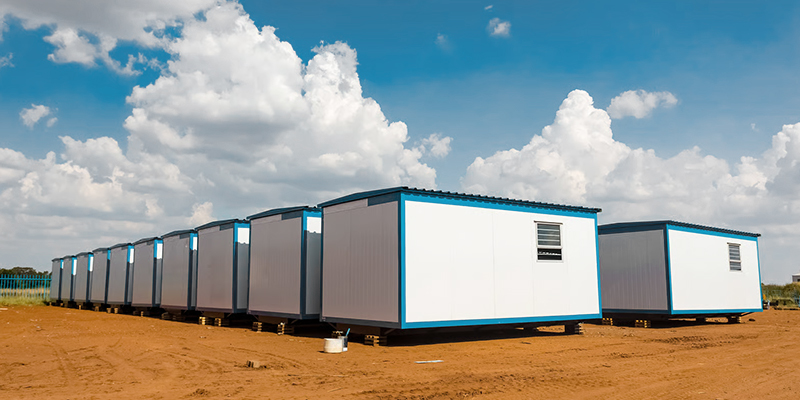
Standard boxes set the rules. A 20 ft container has internal dimensions of about 5.9 by 2.35 by 2.39 meters, or roughly 33 cubic meters of cargo space. A 40 ft high cube stretches that to about 12.0 by 2.35 by 2.69 meters, or roughly 76 cubic meters. Most prefabricated modules are engineered around these envelopes so they can ride ordinary vessels, ordinary trucks, and ordinary cranes. A bare used 20 ft box can cost around $2,500 in some markets, but a finished living module is a different product entirely: it carries insulation, wiring, plumbing, and interior finishes that must survive several thousand kilometers of road and sea.
What leaves the factory is essentially a building, not a kit of raw parts. In a well-run export order, the modules arrive with the following already completed:
- Structural frame with insulated wall and roof panels bonded and sealed
- Electrical wiring, outlets, and the distribution box installed and tested
- Plumbing runs, fittings, and sanitary fixtures mounted
- Flooring, wall finishes, and ceilings finished
- Doors, windows, and locks fitted and adjusted
In our own production, the SIP module system goes further and integrates structure, thermal insulation, electrical, plumbing, ventilation, interior decoration, and smart controls into units that are finished buildings in factory condition. Site crews then concentrate on foundations, lifting, bolting, and utility connections, which is exactly where their time should go.
How Different Container Home Modules Travel
Freight is charged mainly by volume and weight, so the module format you choose is really a shipping decision in disguise. The table below compares the four formats we ship most often and shows why the same floor area can occupy very different amounts of container space.
| Module format | Condition in transit | Typical units per 40 ft high cube | Key strength | Watch-outs |
|---|---|---|---|---|
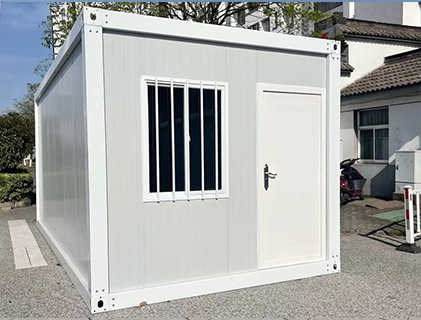
| Flat-pack assemble container house | Floor, roof, and wall panels stacked in bundles | About 4 | Lowest freight cost per unit of space | More bolting and sealing work on site |
| Large-corrugated folding container house | Walls fold down flat onto the floor | About 4 to 5 | Fastest opening; compact storage between uses | Corrugated panels need road-width checks on tight routes |
| Double-wing expandable container house | Side wings folded inward for transit | 1 to 2 | Nearly doubles the living area after unfolding | Fewer units per shipment; higher freight per square meter |
| Fully assembled 20 ft module | Ships complete on a flat rack or lifting frame | 1 | Almost no assembly work at destination | Highest freight and handling cost per unit |
Folding designs exist because of this arithmetic. A large-corrugated folding container room travels with its walls folded down onto the floor, which cuts its transit height dramatically, and then opens into a full building within hours once it reaches the site. For rental fleets, relief agencies, and contractors who move housing between projects, that combination of compact storage and fast opening is often worth more than a slightly lower price per module.
 Large Corrugated Folding Container RoomThis folding container room ships with walls folded down to cut transit height, then opens within minutes on site. Suited to relief agencies and contractors moving housing between projects where compact storage matters.View Product →
Whichever format you prefer, ask the supplier for a packing plan: the number of packages, the cubic meters and gross weight of each bundle, and the loading drawings for the container. Two suppliers quoting the same floor plan can differ substantially in shipped volume, and that gap shows up directly in your freight invoice. A serious manufacturer will send these documents without being asked twice.
Container Home Shipping by Sea: From Factory Gate to Your Site
Sea freight follows a fixed sequence, and knowing the sequence helps you hold everyone accountable. Each stage has deliverables you can and should demand in writing.
Loading, lashing, and export packing
Once production and factory inspection finish, modules are packed according to the approved plan and a full container load is booked with the carrier. At loading, bundles are lifted or pushed into the box, lashed with belts and support frames, and protected against the two classic enemies of a sea voyage: shifting and moisture. Panels should be wrapped, desiccant bags placed inside, and drainage holes checked. A supplier worth hiring photographs the loaded container from several angles and shares the images before the doors are sealed, because those photos become your evidence if anything arrives damaged.
Transit, clearance, and final delivery
Transit time depends on the lane. Sailing from Chinese ports to the US West Coast commonly takes about two to three weeks, while Northern Europe is closer to four to five, and schedules vary by carrier and season. While the vessel is at sea, the document set moves in parallel: commercial invoice, packing list, bill of lading, and certificate of origin. At destination, the shipment is declared, duties are assessed according to the local classification of the goods, port and handling charges are settled, and an inland truck carries the modules to the plot, where a crane sets them on the foundation.
Add the stages together and a practical planning window for a standard order is six to twelve weeks from deposit to modules standing on the foundation. Production time, ocean transit, and customs and inland handling all stack, and each one can stretch during peak season.
Container Home Shipping Costs: Where the Money Goes
The price on a factory quotation is only the first number in your budget. What you actually pay is the landed cost, which combines the module itself, the freight, the duties, and the work needed to make it usable on your plot. The chart below shows how those pieces typically split for a mid-sized flat-pack order shipped from a factory in China to an overseas project site. In this example, factory fabrication takes just over half of the total, while every logistics step shares the rest. Your own percentages will move with route, order size, and specification, so read the chart as a planning tool rather than a price promise.
Illustrative landed-cost breakdown for one exported flat-pack container home order
Factory fabrication and finishes: 55%
Foundation and on-site installation: 15%
Ocean freight, port to port: 12%
Customs clearance, duties, and taxes: 10%
Inland transport and crane at destination: 8%
Planning values for a mid-sized flat-pack order; real shares move with route, volume, and specification.
The fabrication share stays close to half in most quotations because the module itself is the product: structural steel, insulated panels, windows, wiring, plumbing, and finished interiors are all manufactured before anything is packed. Ocean freight looks modest at roughly 12 percent in this example, but it is the most volatile line, since fuel prices, seasonal demand, and lane congestion can move it by several points within a single quarter. Volume is the lever you control: every additional module that fits into the same high cube spreads the fixed booking, port, and documentation fees across more square meters of finished housing. That is why flat-pack and folding formats dominate export projects and why fully assembled units remain the exception.
Weight matters as well, because a specification with heavy cladding or thick steel can hit payload limits before it fills the cube, which forces a different packing plan. Customs duties and taxes depend on how the goods are classified at destination and on the trade agreements that apply, so two buyers in different countries can face very different percentages on identical modules. Inland transport and the destination crane are frequently underestimated, particularly for sites far from the port or reached by narrow roads. Foundation and installation costs swing with ground conditions: a level slab on firm soil is inexpensive, while sloping or soft ground demands real engineering. Notice also that many fees in this chain are charged per shipment rather than per module, which means small orders pay a disproportionately high share. Consolidating modules into fewer, fuller containers is usually the cheapest logistics decision available to a buyer. Finally, request quotations on identical delivery terms, because a delivered-duty price and an FOB price are not comparable until destination charges are made visible. When you follow this discipline, the freight line stops being a surprise and becomes a number you can negotiate.
| Delivery term | Supplier covers | Buyer manages | Best suited to |
|---|---|---|---|
| FOB | Production, export packing, and loading onto the vessel at the origin port | Ocean freight, insurance, destination charges, import clearance | Buyers with their own freight forwarder who want control of shipping |
| CIF | Production, packing, ocean freight, and insurance to the destination port | Import clearance, duties, inland delivery from the port | First-time importers who prefer the seller to handle the ocean leg |
| DAP | Transport all the way to a named site, excluding import duties and taxes | Import clearance and payment of duties and taxes | Buyers who want maximum supplier responsibility up to the project gate |
A few procurement risks deserve their own warning list, because they are the ones that quietly inflate final invoices:
- Quotations that exclude destination port charges, documentation fees, and handling
- Demurrage and detention bills when customs clearance stalls at the port
- Crane and labor costs priced separately on site and forgotten in the budget
- Moisture damage traced back to thin export packing or missing desiccants
- Volume miscalculated because no packing plan was ever requested
Matching Shipped Container Homes to Real Projects
The modules that travel well are the same modules that serve four broad scenario families, and each family rewards a different shipping priority. Reading your own project against these four cards is the fastest way to narrow the format choice.
Emergency Buildings
Disaster relief housing and temporary clinics that must land, open, and operate within days of arriving.
Commercial Spaces
Cafes, offices, bars, and exhibition halls where finish quality matters and glass needs careful protection in transit.
Living Spaces
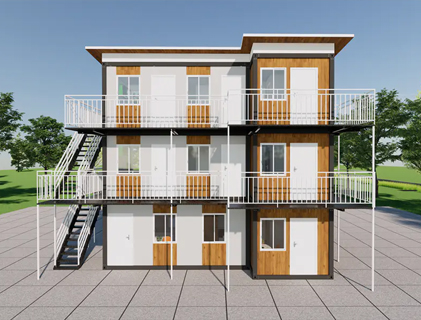
Apartments, worker dormitories, homestays, and container villas where insulation and comfort drive the specification.
Project Support
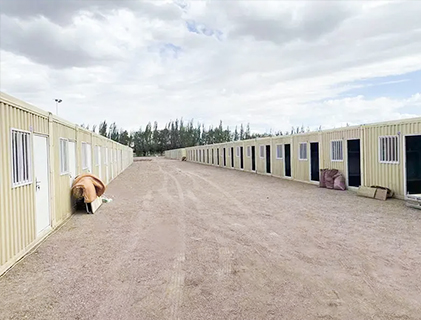
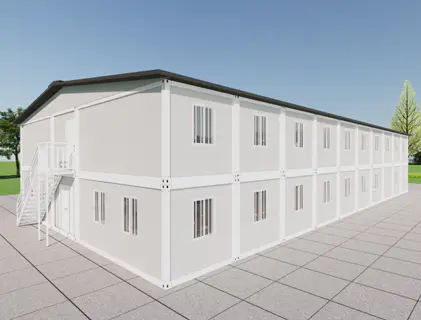
Construction site camps and warehousing that receive repeated shipments and reward durable, stackable formats.
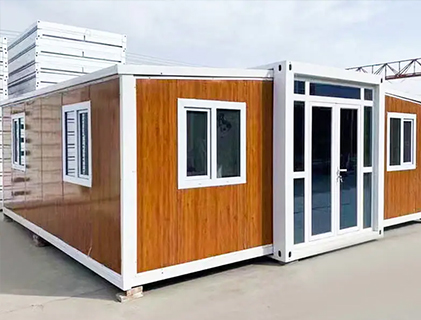
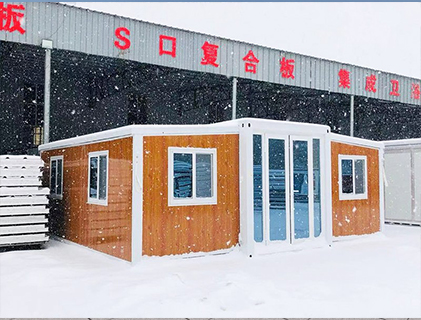
For living projects, the residential double-wing expandable container house is the format built around comfort. It travels with both wings folded inward, occupies little more than a standard box in transit, and opens to nearly double its shipped footprint on site. That profile suits villas, homestays, and family housing, where interior space matters more than squeezing one extra unit into the container.
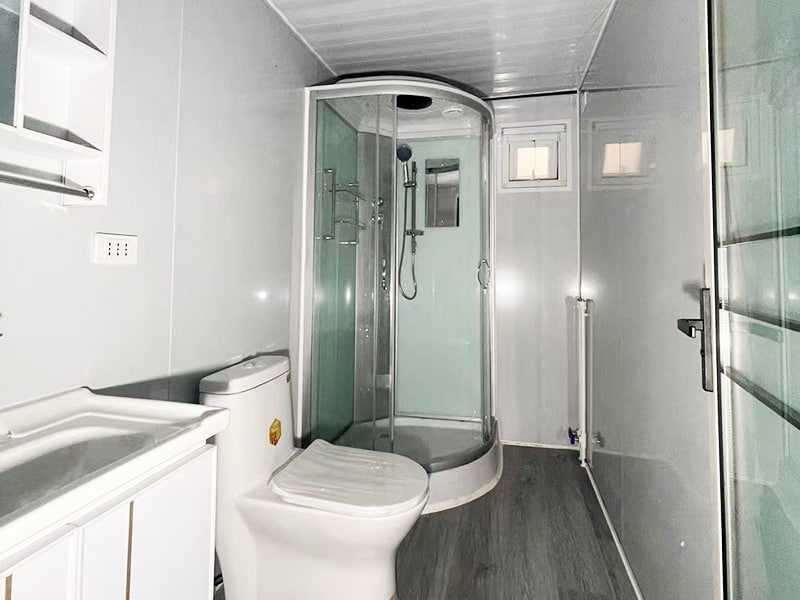 Residential Double-Wing Expandable Container RoomDelivered fully furnished with wood-grain walls and a built-in bathroom, this double-wing unit travels compact and expands to nearly double its footprint, making it a comfortable option for villas and family housing.View Product →
Commercial accommodation operators usually choose the opposite trade-off. Hotel-style quick-assembled modules ship flat, assemble in days, and arrive with interior finishes already in place, which shortens the gap between the vessel arriving and the first guest checking in.
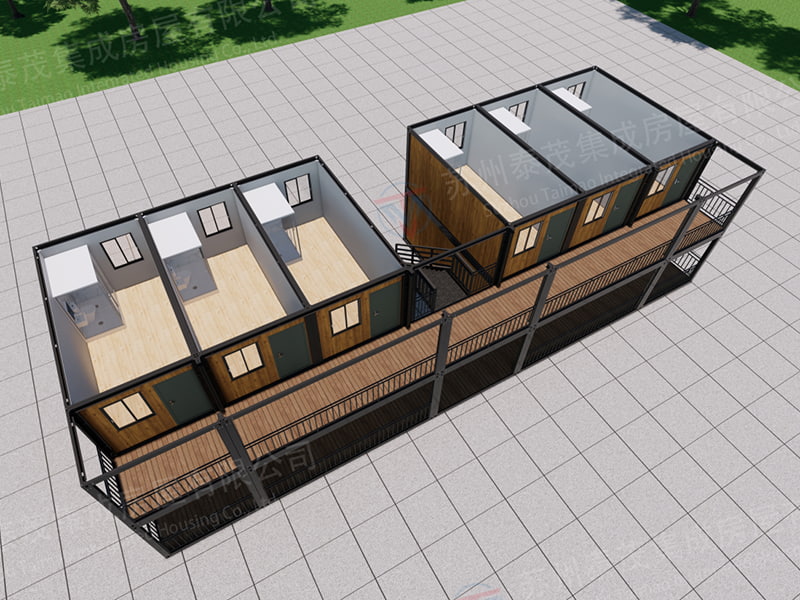 Philippine Hotel-Style Quick-Assembled Container RoomThese flat-packed modules arrive with finished interiors, private bathrooms, and gable roofing for tropical rain, letting hotel and resort operators open rooms within days of the vessel arriving.View Product →
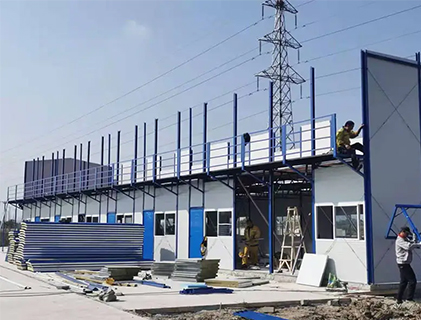
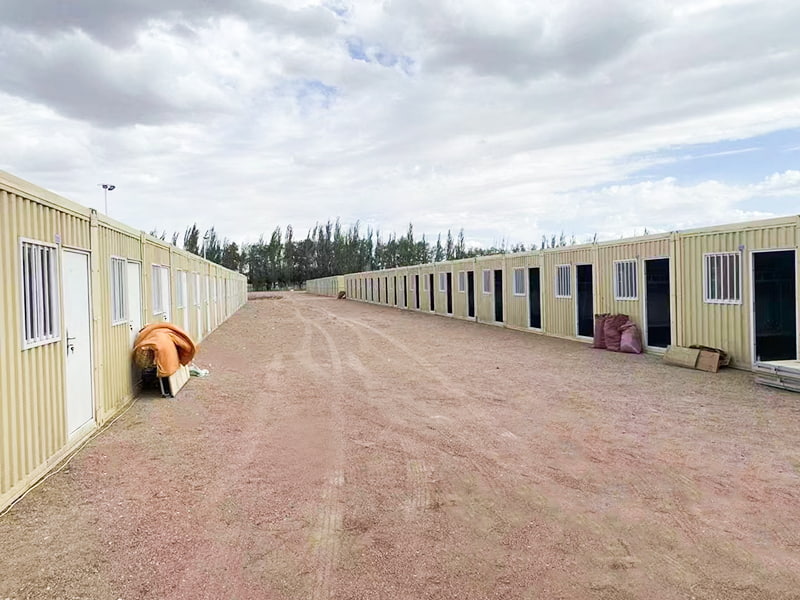
Contractors running site camps tend to buy in waves: a first shipment of dormitory and K-type modules, then follow-up containers as the workforce grows. Repetition is the point. Once the first shipment has validated the packing plan and trained the assembly crew, every later shipment is cheaper to freight and faster to receive.
Choosing a Manufacturer or Supplier for Export Orders
A container house manufacturer with its own production lines will handle your shipment differently from a trader who resells. Direct factories control packing quality, adapt modules to your market, and put engineering staff behind your questions. When we ship to markets such as Korea, Malaysia, Myanmar, the Philippines, and Vietnam, the packing plan and the assembly drawings are prepared by the same team that built the modules, which is exactly what you want when something needs to change quickly. Whether you buy direct from a factory or through a wholesaler, the checklist below separates a reliable partner from a risky one.
- Confirm export experience: ask which countries the factory has shipped to and whether it can share reference projects in your region.
- Demand a packing plan listing packages, cubic meters, and gross weight per module before you compare prices.
- Check which standards the modules meet for your market, including structural, electrical, and thermal requirements.
- Make sure every quote states its delivery term, whether FOB, CIF, or DAP, so the comparison is honest.
- Get a written list of what the factory completes and what your site crew must finish.
- Ask how spare parts, replacement panels, and technical support are handled after delivery.
- Confirm production lead time and how vessel space is secured during peak season.
- Request loading photos and lashing records for every shipment as standard practice.
Notice that none of these eight points asks for a discount. They ask for evidence. A supplier who answers quickly, precisely, and with documents will almost always ship more predictably than one who competes on price alone, and predictable shipping is worth real money in a construction schedule.
Site Preparation, Installation, and Maintenance After Arrival
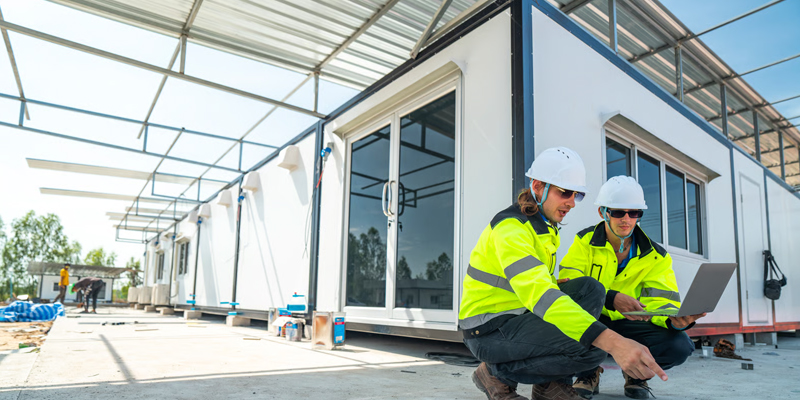
The best packing plan in the world cannot rescue an unprepared site. Before the vessel even sails, close out the ground side of the project: foundation, access, utilities, and permits. Most flat-pack and folding modules sit on concrete strip footings, a level slab, or adjustable steel piers, and the right choice depends on soil and local practice. What matters most is levelness within the tolerance your supplier specifies, because modules interlock with each other and any twist shows up immediately in door and window frames.
| You prepare before the modules arrive | Your supplier and installation crew handle |
|---|---|
|
|
Assembly speed is one of the quiet advantages of this building method. Flat-pack dormitory modules commonly reach weathertight condition within days with a small crew, folding units open within hours of landing, and a double-wing home unfolds in a single working day once the foundation is ready. Compared with conventional construction, the site phase is short enough that you should book the crane and the crew before the vessel departs, not after it docks.
Maintenance that protects the investment
A shipped container home needs little attention, but five habits keep it performing for the long term:
- Inspect roof drainage and sealant joints once a year, ideally before the rainy season
- Touch up paint chips on the steel frame promptly to stop corrosion from spreading
- Check structural bolts after the first season of temperature swings
- Keep ventilation paths clear to manage condensation in humid climates
- Rinse corrugated surfaces in coastal areas to remove salt deposits
Frequently Asked Questions About Container Home Shipping
How much does container home shipping cost?There is no fixed number, because freight moves with route, fuel prices, season, and volume. In the illustrative breakdown earlier in this article, ocean freight took about 12 percent of the landed cost of a mid-sized flat-pack order, and shares between roughly 8 and 20 percent are common depending on distance and order size. The reliable way to budget is to ask each supplier for a packing plan with cubic meters and gross weight, then compare quotes written on the same delivery term. |
How many container homes fit inside one 40 ft container?It depends on the format. Flat-pack assemble modules typically pack about four dwelling units per 40 ft high cube, folding models about four to five, and double-wing expandable homes one to two because their folded structure is bulkier. A fully assembled module ships one per flat rack. Always confirm the counts against the supplier's loading drawings, because ceiling height, window placement, and insulation thickness all change the arithmetic. |
Can a container home be shipped fully assembled?Yes. A finished module can travel on a flat rack or be lifted on and off the vessel as breakbulk cargo. The trade-off is cost: you pay for the volume the module occupies rather than a compact bundle, plus heavy-lift handling at both ports. Buyers choose this route when site labor is scarce or when a unit must be operational almost immediately after arrival. |
How long does container home shipping take door to door?Plan on six to twelve weeks for a standard order. Production commonly takes three to six weeks depending on configuration and factory workload, ocean transit adds roughly two to six weeks depending on the lane, and customs clearance plus inland delivery usually needs another one to two weeks. Custom specifications, peak-season vessel space, and port congestion can extend the timeline, so build buffer into your project schedule. |
Which documents are involved in an international container home shipment?The core set includes the commercial invoice, packing list, bill of lading, and certificate of origin. Depending on the destination, you may also need certificates covering structural, electrical, or thermal standards. A manufacturer that exports regularly will prepare the shipping documents and tell you early which certificates your market requires, so raise this question during supplier selection rather than at the port. |
Do I need a foundation and permits before the modules arrive?For nearly every permanent installation, yes. Strip footings, a level slab, or adjustable piers are the common options, and the choice depends on ground conditions and local practice. Permits and zoning approvals are governed by your local authority and vary widely between countries and even between municipalities. Ask your supplier for foundation drawings and engineering data early, because local engineers will need them to complete the approval. |
Related Guides and Project References
If you want to go deeper before requesting a quotation, these two resources on our site pair naturally with this article and cover the decisions that come before and after the shipment itself.
- Complete guide to container house design, cost, and modern living: layouts, budgets, and living considerations that shape what you actually order from the factory.
- Apartments, dormitories, and container villa case studies: delivered living-space projects that show how modules perform once they leave the port.
For exclusive deals and latest offers, sign up by entering your email address below.

-
TEL:+86 18762912902
-
Email:cntaimao@163.com
-
WhatsApp:
-
Add:Group 5, Cao Village, Zhenze Town, Suzhou, Jiangsu, China
Copyright © Suzhou Taimao Integrated Housing Co., Ltd.
All Rights Reserved.
 Wholesale movable homes for sale
custom built modular homes
Wholesale movable homes for sale
custom built modular homes