

 EN
EN
 русский
 Español
 عربى
عربى Français
Is a Modular Container Homestay Better Than Traditional Buildings?
Admin 2026-06-01Content
- 1 The Direct Answer: Yes, Modular Container Homestays Outperform Traditional Builds in Most Key Areas
- 2 Construction Timeline: How Fast Can a Prefab Homestay Be Ready?
- 3 Vietnam's Container Homestay Boom: Market Data and Growth Trends
- 4 Structural and Thermal Performance: What the Specs Actually Mean for Guests
- 5 Design Flexibility and Guest Experience in Modular Homestays
- 6 Environmental Credentials: Comparing the Carbon Footprint of Each Approach
- 7 Investment Return Profile: A Comparative Financial Analysis
- 8 About Suzhou Taimao Integrated Housing Co., Ltd.
- 9 Frequently Asked Questions
The Direct Answer: Yes, Modular Container Homestays Outperform Traditional Builds in Most Key Areas
When hospitality investors compare a modular container homestay against a traditionally constructed guesthouse, the data consistently favors the prefab approach — not just in cost efficiency, but in speed, design flexibility, environmental footprint, and long-term scalability. A well-engineered quick-assembled container room can be operational in a fraction of the time required for brick-and-mortar construction, without sacrificing comfort, aesthetics, or structural integrity.
This is not a niche trend. Across Southeast Asia — particularly in booming tourism markets such as Vietnam — container accommodation units are rapidly becoming the preferred format for boutique resorts, glamping destinations, and eco-lodges. From the misty highlands of Sa Pa to the coastal stretches of Phu Quoc, the Vietnam container homestay model has demonstrated that speed-to-market and design ambition are no longer mutually exclusive. The shift is structural, not cosmetic.
In the sections below, we examine every dimension of this comparison — construction timeline, structural performance, guest experience, environmental credentials, and investment logic — using real data and industry benchmarks to give you a clear, honest picture.
Construction Timeline: How Fast Can a Prefab Homestay Be Ready?
One of the most compelling arguments for choosing a prefab homestay over conventional construction is the dramatic difference in project timeline. Traditional masonry or concrete guesthouses in tropical regions typically require 8 to 18 months from groundbreaking to first guest check-in. Permitting, foundation curing, structural framing, MEP rough-in, plastering, and finishing all proceed sequentially on-site — each phase dependent on the last.
By contrast, a modular container house built using factory-prefabricated panels and frames compresses this timeline to between 4 and 10 weeks for most small-to-mid-scale projects. The structural shell, insulation layers, interior wall finishes, electrical conduit, and plumbing rough-in are all completed in the factory while site preparation (foundation, utilities, landscaping) proceeds in parallel. When modules arrive, final assembly typically takes days, not months.
Average Project-to-Completion Timeline (Weeks)
Based on industry benchmarks for small-to-mid-scale hospitality builds (4–20 units) in Southeast Asia
The chart above illustrates a stark reality for hospitality investors: every week a property is under construction is a week of lost revenue. For a container hotel room or boutique eco-lodge targeting peak tourist seasons, the ability to go from signed contract to open doors in under 10 weeks is a decisive competitive advantage. This speed advantage alone often justifies the choice of a prefab resort room format over conventional construction, particularly in markets where seasonal tourism windows are narrow and financing costs accumulate daily.
Vietnam's Container Homestay Boom: Market Data and Growth Trends
Vietnam has emerged as one of Southeast Asia's fastest-growing boutique tourism markets, with international arrivals recovering strongly and domestic travel surging post-pandemic. Within this context, the Vietnam container homestay segment has experienced exceptional momentum. Platforms like Airbnb and Booking.com report disproportionately high listing growth for non-traditional accommodation formats — container cabins, prefab glamping units, and modular eco-rooms — in provinces such as Lam Dong, Khanh Hoa, and Quang Ninh.
Data from regional hospitality consultancies indicates that modular container house projects in Vietnam's tourism belt have grown at a compound annual rate exceeding 35% since 2020. This growth is driven by three convergent forces: increasing land scarcity in prime tourist zones (which rewards compact, efficient footprints), rising traveler appetite for "architectural experience" accommodation, and the entry of tech-forward developers who understand the financial logic of prefab construction.
Vietnam Container Homestay Listings Growth Index (2019 = 100)
Estimated index based on regional hospitality market data; 2020 reflects pandemic-related dip
The growth trajectory shown above is not a temporary spike. Vietnam's tourism infrastructure is still maturing, and the availability of turnkey quick-assembled container rooms has lowered the barrier to entry for small-scale hospitality investors who previously could not afford the capital outlay or construction timeline of conventional resort development. This democratization of boutique hospitality development is reshaping the landscape of rural and coastal tourism destinations across the country.
A homestay container house in a well-positioned location — say, a hillside in Da Lat or a beachfront plot in Da Nang — can achieve occupancy rates of 65–80% during peak season, with average daily rates competitive with mid-range boutique hotels. The combination of lower build cost, faster deployment, and strong guest demand creates a financial profile that traditional construction methods simply cannot replicate at the same scale.
Structural and Thermal Performance: What the Specs Actually Mean for Guests
A common misconception is that speed and modularity come at the expense of structural quality. In practice, well-engineered modular container accommodation units — particularly those built around SIP (Structural Insulated Panel) technology — perform comparably or superiorly to conventional construction on the metrics that matter most to guests: thermal comfort, acoustic isolation, wind and seismic resistance, and long-term durability.
SIP panels used in modern prefab cabin and container cabin systems achieve R-values between R-14 and R-28 depending on core thickness, significantly outperforming standard timber-frame or single-skin steel construction. In tropical climates — precisely where most Vietnam homestay projects are located — this thermal performance directly translates to lower air conditioning loads, reduced energy bills, and more comfortable interiors.
Performance Radar: Modular Container vs. Traditional Build (Score out of 10)
Composite scores based on industry benchmarks; traditional build scores reflect typical masonry or timber-frame construction in tropical climates
The radar chart above reveals a nuanced competitive picture. Modular container construction leads clearly on build speed, sustainability, and cost efficiency, while traditional builds maintain parity on structural strength and show modest advantages in thermal mass for specific climates. Crucially, the gap in design flexibility has narrowed dramatically in recent years: modern prefab resort rooms can be configured with floor-to-ceiling glazing, cantilevered decks, curved rooflines, and fully custom interior schemes — design elements that were previously considered the exclusive domain of site-built architecture.
Acoustic performance is another area where container hotel rooms built on SIP technology punch above their weight. The dense foam core of a SIP panel delivers sound transmission class (STC) ratings of 40–50, meaning guests in adjacent units experience meaningful noise isolation — a critical comfort metric for boutique hospitality that is difficult to achieve in lightweight conventional construction without expensive additional treatments.
Design Flexibility and Guest Experience in Modular Homestays
Modern travelers — particularly the millennial and Gen Z demographic that drives boutique accommodation bookings — increasingly make destination decisions based on the visual and experiential uniqueness of the property. A container cabin perched on a hillside, a prefab cabin nestled in bamboo forest, or a cluster of modular container houses arranged around a natural swimming pool: these are the kinds of images that generate social media sharing and direct bookings.
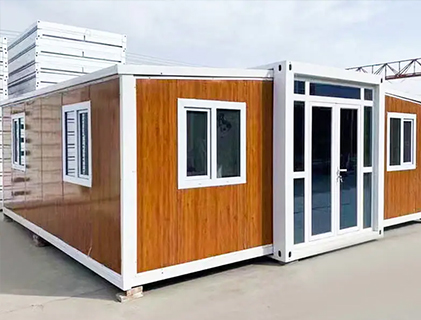
Contemporary factory-built container accommodation units are no longer the industrial-looking steel boxes of early container architecture. Leading manufacturers now offer a broad menu of exterior cladding options — wood composite panels, fiber cement boards, stone veneer, corrugated color steel, and glass curtain systems — that can be applied to modular structures without structural modification. Interior fit-out follows the same logic: because all MEP (mechanical, electrical, plumbing) work is pre-completed in the factory, interior designers work from a clean, ready canvas when modules arrive on-site.
Key Design Features Available in Today's Modular Homestay Units
- Floor-to-ceiling sliding glass walls that open entirely to outdoor decks or natural landscapes
- Pre-integrated smart home systems: app-controlled lighting, climate, and security from the factory
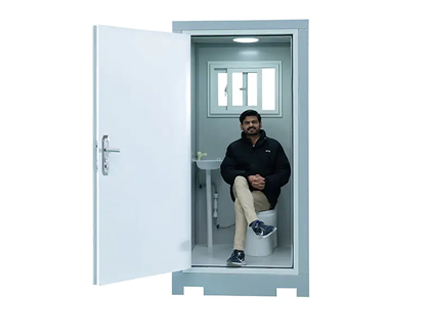
- Modular bathroom pods with pre-tiled wet rooms, glass enclosures, and freestanding bathtubs
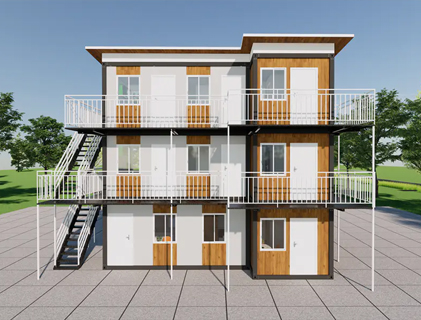
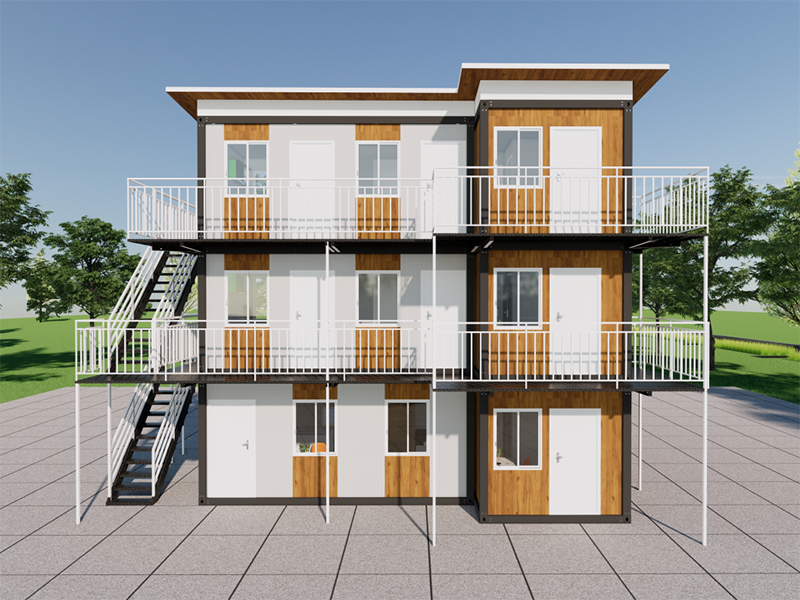
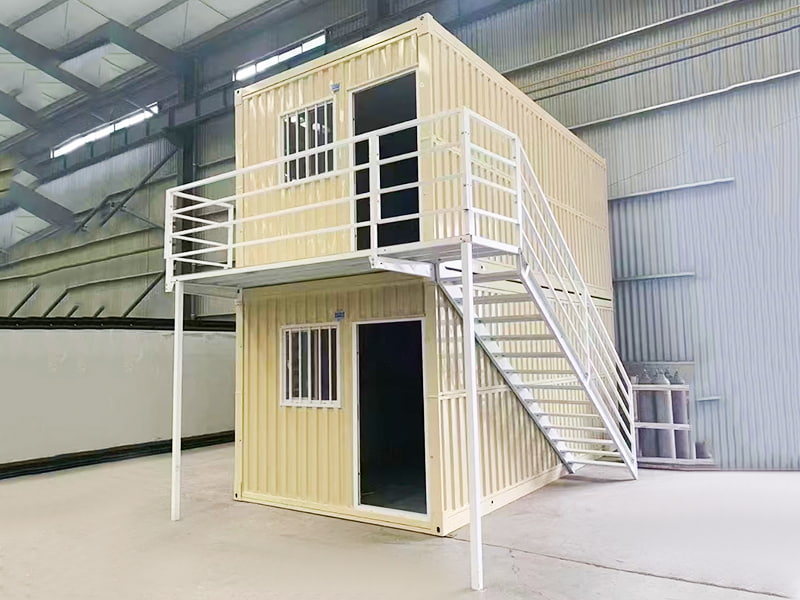
- Multi-story configurations achieved by stacking and connecting modules with structural connectors
- Custom roof forms including pitched, butterfly, green-roof, and rooftop deck configurations
- Integrated HVAC and ventilation systems concealed within the module structure for clean interiors
This breadth of customization means a prefab homestay project can be architecturally distinctive without requiring bespoke construction methods. The factory handles the complexity; the site receives a refined, ready-to-finish product. For investors developing a Vietnam Homestay Building in a competitive tourist destination, this combination of speed and design quality is transformative.
Environmental Credentials: Comparing the Carbon Footprint of Each Approach
Sustainability is no longer a marketing add-on for hospitality developers — it is increasingly a baseline expectation from travelers, governments, and financiers alike. In this dimension, modular container homestay construction demonstrates measurable advantages over traditional building methods across multiple environmental metrics.
Factory prefabrication generates approximately 50–70% less construction waste compared to on-site builds, according to lifecycle analysis studies conducted in the Asia-Pacific construction sector. The precision of factory cutting and assembly means that materials are used with far less over-ordering and off-cut waste. Additionally, the majority of construction activity is consolidated at the factory, dramatically reducing the vehicle movements, site machinery hours, and associated emissions that characterize conventional construction.
Environmental Performance: Modular vs. Traditional Construction
Indexed comparison (Traditional = 100); lower values indicate better environmental performance. Based on Asia-Pacific construction lifecycle analysis data.
The environmental advantages of modular container house construction are not limited to the build phase. During operation, the superior thermal envelope of SIP-based modules reduces HVAC energy consumption by an estimated 30–45% compared to equivalent-sized rooms built with single-skin masonry or lightweight timber framing in tropical climates. For a 20-unit prefab resort operating year-round, this operational efficiency compounds into substantial cost savings and a measurably lower carbon footprint over the building's lifetime — a factor that is increasingly relevant as carbon disclosure requirements extend into the hospitality sector across Southeast Asia.
Investment Return Profile: A Comparative Financial Analysis
Beyond the construction and operational dimensions, the investment return profile of a container homestay project versus a traditional build deserves careful analysis. The key financial variables are: total capital expenditure, time-to-revenue, operating cost structure, scalability, and residual asset value.
On total capital expenditure, prefab cabin and container-based projects typically deliver 20–40% cost savings versus equivalent traditional builds in Vietnam and comparable Southeast Asian markets. These savings derive from reduced labor hours (factory assembly is more efficient than site labor), lower material waste, compressed financing periods (the project reaches revenue faster), and elimination of weather delays that routinely inflate traditional construction budgets.
| Metric | Modular Container | Traditional Build |
|---|---|---|
| Construction Timeline | 6–10 weeks | 28–48 weeks |
| Relative Build Cost | 60–80% of traditional | Baseline |
| Annual Energy Running Cost | 30–45% lower | Baseline |
| Scalability (adding units) | Add units in weeks | Major renovation cycle |
| Estimated Payback Period | 3–5 years (indicative) | 6–10 years (indicative) |
| Relocation / Reuse Value | High (modules relocatable) | None |
The scalability advantage of container accommodation units deserves particular attention. A traditional homestay that wants to expand from 10 to 20 units faces a new construction project of comparable complexity to the original build — with all the associated disruption, permitting, and timeline uncertainty. A modular property, by contrast, can expand by ordering additional factory-built units that slot into the existing site layout and connect to pre-planned utility hookups. This modularity transforms the business model from a fixed-capacity investment to a scalable hospitality platform.
About Suzhou Taimao Integrated Housing Co., Ltd.
Suzhou Taimao Integrated Housing Co., Ltd. specializes in delivering globally certified modular building solutions, offering industry-leading modular design, proprietary manufacturing technologies, and end-to-end digital software support. Our mission is to accelerate project timelines, boost operational efficiency, minimize ecological impact, and uphold uncompromising standards of quality and safety.
Our flagship SIP (Structural Insulated Panel) modular building system integrates structure, insulation, MEP (mechanical, electrical, plumbing), HVAC, interior finishes, and smart home technologies into a single, unified solution. This rapid assembly technology shifts the majority of on-site construction and finishing work to controlled factory environments. Once prefabricated modules are shipped to the project site, on-site assembly can be completed in just days — or even hours. Our modular solutions are defining the future of sustainable construction.
Whether you are developing a Vietnam container homestay, a coastal prefab resort room cluster, a mountain container cabin retreat, or a large-scale container hotel room complex, Taimao's factory-to-site delivery model gives you the speed, quality, and design flexibility to compete in today's demanding hospitality market. Our global certification portfolio and in-house engineering team support projects from initial concept through to final commissioning across Southeast Asia, the Middle East, Africa, and beyond.
Frequently Asked Questions
Q1: How long does it take to complete a modular container homestay project from order to handover?
A: For a typical small-to-mid-scale project of 5–20 units, the factory production and on-site assembly cycle generally ranges from 6 to 12 weeks from confirmed order to guest-ready handover. Site preparation (foundation, utilities access) can proceed in parallel with factory production, further compressing the overall timeline. Larger or more complex projects may require additional time for engineering review and logistics coordination.
Q2: Are container homestay and prefab cabin structures durable enough for tropical climates like Vietnam?
A: Yes. Modern modular container houses built on hot-dip galvanized steel frames with SIP panel cladding are engineered for tropical performance: they resist humidity, salt air, and wind loads common in coastal and highland Vietnam environments. SIP panels provide superior thermal insulation compared to single-skin alternatives, reducing interior heat gain and moisture-related degradation over time. Factory-applied protective coatings and sealants further extend service life in demanding climates.
Q3: Can the design of a prefab resort room or container hotel room be customized to match a specific aesthetic?
A: Absolutely. Contemporary prefab homestay and container cabin systems offer extensive customization across exterior cladding materials, roofline profiles, window and door configurations, interior finishes, bathroom pod specifications, smart home integration, and furniture packages. The factory production model does not limit design — it systematizes delivery of a custom design. Our engineering team works with clients' architects or provides in-house concept development services as part of the project scope.
Q4: What certifications do Taimao's modular container accommodation units hold?
A: Taimao's modular container house and SIP building systems carry globally recognized certifications covering structural engineering, fire resistance, thermal performance, and electrical safety. Specific certification packages are configured to meet the regulatory requirements of the destination country. For Vietnam-based projects, our team coordinates with local authorities to facilitate compliant permitting documentation as part of the project delivery process.
Q5: Is it possible to expand a container homestay project after initial completion — for example, adding more units in a second phase?
A: This is one of the strongest structural advantages of modular construction. Because each quick-assembled container room is a self-contained module with standardized connection interfaces, additional units can be ordered and installed without disturbing existing operational structures. Second-phase units are typically delivered and installed within the same 6–10 week window as the original build. Pre-planning utility hookup capacity for future phases is recommended during initial site design and is a standard element of Taimao's project planning service.
For exclusive deals and latest offers, sign up by entering your email address below.

-
TEL:+86 18762912902
-
Email:cntaimao@163.com
-
WhatsApp:
-
Add:Group 5, Cao Village, Zhenze Town, Suzhou, Jiangsu, China
Copyright © Suzhou Taimao Integrated Housing Co., Ltd.
All Rights Reserved.
 Wholesale movable homes for sale
custom built modular homes
Wholesale movable homes for sale
custom built modular homes