

 EN
EN
 русский
 Español
 عربى
عربى Français
How Many Workers Can a Container Dormitory House?
Admin 2026-06-09Content
- 1 How Many Workers Can a Container Dormitory House?
- 2 Capacity Planning: How Many Workers Fit in a Container Camp?
- 3 Why Container Dormitories Are the Preferred Choice for Myanmar Construction Sites
- 4 Key Features That Define a Quality Quick-Assembled Container Room
- 5 Service Life, Reusability, and Total Cost of Ownership
- 6 Worker Comfort and Welfare Standards in Modular Labor Camps
- 7 Selecting the Right Container Room Supplier for Myanmar Projects
- 8 About Suzhou Taimao Integrated Housing Co., Ltd.
- 9 Frequently Asked Questions
How Many Workers Can a Container Dormitory House?
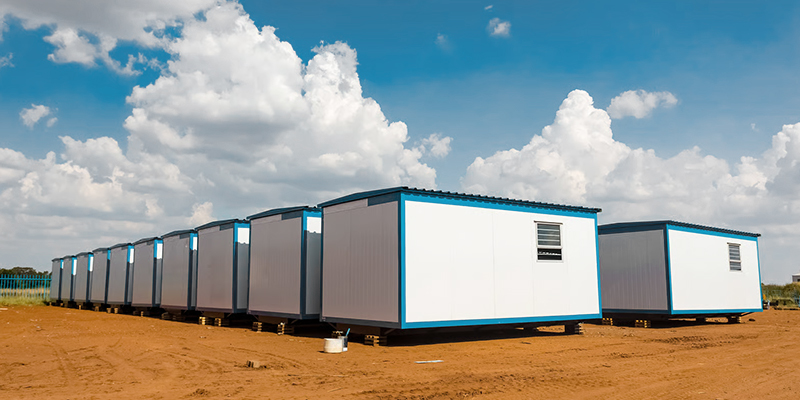
A standard container dormitory unit measuring 6 meters by 3 meters can comfortably house 4 to 6 workers in a shared configuration. When stacked into two- or three-story modular labor camp arrangements, a single project site can accommodate anywhere from 50 to over 500 workers using a fraction of the land footprint required by conventional brick-and-mortar dormitories. For large infrastructure and civil engineering projects in markets such as Myanmar, this capacity-to-footprint ratio is one of the most decisive factors in housing plan selection.
The Myanmar Construction Site Temporary Dormitory Quick-Assembled Container Room has become the benchmark solution for workforce housing across Southeast Asia precisely because it delivers on three metrics simultaneously: fast installation measured in hours, not weeks; redeployable assets that follow projects across sites; and living standards that support worker wellbeing and retention over multi-year project cycles. The sections below examine each of these dimensions in detail, with data drawn from actual camp deployments and industry benchmarks.
Capacity Planning: How Many Workers Fit in a Container Camp?
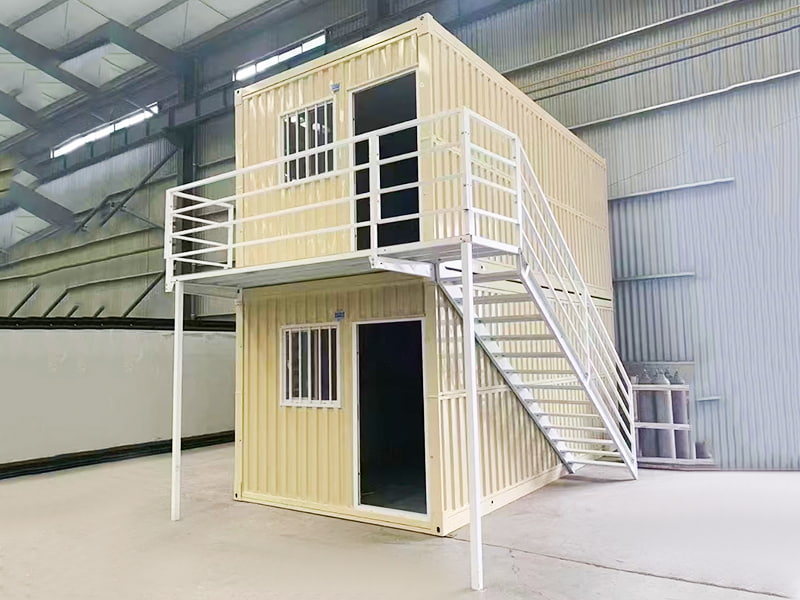
Capacity planning for a construction site dormitory begins with the individual unit specification. A standard 20-foot ISO container, when converted into a prefab dormitory module, provides approximately 14.4 square meters of usable interior space. International labor welfare guidelines recommend a minimum of 3.5 to 4.5 square meters per worker for sleeping quarters, which places the single-unit capacity at 3 to 4 workers in a wellness-compliant configuration, or up to 6 workers in projects where cost compression is the overriding constraint.
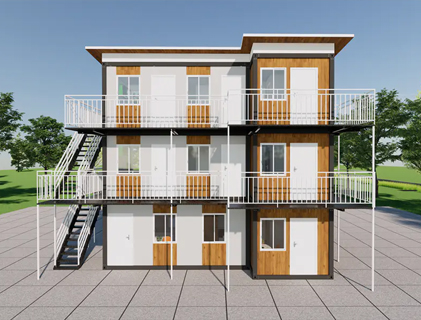
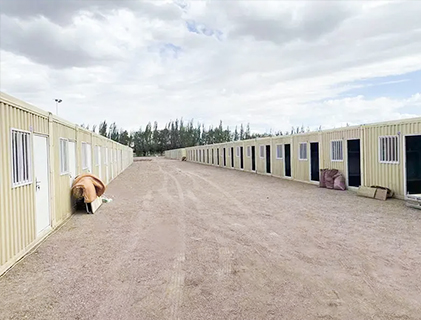
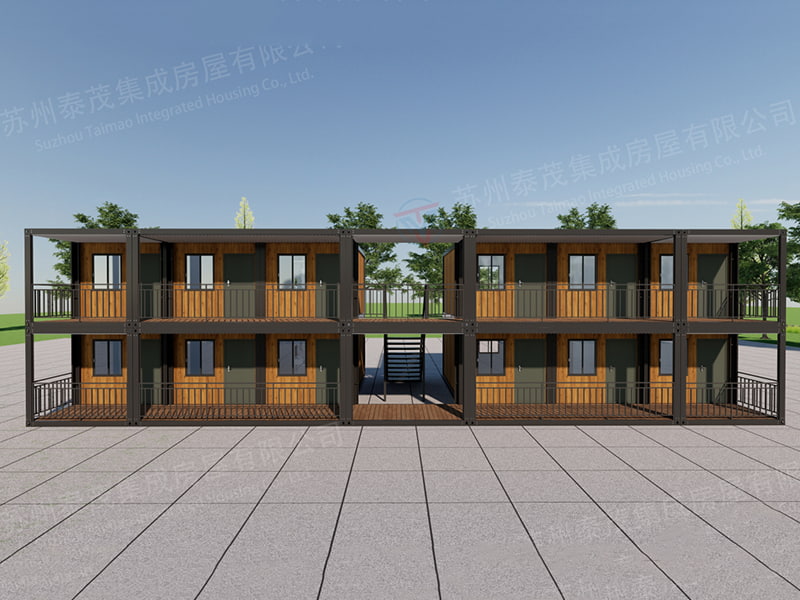
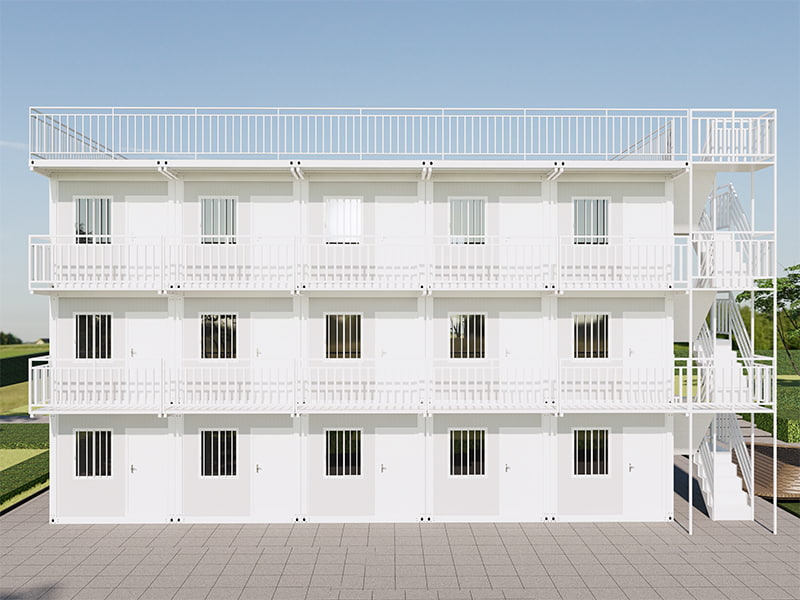
Multi-story stacking changes this calculation significantly. A portable dormitory building arranged as a two-story, 10-unit block houses 40 to 60 workers on a site footprint of roughly 18 meters by 7 meters. A three-story, 30-unit modular labor camp Myanmar installation, which is common on large dam, highway, and industrial park projects, can accommodate 180 to 240 workers in a managed camp layout with shared sanitation, dining, and recreation facilities. A project workforce of 500 workers typically requires approximately 100 standard container modules plus supporting utility units for washrooms, kitchens, and offices.
Capacity by Configuration Type
| Configuration | No. of Modules | Workers Housed | Footprint (approx.) | Assembly Time |
|---|---|---|---|---|
| Single unit | 1 | 4 to 6 | 18 sqm | 2 to 3 hours |
| Single-story, 10-unit row | 10 | 40 to 60 | 180 sqm | 2 to 3 days |
| Two-story, 20-unit block | 20 | 80 to 120 | 180 sqm | 5 to 7 days |
| Three-story, 60-unit camp | 60+ | 240 to 360 | 360 sqm | 12 to 18 days |
| Full camp, 100+ units | 100+ | 400 to 600 | 600+ sqm | 20 to 30 days |
This horizontal bar chart compares maximum worker capacity across five standard container camp configurations, from a single unit to a full camp of 100 or more modules. The scaling relationship is nearly linear with the number of units, confirming that the modular approach is highly predictable for project planners. A three-story 60-unit camp delivers 360 berths on roughly the same footprint as a single-story 20-unit arrangement, demonstrating the land efficiency gains from vertical stacking. The 100-plus unit full camp format, which is typical on large infrastructure projects in Myanmar and the wider ASEAN region, can house up to 600 workers and still be assembled within 20 to 30 days from the date modules arrive on site. Understanding this capacity curve allows project managers to right-size their container dormitory procurement without over-investing in surplus capacity during early project phases.
Why Container Dormitories Are the Preferred Choice for Myanmar Construction Sites
The combination of climate conditions, infrastructure constraints, and rapid project mobilization timelines that characterizes construction activity in Myanmar makes the Myanmar container house format particularly well suited to the local market. Conventional brick-and-mortar worker accommodation requires 3 to 6 months to construct, demands locally sourced skilled labor, and leaves a permanent structure on the site that the project owner cannot recover or redeploy.
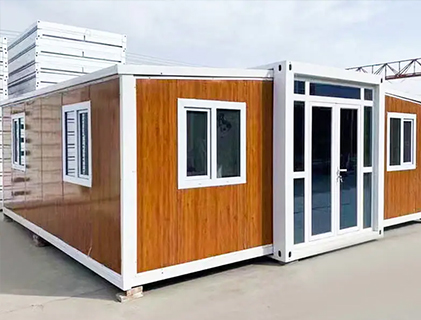
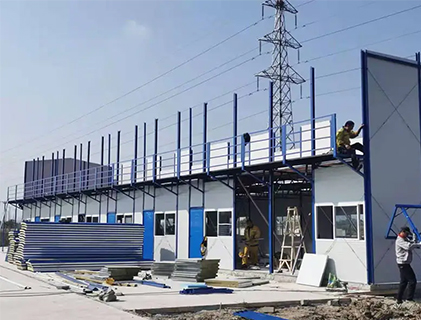
By contrast, a quick assembled container room can be operational within 2 to 3 hours of delivery. The units arrive pre-fitted with electrical wiring, LED lighting, wall-mounted air conditioning provisions, and insulated wall panels suited to tropical climates. A crew of 4 to 6 workers with a forklift or crane can complete the placement, connection, and inspection of a single unit within a single work shift. For a project mobilizing 200 workers simultaneously, this means fully operational camp accommodation in 7 to 10 working days rather than the 3 to 6 months required for site-built alternatives.
Climate Performance in Tropical Conditions
Myanmar's construction season runs year-round, with average temperatures exceeding 35 degrees C during the dry season and sustained rainfall during the monsoon months from May to October. The construction site dormitory Myanmar units designed for this environment incorporate 50mm to 75mm thick polyurethane foam sandwich panels for the roof and walls, achieving a thermal resistance value that reduces internal peak temperatures by 8 to 12 degrees C compared to uninsulated metal structures. Ground-level units are installed on adjustable steel pedestals or concrete plinths to prevent monsoon flooding and maintain structural alignment on uneven site terrain.
This column chart compares the time to operational housing across five common site accommodation approaches at different workforce scales. Container dormitory solutions deliver housing in 10 days for 50 workers and 18 days for 200 workers, compared to 90 and 150 days respectively for prefabricated brick and conventional construction. Even timber camp solutions, which are sometimes used as a low-cost alternative in forested project areas, require 45 days to house 200 workers -- more than twice the container timeline. The speed differential is not a minor convenience; in a typical construction contract where labor mobilization delays cost USD 5,000 to 20,000 per day in productivity loss, getting 200 workers on site 130 days earlier than a conventional dormitory would permit represents a substantial project value recovery. This is the core financial justification for the container accommodation model on large Myanmar construction and infrastructure projects.
Key Features That Define a Quality Quick-Assembled Container Room
Not all portable dormitory buildings deliver the same performance in field conditions. The market for container camp solutions Myanmar includes units spanning a wide quality range, and understanding the technical differentiators separates a 5-year liability from a 20-year asset. The following features characterize a well-engineered quick assembled container house.
Structural Frame and Load Ratings
The primary frame of a quality temporary worker housing unit is fabricated from hot-dip galvanized Q345 structural steel sections with a minimum wall thickness of 2.0 mm. Corner castings conform to ISO 1161 standards, enabling standard ISO twist-lock connections for stacking up to three stories without additional structural reinforcement. The design wind load rating should cover at least Category 3 tropical cyclone conditions, equivalent to sustained wind speeds of 120 to 150 km/h, which encompasses the windstorm conditions experienced across Myanmar's coastal and delta construction zones.
Insulation and Thermal Performance
Wall and roof panels in a tropical-specification prefab worker accommodation unit use 50 mm to 75 mm closed-cell polyurethane foam cores with steel facing, achieving a U-value of approximately 0.35 to 0.45 W/m2K. This insulation performance reduces air conditioning energy consumption by 30 to 40 percent compared to uninsulated corrugated steel shelters, directly lowering the ongoing operational cost of the camp. Floor panels are typically 18 mm marine-grade plywood or composite decking rated for a distributed load of 3.0 kN/m2, which comfortably handles furniture, occupant loads, and storage.
Electrical and Plumbing Integration
A container accommodation Myanmar unit pre-fitted with electrical conduit, breaker box mounting provisions, LED lighting points, and wall-mounted socket outlets can be connected to site power within 1 hour of placement. Units with integrated plumbing supply and drain connections accelerate sanitation block installation even further. The key specification to verify is whether electrical wiring is installed to IEC 60364 or local Myanmar electrical code standards, which affects both safety compliance and the ease of obtaining permits from the Department of Labour, Immigration, and Population.
This radar chart scores container dormitory solutions against conventional site-built camps across six key performance dimensions: assembly speed, reusability, thermal comfort, structural durability, cost efficiency, and site flexibility. The container dormitory polygon is substantially larger in five of the six dimensions, with particularly pronounced advantages in assembly speed, reusability, and site flexibility. Conventional camps score marginally higher only in structural durability for permanent installations, reflecting the inherent advantage of in-situ concrete and masonry construction for fixed, long-term facilities. However, container units rated for 20-year service life and designed to ISO structural standards are closing this gap rapidly. The overall area enclosed by the container dormitory polygon is approximately 2.8 times larger than the conventional camp polygon, providing a composite view of the value proposition that is difficult to replicate with any single-metric comparison. This visualization is intended to help procurement teams communicate the holistic case for container solutions to project stakeholders.
Service Life, Reusability, and Total Cost of Ownership
A well-manufactured container room supplier Myanmar product carries a documented service life of up to 20 years under normal operational conditions. This figure assumes annual inspection of the structural frame, periodic recoating of exposed steel surfaces, and replacement of consumable components such as door seals and window gaskets every 5 to 7 years. Over a 20-year period, a single container module can serve on 4 to 6 sequential project sites before its economic residual value drops below the cost of refurbishment.
The redeployment economics of temporary housing for construction workers are straightforward. At the conclusion of a 3-year highway project, a camp of 60 units can be demobilized, inspected, and reloaded onto flatbed trucks within 7 to 10 days. Transport costs for a full 60-unit camp between sites within Myanmar typically run to 15 to 25 percent of the original unit cost. Compare this to the write-off of a site-built dormitory at project completion, and the reusable container model recovers a meaningful fraction of the original capital investment with every relocation.
Environmental and Sustainability Considerations
The modular labor camp model generates substantially less construction waste than site-built accommodation. Factory fabrication of panels and structural components reduces off-cuts and on-site material waste by an estimated 60 to 80 percent compared to conventional formwork and masonry construction. The reusable nature of the modules further extends this environmental benefit by eliminating the need for new material extraction for each successive project. Steel from end-of-life units is almost entirely recyclable, with steel recovery rates exceeding 95 percent in formal dismantling operations.
This line chart contrasts the asset value retention curves of container dormitory units versus site-built worker camps over a 20-year period. Container units retain approximately 70 percent of their value at year 5 following refurbishment and redeployment, declining gradually to around 30 percent at year 20, at which point the structural steel still carries significant scrap and recycling value. Site-built camps, by contrast, drop to near-zero residual value within 5 to 10 years because they cannot be relocated and are typically demolished or abandoned at project completion. This divergence in value retention curves explains why the total cost of ownership calculation over multiple project cycles consistently favors the container model even when the initial unit cost is higher than local site-built alternatives. The chart also makes clear that the compounding benefit of reusability grows with each successive deployment cycle, making the container dormitory asset progressively more cost-competitive over time.
Worker Comfort and Welfare Standards in Modular Labor Camps
Worker welfare standards in labor camp accommodations have become an increasingly important factor in project procurement, particularly for internationally funded infrastructure projects in Southeast Asia. The IFC Performance Standards on Labor and Working Conditions, which apply to projects financed by the International Finance Corporation and many development banks, require minimum living space of 3.5 m2 per person, access to potable water within 500 meters of sleeping quarters, and functional sanitation at a ratio of no less than 1 toilet per 15 workers.
A properly configured construction camp accommodation based on container modules can meet all of these standards while maintaining the rapid deployment advantage. The key is integrating sanitation container units, water treatment modules, and communal dining containers into the camp layout from the initial design stage. Experienced container camp solution Myanmar providers will produce a site layout drawing showing the arrangement of sleeping, sanitation, dining, and office modules relative to site access roads, utility connection points, and emergency egress routes before any units are shipped.
Beyond the minimum welfare standards, better-quality worker accommodation Myanmar installations now include Wi-Fi infrastructure, covered communal areas for recreation, and individual lockable storage for personal effects. These amenities have a measurable impact on worker retention rates: industry surveys across Southeast Asian construction projects consistently show that workers in camp accommodations with functional cooling, reliable lighting, and lockable personal storage report 25 to 35 percent higher satisfaction scores and demonstrate 15 to 20 percent lower voluntary turnover rates compared to workers in substandard facilities.
Selecting the Right Container Room Supplier for Myanmar Projects
The market for site housing and temporary worker accommodation in Myanmar includes a broad spectrum of suppliers ranging from locally fabricated units assembled from salvaged containers to factory-engineered modular systems with full certification documentation. Distinguishing between these tiers requires examining several supplier capability indicators beyond the quoted specifications on a product brochure.
- Factory quality systems: Does the supplier hold ISO 9001 certification for their manufacturing process? Can they provide material test reports for structural steel and panel components?
- Reference projects: Have they delivered comparable-scale camps in Myanmar or comparable tropical environments within the past 3 years? Are reference contacts available for verification?
- Lead time and logistics: What is the standard production lead time from order confirmation to units on a Myanmar port? Does the supplier manage the export documentation and customs process, or is this left to the buyer?
- After-sales and spare parts: Are replacement panels, door hardware, and structural connection components available from a local depot or regional distribution center?
- Design customization: Can the supplier adapt module dimensions, partition layouts, or finish specifications to match project-specific requirements without a major tooling cost?
A supplier who can answer these questions with documentation, not just verbal assurances, provides the foundation for a reliable long-term accommodation supply relationship across multiple project cycles.
About Suzhou Taimao Integrated Housing Co., Ltd.
Suzhou Taimao Integrated Housing Co., Ltd. specializes in delivering globally certified modular building solutions, offering industry-leading modular design, proprietary manufacturing technologies, and end-to-end digital software support. The company's mission is to accelerate project timelines, boost operational efficiency, minimize ecological impact, and uphold standards of quality and safety across every deployment.
The flagship SIP (Structural Insulated Panel) modular building system integrates structure, insulation, MEP (mechanical, electrical, plumbing), HVAC, interior finishes, and smart home technologies into a single unified solution. This rapid assembly approach shifts the majority of on-site construction and finishing work to controlled factory environments, ensuring consistent quality regardless of site conditions. Once prefabricated modules are shipped to the project site, on-site assembly can be completed in days or even hours. Taimao's prefab dormitory and modular labor camp solutions are defining the future of sustainable construction for workforce accommodation projects across Southeast Asia and beyond.
Frequently Asked Questions
Q1: How many workers can a standard container dormitory unit accommodate?
A: A single 20-foot container dormitory unit provides 4 to 6 berths in a shared sleeping configuration, depending on the internal layout and the welfare standard applied. A 40-foot unit accommodates 8 to 10 workers. Multi-story stacking of 60 or more units can house 300 to 400 workers on a camp footprint equivalent to a single tennis court.
Q2: How long does it take to assemble a quick-assembled container room on a Myanmar construction site?
A: A single unit can be placed, leveled, and connected to site utilities in 2 to 3 hours with a crew of 4 workers and a small crane or forklift. A 20-unit two-story block is typically operational within 5 to 7 working days. Full camps of 100 or more units including sanitation and dining blocks are normally completed within 20 to 30 days of module delivery to site.
Q3: What is the service life of a container dormitory, and can the units be reused after a project ends?
A: Quality container dormitory units are designed for a service life of up to 20 years with routine maintenance. At project completion, units are demobilized, inspected, refurbished if necessary, and redeployed to a new site. A single unit can typically serve on 4 to 6 sequential projects before its residual value falls below the cost of major refurbishment.
Q4: Are container dormitories suitable for Myanmar's tropical climate and monsoon conditions?
A: Yes. Tropical-specification units use 50 to 75 mm closed-cell polyurethane foam insulated panels that reduce internal temperatures by 8 to 12 degrees C compared to uninsulated steel structures, significantly reducing air conditioning load. Units are rated for wind speeds up to 120 to 150 km/h and are mounted on elevated pedestals to prevent flooding during monsoon season.
Q5: What supporting facilities should be included in a complete construction camp accommodation layout?
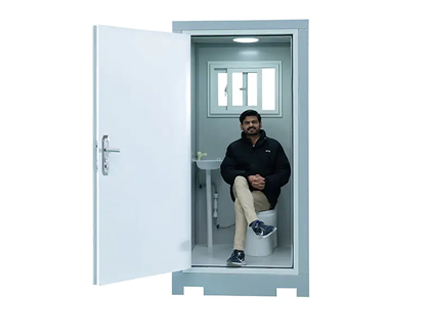
A: A complete camp layout should include sleeping modules, dedicated sanitation container blocks at a ratio of 1 toilet per 15 workers, a cooking and dining unit, a site office module, a medical aid room, and covered communal areas. Water treatment and waste management units are added for remote sites without municipal services. The layout should be designed by the supplier before shipment to ensure utility connections and emergency egress paths are properly planned.
Q6: Can container dormitory modules be customized for specific project requirements?
A: Most established container room suppliers Myanmar offer customization options including partition layouts, door and window positions, exterior color schemes, integrated electrical specifications, and internal finish materials. Standard modules can also be combined into larger open-plan units by removing intermediate partitions, creating dining halls, training rooms, or recreational spaces within the same modular system framework.
For exclusive deals and latest offers, sign up by entering your email address below.

-
TEL:+86 18762912902
-
Email:cntaimao@163.com
-
WhatsApp:
-
Add:Group 5, Cao Village, Zhenze Town, Suzhou, Jiangsu, China
Copyright © Suzhou Taimao Integrated Housing Co., Ltd.
All Rights Reserved.
 Wholesale movable homes for sale
custom built modular homes
Wholesale movable homes for sale
custom built modular homes