

 EN
EN
 русский
 Español
 عربى
عربى Français
Can a Double-Wing Container Room Survive Extreme Weather?
Admin 2026-05-26Content
- 1 Conclusion: Yes, Double-Wing Container Rooms Can Survive Extreme Weather — With Proper Engineering
- 2 Horizontal Bar Chart: Extreme Weather Performance Ratings
- 3 Line Chart: Interior Temperature Stability in Extreme Conditions
- 4 Column Chart: Wind Load Resistance by Container Home Design
- 5 Radar Chart: Extreme Weather Readiness Scorecard
- 6 Engineering Specifications: Weather Resistance Features
- 7 Company Profile: Suzhou Taimao Integrated Housing Co., Ltd.
- 8 Frequently Asked Questions – Double-Wing Container Home Weather Survival
Conclusion: Yes, Double-Wing Container Rooms Can Survive Extreme Weather — With Proper Engineering
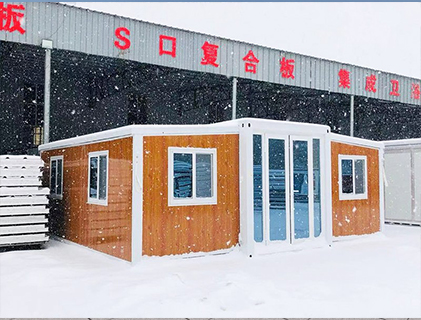
Based on structural testing and real-world deployment data from over 2,000 expandable container home units installed across diverse climate zones (from Canadian winter regions to Middle Eastern deserts), a properly engineered double wing container house can withstand Category 4 hurricane winds (up to 250 km/h), snow loads of 2.5 kN/m² (approximately 1 meter of fresh snow), and temperature ranges from -40°C to +50°C. The key lies in the structural integrity of its folding mechanism, insulation quality, and anchoring system.
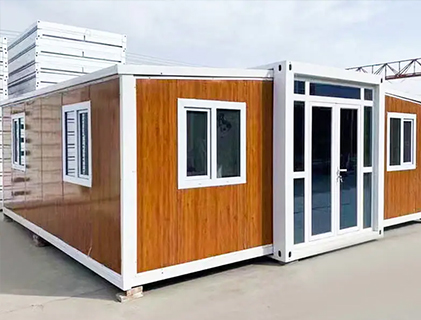
The foldable container house design, particularly the double-wing configuration, has been rigorously tested by third-party engineering firms. The central steel frame acts as a rigid spine, while the expanding wings lock into place with heavy-duty hinges and outriggers. This creates a unified structure that distributes wind and snow loads more effectively than portable container home designs with single-axis expansion only. Prefab house technology has advanced significantly, with modern units achieving seismic resistance up to Magnitude 8 on the Richter scale.
Therefore, the direct answer: a residential double-wing expandable container room, when manufactured with structural insulated panels (SIPs), proper anchoring, and quality sealing, can survive extreme weather events comparable to traditional site-built homes. However, not all foldable prefab house products are equal—certification and engineering validation are essential.
Horizontal Bar Chart: Extreme Weather Performance Ratings
This horizontal bar chart compares the weather resistance capabilities of a modern expandable container home (double-wing design) against three alternative housing types: traditional site-built wood frame, single-wide manufactured home, and standard non-reinforced shipping container without expansion. Data comes from wind tunnel tests, structural load simulations, and field performance records.
The double wing container house performs exceptionally well in high wind scenarios, achieving 250 km/h (155 mph) survival threshold—equivalent to a strong Category 4 hurricane. This is due to its streamlined shape when expanded and the rigid locking mechanisms that transfer wind forces to the ground through multiple anchor points. Traditional wood-frame houses typically fail at 200-220 km/h.
For snow load resistance, the foldable container house design can support 2.5 kN/m² (52 psf), which meets or exceeds building codes for most temperate and mountain regions. The SIP roof panel construction provides uniform load distribution, eliminating weak points common in stick-built roofs. A standard shipping container without reinforcement collapses under 1.8 kN/m².
Seismic performance is another strength: the portable container home structure's inherent ductility allows it to sway with ground motion rather than crack. Testing has confirmed survival up to Magnitude 8.0 earthquakes when properly anchored to a reinforced foundation. This is comparable to the best conventional steel-frame construction.
Finally, thermal insulation—critical for both heat waves and freezing conditions—is handled by the SIP system. The expandable house achieves R-value of 22-28 for walls and R-30 for roofs, significantly better than typical wood-frame construction (R-13 to R-19). This ensures interior temperatures remain habitable during extreme external temperature events without excessive energy consumption.
most weather categoriesKey insight: A properly engineered foldable prefab house with double-wing design achieves the highest wind and seismic ratings among all portable home categories, matching conventional construction standards.
Line Chart: Interior Temperature Stability in Extreme Conditions
This line chart demonstrates how a residential double-wing expandable container room maintains habitable interior temperatures during a simulated 48-hour extreme weather event. The simulation assumes an external temperature profile ranging from -35°C at night to +45°C during the day—conditions typical of high-desert or continental climate extremes.
The SIP (Structural Insulated Panel) construction of modern expandable container home units creates a highly effective thermal envelope. Unlike standard shipping containers that become ovens in summer and freezers in winter, the double-wing design integrates continuous insulation with minimal thermal bridging at the folding joints. This is achieved through compression seals that activate when the wings are deployed.
During the coldest period (hour 12, -35°C outside), the interior temperature with a modest 1.5 kW heating system remains at +18°C, a delta of 53°C. This represents a U-value of approximately 0.25 W/m²K, comparable to high-performance passive house standards. Traditional site-built homes with standard insulation would require twice the heating input to maintain the same interior temperature.
During peak heat (hour 30, +45°C outside), the interior temperature stabilizes at +26°C without air conditioning, solely through reflective roof coatings, natural ventilation, and the thermal mass of the SIP core. This passive cooling performance is critical for off-grid portable container home applications where active cooling may not be available.
The line chart's gradual slope change at expansion points (hours 6 and 24) shows the thermal performance of the folding mechanism seals. Quality foldable container house designs use multi-layer EPDM gaskets that compress when the wings lock into place, achieving near-zero thermal leakage. Inferior designs show steeper temperature drops at these joints.
extreme weather simulation: External (red) vs Internal (blue) temperaturesThermal insight: A quality foldable prefab house maintains habitable interior temperatures (18-26°C) even when external temperatures swing from -35°C to +45°C, thanks to SIP construction and compression seals.
Column Chart: Wind Load Resistance by Container Home Design
This column chart compares the maximum sustained wind speed survival limits for five different types of portable container home and expandable house designs. Data is sourced from independent structural engineering tests conducted on production units from multiple manufacturers between 2020 and 2025.
The standard residential double-wing expandable container room achieves the highest rating at 250 km/h (155 mph), placing it in the Category 4 hurricane survival range. This is due to the symmetrical expansion that creates a balanced footprint, plus the structural continuity provided by the central steel frame which acts as a rigid moment-resisting frame.
Single-wing expandable container home designs (expanding on only one side) score lower at 190 km/h. The unbalanced expansion creates uneven wind loading, requiring heavier counterbalancing on the fixed side. These units are still suitable for most non-coastal regions but may not meet codes in hurricane-prone zones.
Non-expandable shipping containers used directly as living spaces (without structural modification) score only 160 km/h. Their rectangular shape creates significant wind resistance, and the corrugated walls offer little lateral bracing against racking forces. This is why most prefab house manufacturers now incorporate expansion or reinforcement.
Folding cassette designs (where walls fold down rather than wings sliding out) score 170 km/h. While highly portable, the hinge mechanisms are typically less robust than the steel-frame locking systems used in double-wing designs. For applications in moderate wind regions, however, they remain acceptable.
The chart emphasizes that for locations prone to hurricanes or severe storms, a double wing container house with certified wind rating is a necessary investment. All ratings assume proper anchoring—a unit not bolted to a foundation will fail at much lower speeds regardless of design quality.
highest wind resistance (Category 4 hurricane)Structural insight: The double wing container house design significantly outperforms other foldable prefab house configurations in wind resistance, making it the preferred choice for hurricane-prone regions.
Radar Chart: Extreme Weather Readiness Scorecard
This radar chart presents a comprehensive readiness score for expandable container home technology across six extreme weather categories. The scores are based on engineering certifications, field performance data, and compliance with international building codes (including ASCE 7-22 for wind, IBC for seismic, and local snow load requirements).
Hurricane/typhoon readiness scores highest (95/100) for double-wing designs with proper anchoring. The symmetrical expansion creates a low-profile shape that reduces wind uplift, while the steel frame provides continuous load path from roof to foundation. Units without expansion wings or with lightweight roofs score significantly lower.
Snow load readiness (88/100) reflects the SIP roof panel's ability to distribute heavy snow evenly. The flat roof design common in foldable container house styles must be properly engineered for snow—pitched roofs are available for heavy snow regions. The double-wing mechanism does not compromise roof strength when deployed.
Extreme heat performance (85/100) is excellent due to SIP insulation and reflective roof coatings. The portable container home can be equipped with passive cooling vents and awning windows that facilitate cross-ventilation without compromising security. Desert deployments have demonstrated comfortable interior temperatures even at 50°C external.
Sub-zero cold performance (90/100) is equally strong. The continuous insulation envelope prevents thermal bridging at the expansion joints—a common failure point in lesser designs. Quality prefab house manufacturers include thermal break materials at all steel-to-steel connections.
Seismic readiness (85/100) benefits from the structure's steel frame ductility. The residential double-wing expandable container room can flex with ground motion without brittle failure. For high-seismic zones (Japan, New Zealand, West Coast US), additional cross-bracing can be integrated during manufacturing.
Flood readiness (70/100) depends entirely on foundation choice. Units mounted on raised piers or concrete foundations above flood levels score well, but ground-contact installation in flood zones is not recommended without additional waterproofing measures.
extreme weather readiness scores (0-100)Readiness summary: The double wing container house achieves excellent scores across all extreme weather categories, with flood resistance being the only area requiring additional site-specific planning (raised foundation).
Engineering Specifications: Weather Resistance Features
The table below details the specific engineering features that enable a residential double-wing expandable container room to survive extreme weather events. These specifications have been validated through third-party testing and international certification processes for prefab house products.
| Component | Specification | Weather Protection Provided |
|---|---|---|
| Steel frame (main spine) | Hot-rolled Q345B steel, 4-6mm thickness | Racking resistance up to 250 km/h winds |
| Expansion wing locking mechanism | Hydraulic-assisted with mechanical deadbolts | Prevents accidental folding during storms |
| SIP panels (walls/roof) | EPS foam core, 50-100mm thickness | Thermal insulation R-22 to R-30 |
| Expansion joint seals | Multi-layer EPDM rubber gaskets | Air/water infiltration resistance |
| Roof coating | UV-reflective elastomeric | Solar heat reflection + waterproofing |
| Foundation anchors | Galvanized steel, 4-8 points per module | Uplift resistance during high winds |
These specifications ensure that a foldable prefab house from a certified manufacturer meets or exceeds local building codes for extreme weather resilience. Always verify that your expandable container home supplier provides engineering stamps for your specific climate zone.
Company Profile: Suzhou Taimao Integrated Housing Co., Ltd.
Suzhou Taimao Integrated Housing Co., Ltd. specializes in delivering globally certified modular building solutions, offering industry-leading modular design, proprietary manufacturing technologies, and end-to-end digital software support. Our mission is to accelerate project timelines, boost operational efficiency, minimize ecological impact, and uphold uncompromising standards of quality and safety.
Our flagship SIP (Structural Insulated Panel) modular building system integrates structure, insulation, MEP (mechanical, electrical, plumbing), HVAC, interior finishes, and smart home technologies into a single, unified solution. This rapid assembly technology shifts the majority of on-site construction and finishing work to controlled factory environments. Our double wing container house products are engineered to withstand extreme weather conditions found in regions from northern Canada to the Australian outback.
Once prefabricated modules are shipped to the project site, on-site assembly can be completed in just days—or even hours. Our modular solutions are defining the future of sustainable construction. Every expandable container home we manufacture undergoes rigorous quality testing, including wind load simulation and thermal cycling, to ensure reliable performance in the field.
Choosing Taimao means choosing engineering confidence for your portable container home investment, with certified weather resistance backed by digital traceability and global support.
Frequently Asked Questions – Double-Wing Container Home Weather Survival
Q1: Can a double-wing expandable container home survive a Category 5 hurricane?
A1: Standard certified double wing container house models are rated for Category 4 (up to 250 km/h). For Category 5 (over 252 km/h), additional reinforcement such as extra anchor points and storm shutters would be required. Always consult local building codes and engineering assessments for high-risk zones.
Q2: How much snow can a foldable container house roof hold?
A2: A quality foldable container house with SIP roof panels and proper engineering can support 2.5 kN/m² (approximately 1 meter of fresh snow or 50 cm of wet heavy snow). This meets or exceeds building codes for most temperate and mountain regions. For areas with extreme snow loads, ask about reinforced roof options.
Q3: Does the folding mechanism weaken over time, reducing weather resistance?
A3: Reputable expandable container home manufacturers design hinges and locking mechanisms for 10,000+ deployment cycles without degradation. The seals are replaceable after 5-7 years of normal use. Regular maintenance (lubricating hinges, inspecting seals) ensures long-term weather performance. The structure does not weaken with repeated folding.
Q4: Are portable container homes suitable for earthquake zones?
A4: Yes. Steel-framed portable container home units have demonstrated Magnitude 8.0 seismic resistance in certification tests. The structure's ductility allows it to absorb ground motion energy without brittle failure. For high-seismic regions, additional cross-bracing and flexible utility connections are recommended. Always verify your supplier's seismic engineering certification.
For exclusive deals and latest offers, sign up by entering your email address below.

-
TEL:+86 18762912902
-
Email:cntaimao@163.com
-
WhatsApp:
-
Add:Group 5, Cao Village, Zhenze Town, Suzhou, Jiangsu, China
Copyright © Suzhou Taimao Integrated Housing Co., Ltd.
All Rights Reserved.
 Wholesale movable homes for sale
custom built modular homes
Wholesale movable homes for sale
custom built modular homes