

 EN
EN
 русский
 Español
 عربى
عربى Français
Is there a porta potty for pee only?
Admin 2026-06-22Content
- 1 Quick Answer: Is There a Portable Toilet Designed Only for Urination
- 2 What Is a Single-Person Outdoor Portable Toilet
- 3 Structural Overview: Isometric Diagram of the Compact Cabin
- 4 Footprint and Space Efficiency Compared to Other Configurations
- 5 Typical On-Site Deployment Timeline
- 6 Component Durability Index
- 7 Multi-Dimensional Performance Comparison
- 8 Best-Fit Applications and Site Types
- 9 Maintenance Tips for Long-Term Reliability
- 10 About Suzhou Taimao Integrated Housing Co Ltd
- 11 Frequently Asked Questions
Quick Answer: Is There a Portable Toilet Designed Only for Urination
Urine-only restroom stations do exist in the portable sanitation industry, usually built as open urinal screens or urine-diversion modules for short, high-frequency use at male-focused outdoor events. For most construction sites, campgrounds, parks, and temporary venues, however, a single-person outdoor portable toilet is the more practical choice because it covers both urination and full sanitation needs in one self-contained unit. Rather than installing a separate urinal and a separate enclosed toilet, site managers can place a single compact cabin and meet both requirements at once. This is why search interest around a single-person outdoor portable toilet tends to be broader and more durable over time than interest in urine-only fixtures, which are typically limited to large festivals or stadium overflow areas.
This article walks through how a single-person outdoor portable toilet is engineered, how it compares to other restroom configurations on footprint, deployment speed, and durability, and where it fits best on a job site or outdoor venue. People researching the best single-person outdoor portable toilet, looking at a single-person outdoor portable toilet for sale, or comparing single-person outdoor portable toilet reviews will also find a short clarification later in this article about how this category differs from a portable folding toilet for camping, a portable folding toilet for car use, or a portable travel toilet for camping and hiking, since these terms often get mixed together in search results despite describing different products.
What Is a Single-Person Outdoor Portable Toilet
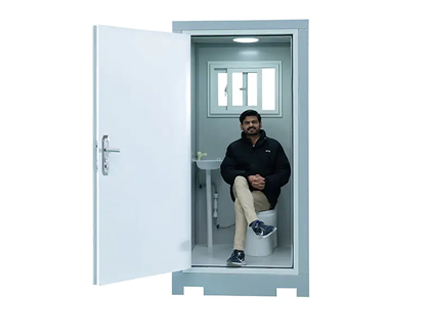
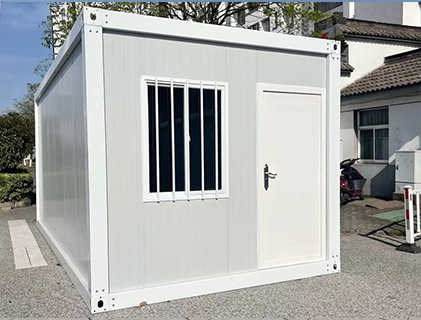
A single-person outdoor portable toilet is a compact, reliable, and fully functional mobile restroom solution built for locations with limited space or for temporary outdoor facilities. Unlike XL or dual-compartment portable toilets, this configuration emphasizes space efficiency and portability while still providing all essential restroom functions inside one enclosed cabin. The structure is built to stay stable through repeated relocation and outdoor exposure, which matters on active construction sites where equipment gets moved more than once during a project. Because the footprint is small, the unit fits into corners of a site, narrow sidewalks at event venues, or staging areas where a larger dual-compartment toilet for adults simply would not fit. Despite the reduced size, the cabin is designed to deliver a complete and practical sanitation solution for one person at a time, rather than a stripped-down or partial fixture.
Core Features at a Glance
- Compact and space-saving footprint, suitable for sites where larger restroom configurations cannot be placed
- Durable construction intended to remain stable through weather exposure and repeated relocation
- Fully functional interior that includes the basic restroom facilities needed for individual use
- Portable design that allows quick deployment and relocation as a project or event moves forward
- Practical configuration aimed at temporary sanitation needs without unnecessary added bulk
How This Differs From Folding and Travel Toilets
It is worth separating this product category from smaller personal items that share similar search terms. A portable folding toilet for camping, a portable folding toilet for car use, and a portable travel toilet for camping and hiking are typically small, carry-on items that fit into a trunk or backpack for one or two uses before being packed away again. A single-person outdoor portable toilet, by contrast, is a stationary site cabin that stays in place for the duration of a project, event, or season, and is relocated by lifting or towing equipment rather than by hand. Buyers comparing a single-person outdoor portable toilet for sale against a portable folding toilet for camping should think first about whether they need a fixed-site facility for a crew or visitors, or a personal-use item that travels with one individual.
Structural Overview: Isometric Diagram of the Compact Cabin
The diagram below sets out the main structural elements of a single-person outdoor portable toilet cabin in an isometric view, with each numbered callout pointing to a specific component. The front face shows the door and frame, the top face represents the roof and ventilation area, and the side face shows the depth of the cabin body. This kind of breakdown helps site planners understand which parts of the unit need attention during routine inspection and which parts are designed to absorb the wear of repeated relocation.
As shown in Figure 1, the door handle assembly sits on a reinforced frame rather than a thin panel, which matters for sites where the unit is opened and closed many times per day. The insulated wall panel construction is shared with the wider SIP building system used across the manufacturer's modular product line, so the same panel logic that supports a full modular house also supports this smaller sanitation cabin. The roof ventilation strip allows airflow without leaving the cabin open to weather. The base skid is shaped for forklift or pallet jack handling, which is the same lifting method used for shipping container style modules. Together these five elements explain why the unit can be classified as a compact, factory-built product rather than a simple plastic shell.
Footprint and Space Efficiency Compared to Other Configurations
One of the main reasons site planners search for a single-person outdoor portable toilet for sale is footprint. Figure 2 below sets out an illustrative floor area comparison across four common restroom configurations, measured in square feet of ground footprint.
As Figure 2 illustrates, a single-person compact configuration occupies roughly 9 square feet of ground space, which is meaningfully smaller than a dual-compartment unit at around 16 square feet, an XL standard unit near 22 square feet, or an ADA accessible unit closer to 32 square feet. These figures are illustrative reference points based on typical industry layouts rather than fixed specifications for every model on the market. The practical effect of this gap shows up most clearly on constrained sites, such as narrow urban sidewalks, rooftop construction zones, or small event lots where every square foot of usable space has competing demands. A smaller footprint also tends to simplify transport, since a compact cabin can often be moved with lighter lifting equipment than a larger dual-compartment or ADA unit. For teams comparing a single-person outdoor portable toilet for sale against bulkier alternatives, footprint is frequently the first filter applied before durability or interior features are even considered. None of this means a compact unit replaces a dual-compartment or ADA unit in every situation, since those larger configurations exist to serve higher traffic volumes or accessibility requirements that a single-person cabin is not designed to cover.
Typical On-Site Deployment Timeline
Once prefabricated modules are shipped to a project site, on-site assembly can often be completed in just days, or even hours, because most of the construction and finishing work has already taken place inside a controlled factory environment. Figure 3 below shows an illustrative cumulative deployment timeline, tracking elapsed hours from initial site preparation through to the unit being ready for use.
The curve in Figure 3 reflects a typical sequence rather than a fixed promise for every project, since real timelines shift with site access, weather, and crew availability. Site preparation, including leveling a small pad and clearing access for lifting equipment, generally accounts for the first couple of hours. Module delivery is usually the next checkpoint, since the cabin arrives largely finished and only needs to be placed and connected rather than built from raw materials on site. The assembly and connection phase, where the unit is secured and any utility tie-ins are completed, tends to be the longest single segment because it involves the most hands-on work. Final inspection is typically short by comparison, since most of the structural and finishing quality has already been controlled inside the factory before shipment. The overall pattern, moving from site preparation through to a unit ready for use within roughly half a day to a full day, is the main reason factory-built modular sanitation units are often chosen over fully site-built alternatives on time-sensitive projects.
Component Durability Index
Durability is not a single number, since different parts of the cabin face different stresses over time. Figure 4 below presents an illustrative durability index, scored on a 0 to 10 scale, for four components that most often determine how long a unit stays serviceable in outdoor conditions.
The values in Figure 4 are illustrative scores rather than certified laboratory results, intended to show relative differences between components rather than exact guaranteed performance. The galvanized steel frame scores highest in this illustration because it carries most of the structural load and resists corrosion well when properly coated. The insulated SIP wall panel follows closely, since it combines structural strength with thermal insulation in a single layer, which reduces the number of separate parts that could fail independently. The door seal gasket scores lower than the frame or panel in this illustration because rubber and foam seals naturally wear faster than steel or composite panels and benefit from periodic inspection. The forklift-ready base skid sits between the panel and the frame, reflecting steady performance under repeated lifting and ground contact. Reviewing a chart like this before purchase can help a buyer set realistic expectations about which parts of a single-person outdoor portable toilet are likely to need attention first during long-term outdoor use.
Multi-Dimensional Performance Comparison
No single configuration wins on every measure, which is why Figure 5 below uses a radar chart to compare a single-person compact unit against a standard dual-compartment unit across five practical dimensions, each scored out of 10.
In Figure 5, the single-person compact unit scores higher on space efficiency, deployment speed, and portability, which lines up directly with its smaller footprint and lighter handling requirements described earlier in this article. The dual-compartment unit pulls ahead slightly on structural durability in this illustration, since a larger frame can sometimes accommodate thicker structural members, though this gap is modest rather than dramatic. Maintenance simplicity favors the compact unit, mainly because there is less interior surface area and fewer fixtures to inspect and clean during a routine service visit. Neither configuration scores a perfect result across every dimension, which reflects normal engineering trade-offs rather than a flaw in either design. For a site that prioritizes quick placement, limited space, and straightforward upkeep, the single-person compact unit is generally the stronger fit, while a dual-compartment unit remains a reasonable choice where higher traffic volume justifies the larger footprint. Reading this kind of comparison alongside the earlier footprint and durability charts gives a more complete picture than looking at any single metric on its own.
Best-Fit Applications and Site Types
Table 1 below summarizes where a single-person outdoor portable toilet tends to fit best, based on the footprint, deployment speed, and durability characteristics discussed above.
| Site Type | Typical Occupancy Need | Suggested Configuration | Deployment Note |
|---|---|---|---|
| Urban construction site | Low to moderate, rotating crew | Single-Person Compact | Fits narrow sidewalk or fenced corner |
| Small outdoor event | Short duration, light traffic | Single-Person Compact | Quick placement and removal same day |
| Temporary field office compound | Moderate, fixed staff | Single-Person Compact or Dual-Compartment | Often paired with modular office units |
| Remote trail access point | Low, seasonal | Single-Person Compact | Requires accessible lifting equipment for placement |
| Disaster relief staging area | Variable, can scale with multiple units | Multiple Single-Person Compact units | Fast factory-built deployment is a priority |
Maintenance Tips for Long-Term Reliability
Maintenance simplicity is often a deciding factor for buyers searching for the best single-person outdoor portable toilet, since a unit that is easy to service tends to stay in usable condition longer. The following practices help keep a compact cabin reliable through repeated outdoor use.
- Clean the interior on a regular schedule, with frequency adjusted to actual traffic volume rather than a fixed calendar.
- Inspect the door seal gasket periodically for cracking or compression, since this component wears faster than the steel frame or wall panel.
- Check the roof ventilation strip for blockage after storms or heavy dust exposure to keep airflow consistent.
- Lubricate the lock and handle mechanism on a routine basis, particularly on sites with high daily usage.
- Apply seasonal weatherproofing checks before extreme heat or cold periods, focusing on the base skid and exterior panel seams.
About Suzhou Taimao Integrated Housing Co Ltd
Suzhou Taimao Integrated Housing Co Ltd specializes in delivering globally certified modular building solutions, offering modular design expertise, proprietary manufacturing technologies, and end-to-end digital software support. The company's stated mission is to accelerate project timelines, improve operational efficiency, reduce ecological impact, and uphold consistent standards of quality and safety across its product range. The flagship SIP, or structural insulated panel, modular building system integrates structure, insulation, mechanical, electrical, and plumbing systems, HVAC, interior finishes, and smart home technology into a single unified solution. This approach shifts most construction and finishing work into a controlled factory environment, which is the same underlying logic applied to the single-person outdoor portable toilet covered in this article. Because the sanitation cabin shares manufacturing methods and panel technology with the company's broader modular housing line, the same factory-controlled quality process used for full modular buildings also applies to this smaller, more compact product.
Frequently Asked Questions
Q1. Is there a porta potty designed only for urination?
Urine-only stations exist for short, high-traffic events, but a single-person outdoor portable toilet is built to cover full restroom needs in one compact unit, which makes it the more versatile choice for most sites.
Q2. How much floor space does a single-person outdoor portable toilet typically need?
A compact single-person configuration generally occupies around 9 square feet of ground footprint, noticeably smaller than dual-compartment, XL, or ADA accessible alternatives.
Q3. Can a single-person outdoor portable toilet be relocated after installation?
Yes, the unit is designed for relocation using standard lifting equipment such as a forklift or crane, which makes it suitable for projects that move between phases or locations.
Q4. Is this different from a portable folding toilet for camping?
Yes, a portable folding toilet for camping or a portable travel toilet for camping and hiking is a small personal-carry item, while a single-person outdoor portable toilet is a stationary, factory-built cabin meant to stay on site for an extended period.
Q5. What site types are best suited for this configuration?
Urban construction sites, small outdoor events, temporary field office compounds, remote trail access points, and disaster relief staging areas are common fits, largely because of the unit's small footprint and quick deployment.
For exclusive deals and latest offers, sign up by entering your email address below.

-
TEL:+86 18762912902
-
Email:cntaimao@163.com
-
WhatsApp:
-
Add:Group 5, Cao Village, Zhenze Town, Suzhou, Jiangsu, China
Copyright © Suzhou Taimao Integrated Housing Co., Ltd.
All Rights Reserved.
 Wholesale movable homes for sale
custom built modular homes
Wholesale movable homes for sale
custom built modular homes