

 EN
EN
 русский
 Español
 عربى
عربى Français
What Is a Residential Double-Wing Expandable Container Room?
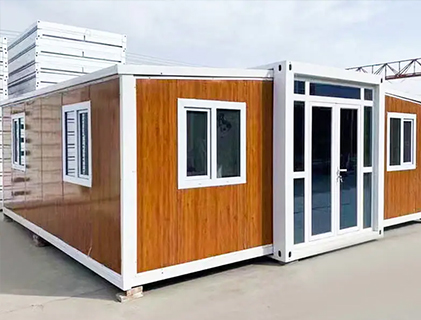
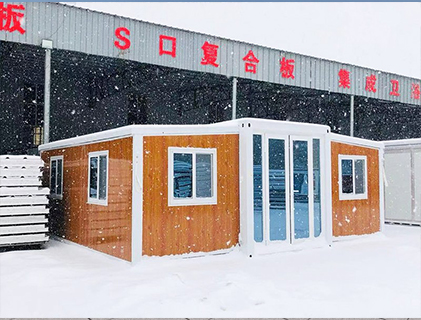
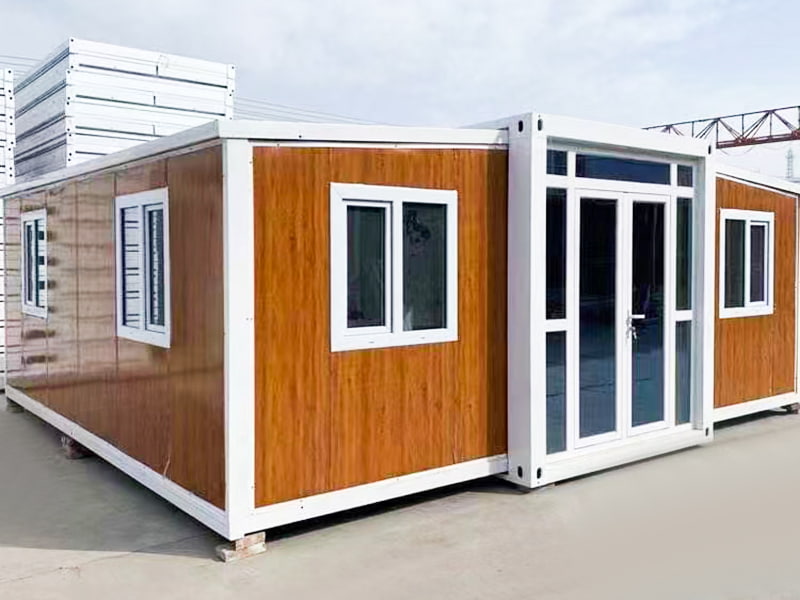
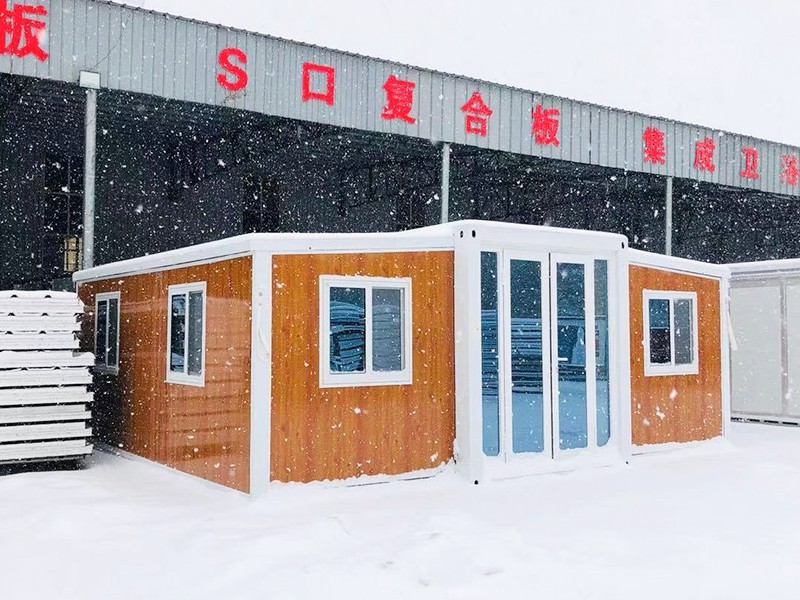
Admin 2026-05-13A Residential Double-Wing Expandable Container Room is a factory-prefabricated modular dwelling unit that folds flat for transportation and unfolds on-site into a fully functional living space—often in under a day. Unlike a standard shipping container conversion, a double wing container house deploys two lateral "wings" that swing outward from a central core, effectively tripling the usable floor area while retaining the structural rigidity of steel-framed construction. The result is a portable container home that combines the logistics efficiency of containerized freight with the comfort expectations of modern residential design.
The bottom line: if you need a livable, durable, and relocatable dwelling that can be installed faster than traditional construction allows, an expandable container home delivers a compelling combination of speed, adaptability, and structural performance. This article examines the technology, performance data, use cases, and buying considerations that matter most to prospective owners and developers.
Content
- 1 How the Double-Wing Mechanism Works
- 2 Key Specifications and Performance Benchmarks
- 3 Speed Advantage: Assembly Time Compared to Conventional Construction
- 4 Interior Flexibility and Layout Options for Residential Use
- 5 Sustainability Credentials: Environmental Performance Data
- 6 Who Is Buying Expandable Container Homes? Real-World Use Cases
- 7 Structural Durability and Safety Standards
- 8 Customization and Smart Technology Integration
- 9 Stacking and Multi-Story Expandable Container Configurations
- 10 About Suzhou Taimao Integrated Housing Co., Ltd.
- 11 Frequently Asked Questions
How the Double-Wing Mechanism Works
The engineering at the heart of a double wing container house relies on a telescoping and pivot-hinge system integrated into the steel skeleton. During manufacturing, the floor panels, wall panels, and roof sections are prefitted with interlocking brackets. When the unit is shipped, the wings fold inward against the central frame, reducing overall width to approximately 2.4 m—the standard ISO container dimension. Once on site, a small crew uses manual levers or, in advanced models, hydraulic actuators to swing each wing outward and lock it into position.
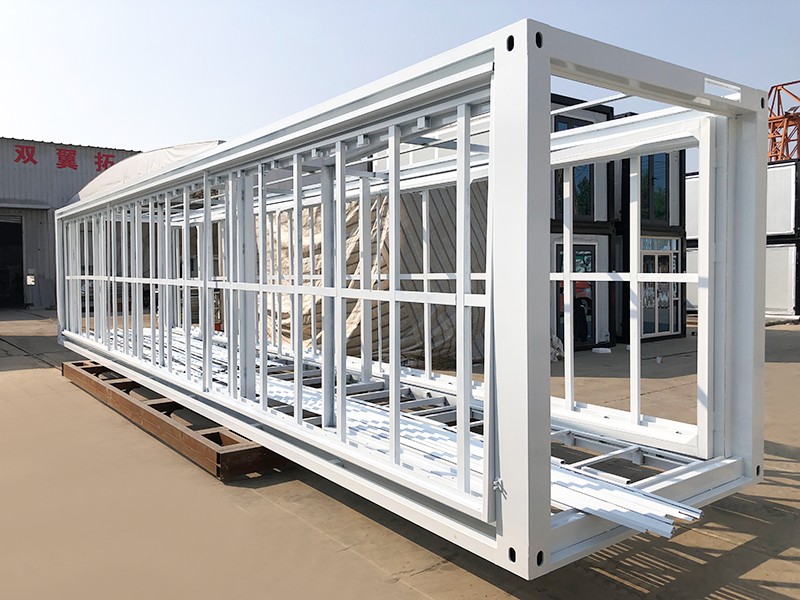
The structural integrity of the expanded configuration comes from heavy-gauge cold-formed steel channels at each connection point, reinforced with cross-bracing under the floor. Industry test data shows that properly manufactured expandable units can withstand wind loads of up to 120 km/h and snow loads consistent with Zone III international standards. Sealing between the core and the wings is achieved through EPDM rubber gaskets and weather-resistant overlap panels, eliminating thermal bridges and moisture ingress.
A key differentiator of the foldable prefab house format is that MEP (mechanical, electrical, plumbing) runs are pre-routed inside the wall cavities before the unit leaves the factory. This means connection on site requires only hooking up utility supply points—no in-wall wiring or pipe fitting by local tradespeople. SIP (Structural Insulated Panel) cores further enhance thermal resistance, typically achieving an R-value of R-25 or higher in the wall assemblies.
Diagram: Four-step deployment process and comparative floor area expansion for a double-wing expandable container room.
The diagram above illustrates how a single factory unit transitions from a compact, transportable form to a fully expanded residential space. The critical insight is that no on-site cutting, welding, or structural assembly is required—every connection is pre-engineered at the factory, dramatically reducing installation risk and labor cost. For remote or infrastructure-limited sites, this is a decisive advantage over any conventional build method.
Key Specifications and Performance Benchmarks
Performance varies by manufacturer and model tier, but the table below summarizes representative specifications for a standard expandable container home in the 40-foot class—the most commonly deployed residential configuration globally.
| Parameter | Folded (Transport) | Expanded (Double Wing) |
|---|---|---|
| Overall Width | 2.4 m | ~7.2 m |
| Overall Length | 12.0 m | 12.0 m |
| Interior Height | 2.5 m (folded) | 2.8 m (high-cube) |
| Net Floor Area | ~15 m² | ~45–50 m² |
| Wall R-Value (SIP) | R-25 to R-30 | |
| Wind Resistance | Up to 120 km/h | |
| On-Site Assembly Time | 4–8 hours (2–4 person crew) | |
| Design Lifespan | 25–50 years (with proper maintenance) | |
These figures reflect a certified manufacturing standard where structural steel is hot-dip galvanized, exterior cladding uses color-coated steel or fiber cement board, and glazing meets EN-standard double-pane thermal requirements. Premium or luxury expandable container home variants may include triple-glazed windows, underfloor heating circuits, and integrated solar-ready roof mounts as standard fitments.
Speed Advantage: Assembly Time Compared to Conventional Construction
One of the most persuasive arguments for choosing a quick install container house is the radical compression of project timelines. Traditional residential construction in most markets requires 6–18 months from foundation pour to occupancy. A site-built timber-frame or masonry house involves sequential trades—each waiting on the prior—exposed to weather delays, labor shortages, and material price volatility.
By contrast, prefab container room systems manufactured under factory-controlled conditions complete 80–90% of construction work off-site. On-site time typically collapses to days rather than months. The chart below compares project phase durations across three construction methods.
Chart 1: Comparative project durations — traditional build vs. standard modular vs. expandable container home method.
The speed benefit is not merely a convenience; it represents measurable financial value. For commercial operators—resorts, workforce accommodation providers, emergency housing authorities—every week of reduced project timeline translates to revenue acceleration or cost avoidance.
Interior Flexibility and Layout Options for Residential Use
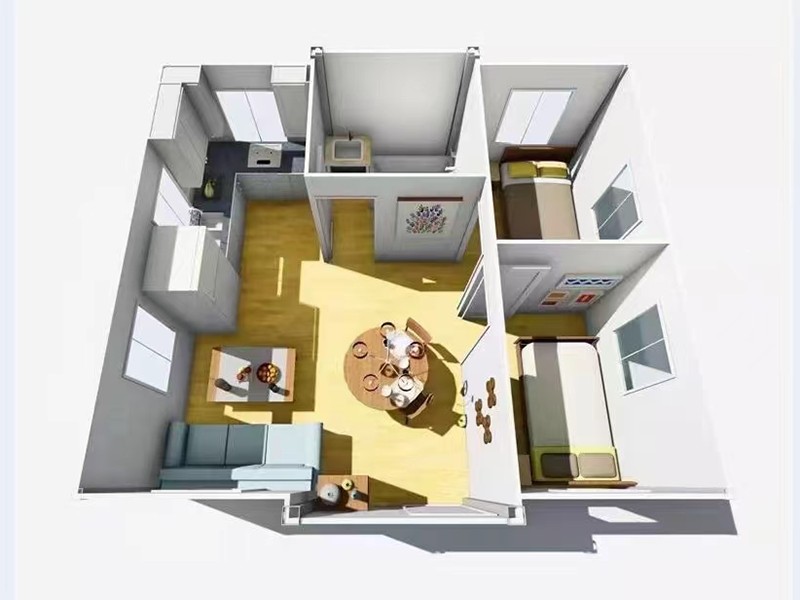
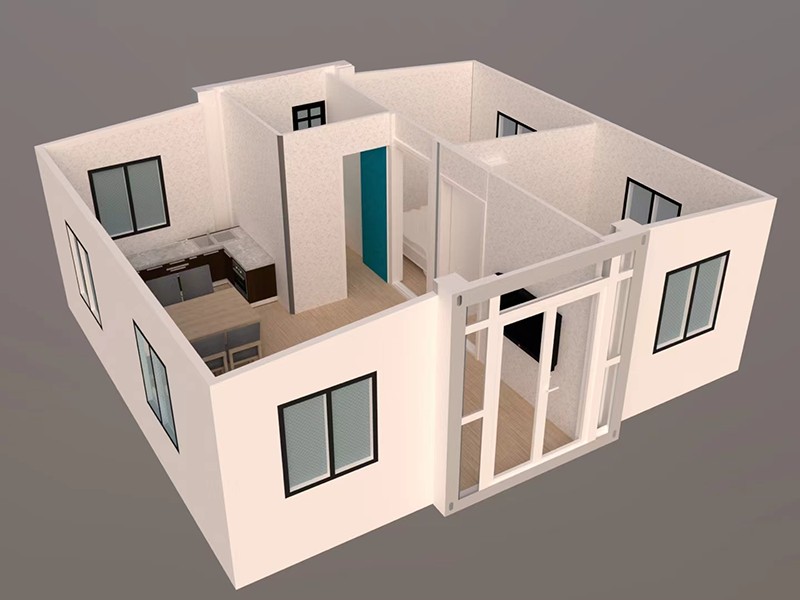
A common misconception about folding container house products is that their structural constraints force occupants into rigid, impractical floor plans. In practice, the double-wing configuration offers considerable interior flexibility. The central core typically accommodates the kitchen, bathroom, and utility spaces—areas that benefit from fixed MEP routing. The two wings become open-plan living/dining areas or bedroom zones, customizable through non-load-bearing partition panels.
Common Residential Floor Plan Configurations
- 1-Bedroom Studio (35 m²): One wing as open living/dining, core as kitchen + bath, second wing as sleeping area with wardrobe wall.
- 2-Bedroom Family (48 m²): Two wings subdivided into separate bedrooms, core retaining kitchen and full bathroom suite.
- Open-Plan Loft (50 m²): No internal partitions in the wings; full-width glazed end walls create a panoramic living experience suitable for vacation and hospitality applications.
- Home Office Hybrid (45 m²): One wing as residential quarters, second wing as dedicated workspace with acoustic treatment panels and separate entry.
Manufacturers offering luxury expandable container home tiers also provide curated interior finish packages: engineered timber flooring, full-height ceramic tile in wet areas, recessed LED lighting systems, and integrated smart home controllers for climate, security, and lighting. These finish options transform what began as a logistics-optimized structure into a genuinely aspirational residential product.
Chart 2: Radar comparison of residential performance attributes — expandable container home vs. traditional build.
The radar chart reveals that expandable container homes score highest on speed and portability, with strong marks on eco-impact given the significant reduction in on-site material waste. Traditional builds retain a marginal advantage in raw comfort ceiling (larger absolute square footage potential) but sacrifice substantially on every efficiency-related dimension. For projects where relocation, phased deployment, or lifecycle adaptability is a requirement, the expandable format has no comparable alternative in conventional construction.
Sustainability Credentials: Environmental Performance Data
The expandable shipping container living house format carries meaningful environmental advantages that are increasingly relevant to buyers navigating stricter planning and emissions regulations. Factory manufacturing concentrates material usage, reducing off-cut waste by an estimated 30–40% compared to site-built equivalents. Pre-fitted insulation eliminates the application of spray foams and loose-fill materials on site, removing a common source of airborne particulate and chemical emissions during construction.
Lifecycle carbon analysis conducted on SIP-core container modules shows operational energy consumption reduced by up to 45% compared to a conventionally insulated timber-frame house of equivalent floor area. This is primarily driven by the superior continuous insulation envelope: unlike timber stud framing, where insulation is interrupted at every stud position, SIP panels maintain a thermal break-free barrier across the entire wall plane.
Water usage during manufacturing is also notably lower. A typical residential modular factory consumes approximately 60% less water per square meter of building produced compared to site-cast concrete or masonry construction—a figure that becomes highly significant in water-stressed deployment regions. Additionally, because units are demountable and relocatable, they do not create permanent land use impacts, supporting brownfield and temporary-use planning frameworks.
Chart 3: Relative environmental impact reduction — expandable container home versus traditional site build (traditional = 100% baseline).
As planning authorities globally tighten embodied carbon limits—the European Union's Construction Products Regulation and similar frameworks in Southeast Asia and the Gulf—the environmental profile of foldable prefab house systems becomes a competitive advantage rather than merely a marketing attribute. Buyers who obtain third-party EPDs (Environmental Product Declarations) for their modules can demonstrate compliance with green building schemes including LEED, BREEAM, and local equivalents.
Who Is Buying Expandable Container Homes? Real-World Use Cases
The buyer profile for a residential expandable container room has expanded substantially over the past decade. Early adopters were primarily emergency relief organizations and temporary workforce camp operators. Today, the market includes private residential buyers, tourism developers, educational institutions, and mixed-use property developers deploying units as permanent structures.
Primary Market Segments
- Remote and Rural Residential: Landowners in areas without established construction trades use portable container home units to establish primary dwellings without dependence on local contractor availability.
- Vacation and Short-Term Rental: Tourism operators deploy expandable house units as glamping pods, eco-lodge cabins, and beachfront rentals, benefiting from the low civil works requirement and seasonal relocatability.
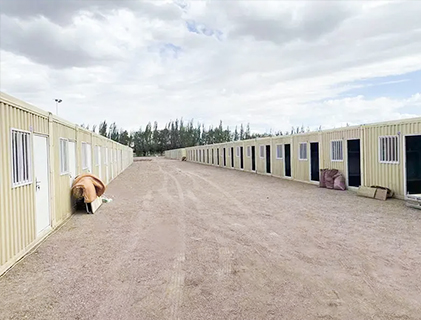
- Workforce and Mining Accommodation: Resource sector operators require deployable, durable, and climate-resilient accommodation that can be relocated as project phases move. Double-wing units scale well for this application.
- Affordable Urban Infill: Some municipalities allow modular units on accessory dwelling unit (ADU) lots, giving landowners an efficient path to creating rental income without major construction permits.
- Disaster Relief and Emergency Housing: Government agencies and NGOs maintain inventories of quick install container house units that can be mobilized within 72 hours of a disaster event declaration.
Chart 4: Indexed global demand growth for expandable container housing vs. traditional modular construction (2019–2025, base index 100). Expandable container demand has grown approximately 3× faster than the broader modular sector.
The growth trajectory illustrated above reflects compounding demand drivers: rising land costs pushing buyers toward density-efficient footprints, post-pandemic acceleration of remote living lifestyles, and growing institutional acceptance of modular building for permanent residential use. The expandable container home sector has grown approximately 3× faster than the broader modular construction market between 2019 and 2025, driven particularly by Asia-Pacific and the Middle East where construction labor costs have risen sharply.
Structural Durability and Safety Standards
A double wing container house must satisfy more rigorous structural requirements than a fixed modular unit because the hinge and locking mechanism introduces additional load transfer points. Reputable manufacturers submit their products to third-party certification testing that evaluates: lateral stability under wind and seismic loading, floor live load capacity (typically 250–450 kg/m²), fatigue life of the hinge mechanism (often rated to 500+ full deployment cycles), and the integrity of utility connections after repeated folding.
Globally recognized certifications include CE marking (Europe), ISO 1496 container structural standard, Australian Building Code compliance, and CSA certification for North American markets. Units destined for seismic zones may also carry compliance documentation for IBC (International Building Code) seismic design categories. Buyers should always request the full structural test report from the manufacturer, not merely a certificate number.
Steel Frame Specification Comparison
| Tier | Steel Grade | Corrosion Treatment | Design Life |
|---|---|---|---|
| Entry | Q235 (mild) | Primer + enamel paint | 10–15 years |
| Standard | Q355 (high-strength) | Hot-dip galvanized + paint | 20–30 years |
| Premium | Q355 + Cor-Ten overlay | Full hot-dip galv. + epoxy | 40–50+ years |
For coastal or high-humidity environments, premium-tier units with full hot-dip galvanization and epoxy topcoats are strongly advisable. The incremental material cost is typically 8–12% over standard-tier units but can extend maintenance intervals by a decade or more, delivering a strongly positive return on that investment over the building's lifetime.
Customization and Smart Technology Integration
Modern luxury expandable container home offerings are increasingly specified with integrated smart home systems as standard, rather than afterthought upgrades. Because the electrical system is pre-wired at the factory, incorporating smart switches, environmental sensors, and network infrastructure adds minimal marginal cost compared to retrofitting these systems into a completed building. Standard smart integrations now available from leading manufacturers include:
- Centralized HVAC Control: Pre-commissioned split-system or MVHR (mechanical ventilation with heat recovery) units paired with programmable thermostats and air quality monitoring.
- Integrated Security: Door and window sensors, motion-activated exterior lighting, and camera-ready conduit routed to a central control panel.
- Solar-Ready Roof Architecture: Reinforced roof structure and pre-run DC cable conduit to accommodate photovoltaic panels without structural modification.
- App-Connected Metering: Integrated sub-metering of electricity, water, and gas consumption, enabling operators of multi-unit sites to allocate utility costs accurately.
- Adaptive Lighting Systems: Tunable LED circuits with circadian rhythm programming—increasingly specified for wellness-focused hospitality and long-term residential applications.
The SIP-based construction platform used in higher-specification expandable container house products provides an additional smart technology benefit: the continuous insulation envelope significantly reduces HVAC load variability, making predictive heating and cooling algorithms more effective. Buildings with stable thermal envelopes respond more predictably to set-point changes, reducing energy consumption by a further 15–20% compared to well-insulated but thermally inconsistent conventional structures.
Stacking and Multi-Story Expandable Container Configurations
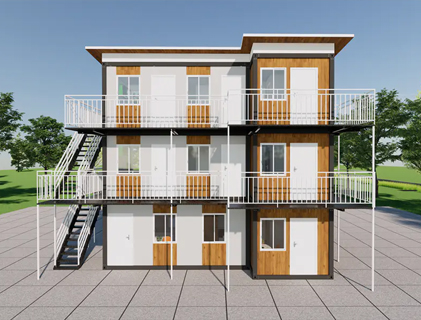
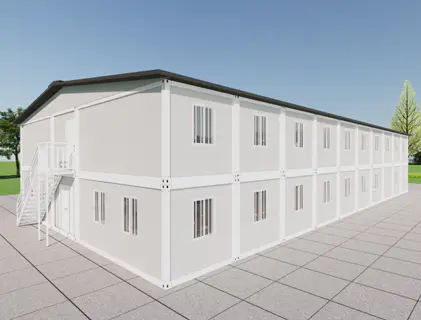
A frequently underestimated capability of certified expandable container home products is their stackability. Load-rated corner castings—the same ISO-standard fittings used in maritime shipping—allow units to be stacked two, and in some engineered configurations three, stories high. This transforms the single-unit foldable prefab house into a scalable building system capable of delivering multi-story residential or hospitality structures.
Multi-story configurations require engineering sign-off specific to the local wind, seismic, and soil conditions, and typically incorporate stair towers or external access structures fabricated from matching steel. However, the core modular approach still delivers a fraction of the on-site labor time compared to conventional multi-story construction. A 10-unit, two-story development using stacked expandable units can realistically achieve structural completion in 2–3 weeks, versus 6–9 months for an equivalent traditionally constructed block.
Chart 5: Total net floor area achievable across four common deployment scenarios using standard 45 m² double-wing expandable container units.
The column chart illustrates how quickly deployable floor area scales when units are combined. A single 45 m² residential double-wing expandable container room suits individual or couple occupancy. A two-story row of five units delivers 450 m²—sufficient for a boutique lodge, a small office campus, or a family compound. A three-story block of six units approaches 810 m², entering the territory of small apartment buildings or mid-scale worker accommodation facilities. Across all configurations, the same prefab design and factory manufacturing process applies, preserving cost predictability at scale.
About Suzhou Taimao Integrated Housing Co., Ltd.
Suzhou Taimao Integrated Housing Co., Ltd. specializes in delivering globally certified modular building solutions, offering industry-leading modular design, proprietary manufacturing technologies, and end-to-end digital software support. Our mission is to accelerate project timelines, boost operational efficiency, minimize ecological impact, and uphold uncompromising standards of quality and safety.
Our flagship SIP (Structural Insulated Panel) modular building system integrates structure, insulation, MEP (mechanical, electrical, plumbing), HVAC, interior finishes, and smart home technologies into a single, unified solution. This rapid assembly technology shifts the majority of on-site construction and finishing work to controlled factory environments. Once prefabricated modules are shipped to the project site, on-site assembly can be completed in just days—or even hours.
Whether you are specifying a single portable container home for a remote residential site, a multi-unit resort development, or a scalable workforce accommodation campus, Taimao's engineering team provides full documentation, structural certification, logistics coordination, and post-installation technical support. Our modular solutions are defining the future of sustainable construction.
Frequently Asked Questions
For exclusive deals and latest offers, sign up by entering your email address below.

-
TEL:+86 18762912902
-
Email:cntaimao@163.com
-
WhatsApp:
-
Add:Group 5, Cao Village, Zhenze Town, Suzhou, Jiangsu, China
Copyright © Suzhou Taimao Integrated Housing Co., Ltd.
All Rights Reserved.
 Wholesale movable homes for sale
custom built modular homes
Wholesale movable homes for sale
custom built modular homes